



Introduction
Guar gum powder (E412) is a natural galactomannan extracted from the endosperm of guar beans (Cyamopsis tetragonoloba). Its value comes from high molecular weight, strong water-binding capacity, cold-water solubility, and shear-thinning behavior, making it a go-to thickener and stabilizer across food and beverage, pharmaceuticals, personal care, paper/textiles, and oil & gas. Quality is not a single metric: it’s a blend of purity, viscosity, hygiene, consistency, and compliance. This article explains what drives quality and standards end to end—farm to factory to warehouse—then details how to test purity/viscosity, compares organic and conventional guar, and closes with shelf-life and storage practices that protect performance.

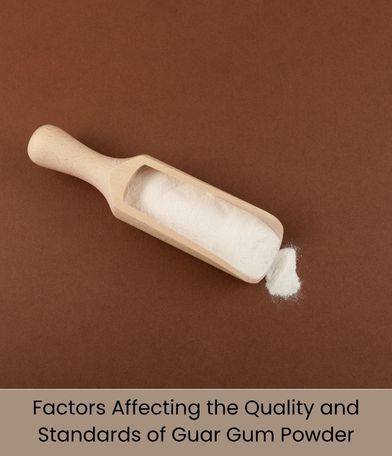
Factors Affecting the Quality of Guar Gum Powder
- Seed genetics, agro-climate, and harvest timing
• Cultivar and growing conditions influence the ratio of endosperm to hull/germ, typical galactomannan molecular weight, and potential viscosity.
• Monsoon timing, soil moisture, and temperature shape pod fill and seed uniformity; drought or late rains can depress endosperm yield and increase microbial risk.
• Harvest maturity matters: over-dry seed fractures; overly moist seed elevates molds and enzyme activity that can reduce polymer length (lower viscosity). - Cleaning, dehusking, splitting, and sorting
• Effective dehusking minimizes hull carry-over. Hull remnants show up as higher ash/acid-insoluble ash and create dull color and turbidity.
• Clean splitting produces high-purity endosperm “splits,” the starting point for premium powders.
• Optical sorting, destoning, and metal detection protect downstream milling and final purity.
- Milling and thermal control
• Excess grinding energy raises temperature and shears the polymer, reducing mean molecular weight and viscosity.
• Low-temperature milling (and controlled residence time) preserves polymer integrity; consistent particle size distribution improves hydration and dispersion.
• Air classification/sieving to tight mesh windows (e.g., 100–200 mesh for food/pharma) stabilizes hydration rates and reduces dusting/caking.
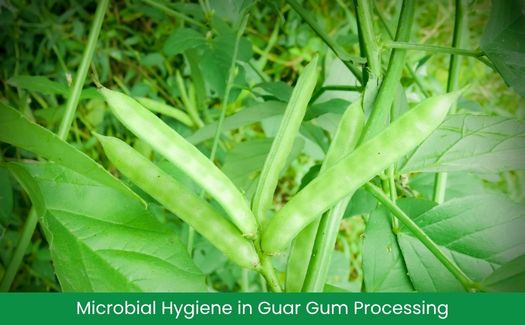
- Microbial hygiene and validated reduction
• Baseline hygiene (GMP, filtered air, clean-contact design) keeps aerobic counts low.
• Validated micro-reduction (commonly saturated steam; ETO restricted/banned in many markets) must be tuned to avoid hydrolysis and viscosity loss.
• Water activity (aw) and packaging at correct moisture protect against post-process rebound in microbes. - Adulteration control and identity integrity
• Economically motivated adulterants (e.g., cassia, tamarind kernel powder, starches) distort rheology, clarity, and taste.
• Identity checks (FTIR/NIR, mannose:galactose ratio near 2:1, ash/acid-insoluble ash) and supplier audits are the best defense.
- Contaminants and residues
• Pesticide residues, mycotoxins (from poorly stored seed), and heavy metals must meet destination market limits.
• Food/pharma buyers often require lot-wise multi-residue screens and heavy metal data; oilfield buyers prioritize hydration curves and brine compatibility but still need baseline safety. - Packaging, handling, and logistics
• Moisture-barrier liners (poly or foil) in multi-wall sacks or FIBCs are essential—guar is hygroscopic.
• Improper stacking and humid warehouses cause caking and lumping; heat exposure accelerates oxidation and off-odors.
• Long-haul logistics require protection from container “sweat” (condensation); palletization and desiccant strategies help.
How Guar Gum Powder Standards Are Typically Defined
Buyers write specifications referencing food additive monographs (e.g., FCC/Codex E412) or end-use needs. Typical parameters:
- Appearance: off-white to cream, free-flowing, bland odor
- Particle size: e.g., 95% pass 100–200 mesh (application-dependent)
- Moisture (LOD): ≤ 12% (often tighter for pharma)
- pH (1% solution): ~5.5–7.5
- Viscosity: Brookfield, 1.0% at 25°C, spindle/speed specified (e.g., LV, 20 rpm), ≥ target cP (often 3500–6000+ cP depending on grade)
- Hydration rate: standard vs fast-hydrating (FHG) per defined curve
- Ash and acid-insoluble ash: low values indicate purity and low hull carry-over
- Protein/fat: proxies for germ contamination
- Microbiology: APC, yeast/mold within limits; absence of Salmonella/E. coli in specified sample size
- Contaminants: heavy metals, pesticides, mycotoxins per market; ETO-free declaration where applicable
- Adders (if any): anti-cake agents, micro-kill process disclosed
Testing Guar Gum Powder for Purity and Viscosity
Identity and purity
- FTIR/NIR fingerprinting: quick authenticity check vs reference spectrum; detects gross adulteration.
- Sugar composition (mannose:galactose ratio): HPAEC or GC-derived profiling; guar ~2:1 is typical.
- Ash and acid-insoluble ash: elevated values indicate hull/silica contamination.
- Protein/fat: higher than expected may indicate germ carry-over or blending.
- Alcohol-insoluble residue/galactomannan enrichment: gauges gum purity.
Rheology and hydration behavior
- Brookfield viscosity: define concentration (often 1%), temperature (25°C), spindle (LV), speed (e.g., 20 rpm), and hydration time (e.g., 2 hours) for comparability.
- Hydration curve: measure cP at 5, 15, 30, 60, 120 minutes to distinguish standard vs FHG and predict processing behavior (instant beverages vs batch cook).
- Shear profile: guar is pseudoplastic; report cP at multiple speeds to support plant design (pumping, mixing).
- Fann viscometer (oilfield): PV/YP/gel strengths better indicate fracturing fluid behavior and crosslink readiness.
Clarity and color
- Transmittance/turbidity of a standard solution indicates aesthetic suitability for clear beverages/sauces.
- Whiteness index/visual color consistency impacts food and personal care.
Microbiology and contaminants
- APC, yeast/mold; absence of Salmonella and defined E. coli.
- Pesticide multi-residue, heavy metals (Pb, Cd, As, Hg).
- Mycotoxins as needed.
Sampling discipline
- Multi-point sampling from sacks/FIBCs avoids bias; composite samples reduce lot variability in COA results.
Organic vs Conventional Guar Gum Powder
What “organic” means here
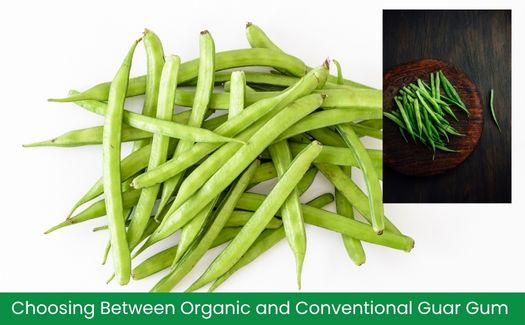
- Certified organic farming and segregated processing compliant with schemes like USDA-NOP/EU Organic; prohibits synthetic pesticides/fertilizers.
- Chain-of-custody: documented segregation from farm to finished pack, with audits and certificates per lot.
Practical differences
- Residue profile: organic systems aim for non-detect/very low pesticide residues; verification via lab testing remains essential.
- Supply and pricing: organic yields and acreage can be lower, adding price premium and supply variability; forward contracting helps.
- Performance: when purity and processing are equivalent, viscosity/hydration of organic and conventional guar are similar; flavor/color nuances can reflect agronomy and gentle processing.
- Paperwork and audits: buyers must manage documentation rigor (organic certificates, transaction certs, traceability).
When to choose which
- Choose organic for certified organic finished goods or brand narratives built around regenerative/low-input agriculture.
- Choose conventional when process/price constraints dominate and your label doesn’t require organic.
- In both cases, retain the same testing rigor for viscosity, micro, and contaminants.
Shelf-Life and Storage Considerations for Guar Gum Powder
Shelf-life expectations
- Typical declared shelf-life: 18–24 months from production in cool, dry conditions.
- Performance-sensitive applications (clear beverages, pharma) may prefer tighter internal use windows.
Packaging
- Multi-wall kraft paper sacks (usually 25 kg) with inner moisture barrier liners (PE; foil for premium).
- FIBCs with food-grade liners for bulk; ensure liner integrity to prevent humidity ingress.
- Nitrogen flushing and light barriers can be used for ultra-premium or long routes, though not always necessary.
Warehouse conditions
- Temperature: ideally ≤ 25°C; avoid hot zones (near roofs, vents).
- Relative humidity: < 60% preferred; dehumidify in monsoon seasons.
- Palletization: keep off floors, away from walls to prevent condensation; use slip sheets where helpful.
- Odor control: store away from strong-smelling goods (spices, chemicals)—guar can adsorb volatiles.
Handling open packs
- Reseal promptly with clamps or heat sealers; log open date.
- Avoid over-stacking that compacts powder (caking); rotate stock using FEFO (first-expire, first-out).
- Re-test near-expiry lots for viscosity, moisture, and micro before allocating to high-spec products.
Common storage pitfalls and fixes
- Caking/lumps: symptom of moisture ingress or compression; fix environment, stacking, and packaging; sieve just-in-time if necessary.
- Odor/off-notes: oxidation or adsorption from surroundings; improve barrier materials and storage zoning.
- Viscosity drift: can occur from thermal history/moisture; validate and, if needed, adjust dosage in low-risk applications or downgrade use.
Quick Buyer’s Checklist
- Specify test method details: concentration, temperature, spindle/speed, hydration times.
- Lock mesh bands and bulk density for predictable flow and dispersion.
- Require micro criteria and disclose kill-step method; ensure ETO-free where needed.
- Demand contaminant testing aligned to destination regulations.
- Evaluate cost-in-use: a guar grade that hits target cP at lower dosage may lower total recipe cost.
- Audit storage and packaging: barrier liners, clean warehouses, FEFO discipline.

Conclusion
High-quality guar gum powder is the sum of good agronomy, clean splitting and milling, tight particle control, validated hygiene, and disciplined packaging and storage. Testing should verify identity and purity, quantify viscosity and hydration behavior with clear methods, and confirm safety via micro and residue screens. Organic and conventional pathways can both deliver excellent performance when processed well; choose based on your label needs and supply strategy. Finally, protect the investment with moisture-safe packaging, climate-aware warehousing, and re-testing near shelf-life—so guar delivers the reliable thickening, stabilization, and processability your formulations depend on.

Mihir Shah is the CEO of Giriraj Enterprise, a trusted manufacturer, supplier, and exporter of Psyllium products, whole spices, ground spices, herbal products, guar gum and other agro products including Psyllium Husk, Psyllium Seeds, Psyllium Husk Powder and Kha Kha Powder. Founded in 1973 and based in Unjha, Gujarat, Giriraj Enterprise has grown significantly under Mihir’s leadership, establishing itself as a trusted name in the global market. With a focus on high-quality standards and adherence to international food norms, the company serves a wide customer base across the globe.
A strategic thinker with a passion for sustainable growth, Mihir has played a pivotal role in expanding the company’s production capacity, which now stands at 3,000 quintals per month, and in ensuring that Giriraj Enterprise remains at the forefront of innovation in the industry. His commitment to quality is reflected in the company’s stringent in-house quality testing and third-party verification, ensuring that all products meet the highest standards of excellence. He is dedicated to driving customer satisfaction by offering fast, reliable services both domestically and internationally.
Through his writing, Mihir shares valuable insights and knowledge about Psyllium, spices, herbal and other agro products, educating readers on their benefits and the role they play in promoting health and well-being. His goal is to provide factual, transparent information to help consumers and businesses make informed decisions.