

AI Summary

This guide is designed for B2B buyers evaluating chia seed suppliers from India. It covers the key procurement parameters – purity grades, moisture thresholds origin verification, sampling protocols, MOQs and supplier audit standards – to help importers, distributors and private label brands make informed sourcing decisions. Giriraj Enterprise is referenced as a compliant export-ready supplier operating within these standards.

Chia Seed Quality Benchmarks: Purity Grades and What They Mean for Buyers

Chia seed quality in the export market is graded based on physical purity, foreign matter content and seed uniformity. For B2B procurement, standard commercial grade requires a minimum purity level, while food-grade export lots should meet 99.5% purity as specified by importing country standards.

When evaluating chia seed manufacturers, request a Certificate of Analysis (COA) for each batch that clearly lists purity percentage, foreign matter, admixture levels and defective seed count. Suppliers who cannot provide batch-specific COAs are a sourcing risk, regardless of price.

Get Bulk Psyllium, Spices & Grains Quotes Today!

WhatsApp

Moisture Content Standards: The Non-Negotiable Procurement Parameter

Moisture content directly affects shelf life, microbial safety and bulk density during international shipping. Acceptable moisture content for chia seeds in export-grade consignments is 6–8% maximum, with most destination markets in Europe and North America requiring below 7%.

Chia seed exporters from India operating under APEDA and FSSAI guidelines are required to declare moisture content on shipping documentation. During procurement, always cross-verify moisture levels through independent third-party lab testing, particularly for shipments traveling through high-humidity sea routes.

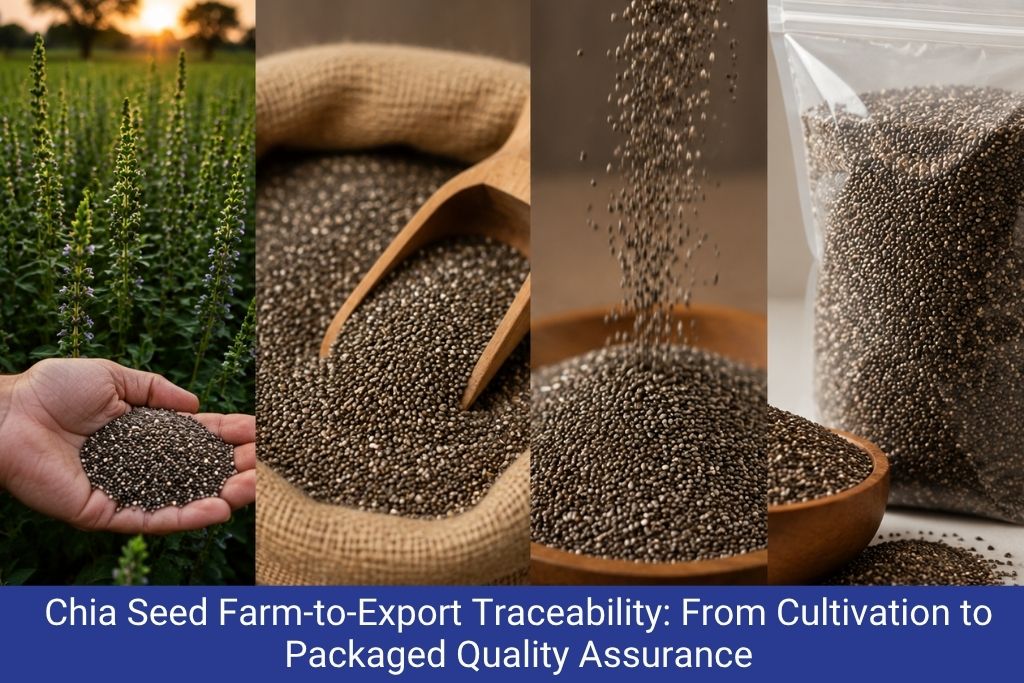
Origin Verification in India: Traceability from Farm to FOB

India’s chia production is concentrated in Madhya Pradesh, Rajasthan and Maharashtra. For B2B buyers origin verification involves two layers: state-level agricultural documentation and supplier-level farm aggregation records.

Request the following from chia seed suppliers in India before order confirmation: farm-level procurement receipts or aggregation logs and APEDA registration of the exporting entity. Giriraj Enterprise, for example, maintains traceable farm-to-export documentation that allows buyers to verify geographic origin as part of their due diligence process.

Origin verification also supports compliance with EU Deforestation Regulation (EUDR) requirements and ESG sourcing disclosures increasingly demanded by retail and institutional buyers.

Sampling Procedures: How to Evaluate Before You Commit

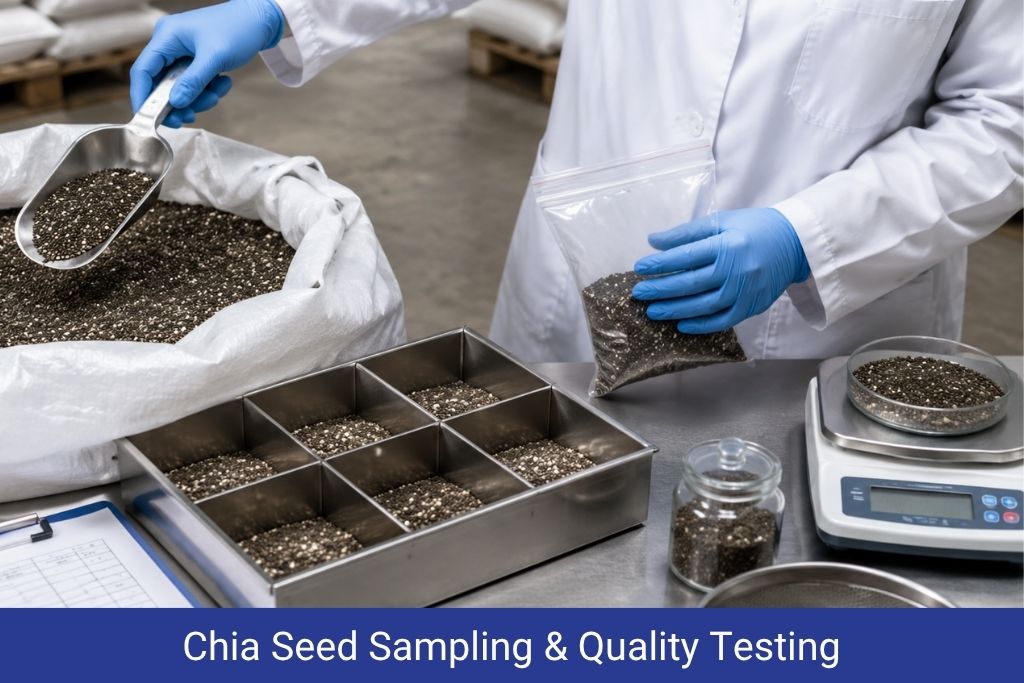
A structured sampling procedure protects buyers from receiving off-spec goods at scale. The standard protocol for chia seeds follows ISO 950 or ISTA sampling guidelines depending on lot size.

For lots under 25 MT, request a minimum 500g representative sample drawn from at least 10 sampling points across the lot. For larger consignments, increase sampling points proportionally. Once the sample arrives, conduct the following evaluations: moisture analysis (oven or moisture meter method), purity assessment under magnification, thousand-seed weight and basic microbiological screening.

Reputable chia seeds manufacturers in India will provide pre-shipment samples aligned with the actual production batch – not showcase samples from a separate lot. Always confirm that the sample batch number matches the eventual shipment documentation.

Minimum Order Quantities: Aligning MOQs with Your Business Scale

MOQs among chia seed exporters in India vary significantly depending on the supplier’s infrastructure. Typical MOQ ranges are:

Spot market or trial orders: 500 kg to 1 MT. Standard commercial orders: 5–10 MT. Full container load (FCL) orders: 18–25 MT.

For new supplier relationships, negotiate a trial shipment of 1–2 MT before committing to larger volumes. Established exporters with cold chain and fumigation capabilities often structure MOQs around FCL economics, which reduces per-unit freight costs for the buyer.

Private label chia seeds orders may carry higher MOQs due to custom packaging and labelling requirements – typically 2–5 MT minimum per SKU. Chia seeds private label manufacturers should clearly outline setup fees, lead times and print specifications in their quotation.

Private Label Chia Seeds: What B2B Buyers Should Evaluate

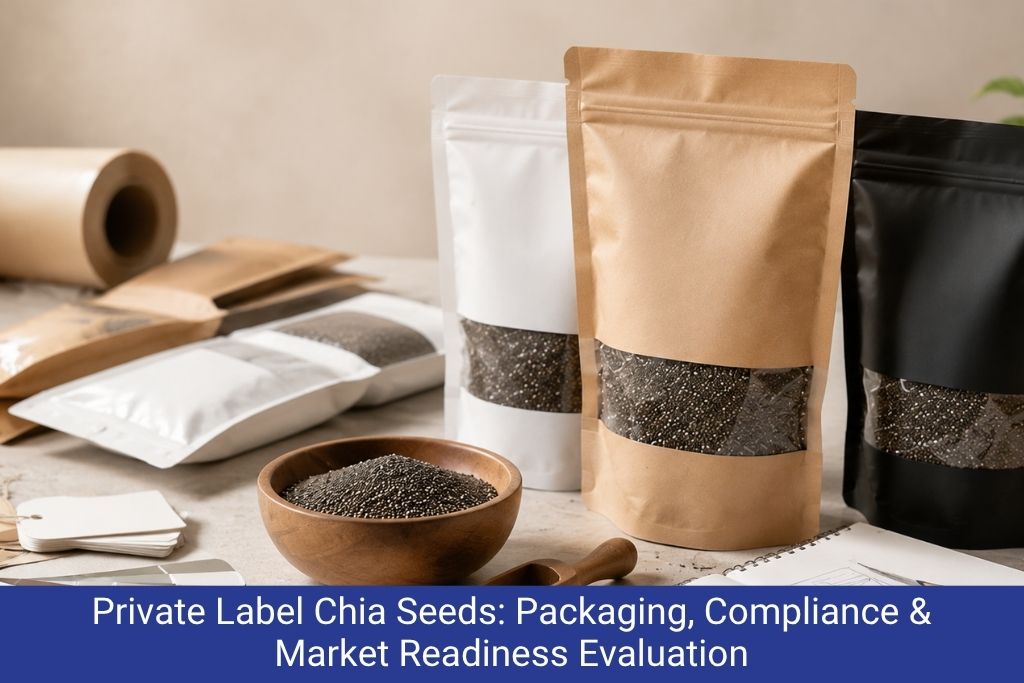
For buyers sourcing private label chia seeds, the evaluation criteria extend beyond product specs to include packaging compliance, labelling accuracy and regulatory alignment for target markets (EU, US, GCC, ASEAN).

Key questions to ask chia seeds private label manufacturers: Do they offer food-grade multilayer pouches or kraft packaging? Can they produce country-specific nutritional labels compliant with local regulations? What is their minimum MOQ per design iteration? Do they have in-house design support or require buyer-submitted artwork?

Giriraj Enterprise, as a leading chia seeds suppliers that serve private label clients typically have pre-approved label templates, packaging material sourcing and export compliance documentation already in place – reducing onboarding time for new buyers.

Benefits of Chia Seeds as a B2B Product Category: Market Context for Buyers

Understanding the demand-side dynamics informs procurement strategy. The benefits of chia seeds – including high omega-3 fatty acid content, dietary fibre, plant-based protein and clean-label positioning – have made them a consistent performer in functional food, nutraceutical and sports nutrition categories globally.

The global chia seed market is projected to grow at a CAGR of over 5% through 2030, driven by demand from Europe, North America and the Middle East. For distributors and contract manufacturers, chia seeds in India offer a cost-competitive sourcing base with year-round export availability.

Export-Ready Psyllium, Spices & Grains Await! Contact Now

WhatsApp

Conclusion

Sourcing chia seeds from India requires a disciplined approach that goes beyond price comparison. Purity grade verification, moisture compliance, traceable origin documentation and a structured supplier audit framework are the foundations of a reliable import relationship. Whether you are a distributor, contract manufacturer or private label brand, aligning with suppliers who meet documented quality and compliance standards – significantly reduces procurement risk and supports consistent product performance across your supply chain.

FAQs

What purity level should B2B buyers require for export-grade chia seeds from India

A minimum of 99%+ purity is standard for food-grade export lots; request batch-specific COAs to confirm this before each shipment.

How do I verify that a chia seed supplier in India is APEDA registered?

APEDA's online registry allows buyers to confirm registration status using the supplier's IEC (Import Export Code) number directly on the APEDA portal.

What is the standard moisture content limit for chia seeds in international trade?

Most importing markets accept up to 7–8% moisture content; buyers targeting EU or organic markets should specify a maximum of 6.5% in their purchase contract.

How are private label chia seed MOQs typically structured by Indian manufacturers?

Private label orders generally start at 2 MT per SKU, with higher MOQs applying when custom pouches, kraft bags or market-specific regulatory labels are required.

What certifications should I look for when auditing chia seed exporters from India?

Prioritise FSSAI, APEDA registration, ISO 22000 or FSSC 22000 and organic certifications (NOP, EU Organic or India Organic) based on your target market requirements.

<< 1 >>