


AI Summary

Ground spices procurement for food service and restaurant operations demands more than just sourcing the right flavors. This guide covers what distributors, importers and bulk buyers need to evaluate – from packaging formats and shelf life standards to flavor batch consistency and supply chain reliability – when partnering with ground spices manufacturers, exporters and suppliers for large-scale or private label requirements.

Ground Spices: Food Service and Restaurant Industry

The food service sector runs on consistency. Whether it is a cloud kitchen in Mumbai, a QSR chain in the Middle East or a catering operation in Europe, the spice cabinet is never an afterthought. Ground spices sit at the heart of recipe standardization and procurement decisions around them directly affect kitchen output, cost control and customer satisfaction. For distributors and importers sourcing at scale, the evaluation criteria go well beyond price per kilogram.

Get Your Custom Bulk Order Quote! Contact Us

WhatsApp

Ground Spices Procurement: What the Food Service Sector Actually Demands

Food service buyers operate under constraints that retail buyers do not. Menus are locked in. Recipes are standardized. Kitchens run on volume. When a hotel chain or a restaurant franchise signs off on a recipe using turmeric powder or coriander powder at a specific color value and moisture percentage, every subsequent batch must match that specification exactly.

This means procurement cannot be treated as a commodity purchase. Ground spices suppliers working with the food service sector must be evaluated on their ability to deliver technical specifications, not just bulk availability. Buyers need to ask: what is the Asta color value for your chilli powder? What is the curcumin content percentage in your turmeric? What is the batch-to-batch variance on your cumin powder moisture levels? These are the questions that separate industrial-grade sourcing from casual purchasing.

Packaging Sizes and Format Requirements for Bulk Spice Buyers

Food service distribution involves multiple tiers and packaging requirements vary significantly across each. A central kitchen supplying 50 outlets operates differently from an institutional caterer or a hotel banqueting unit.

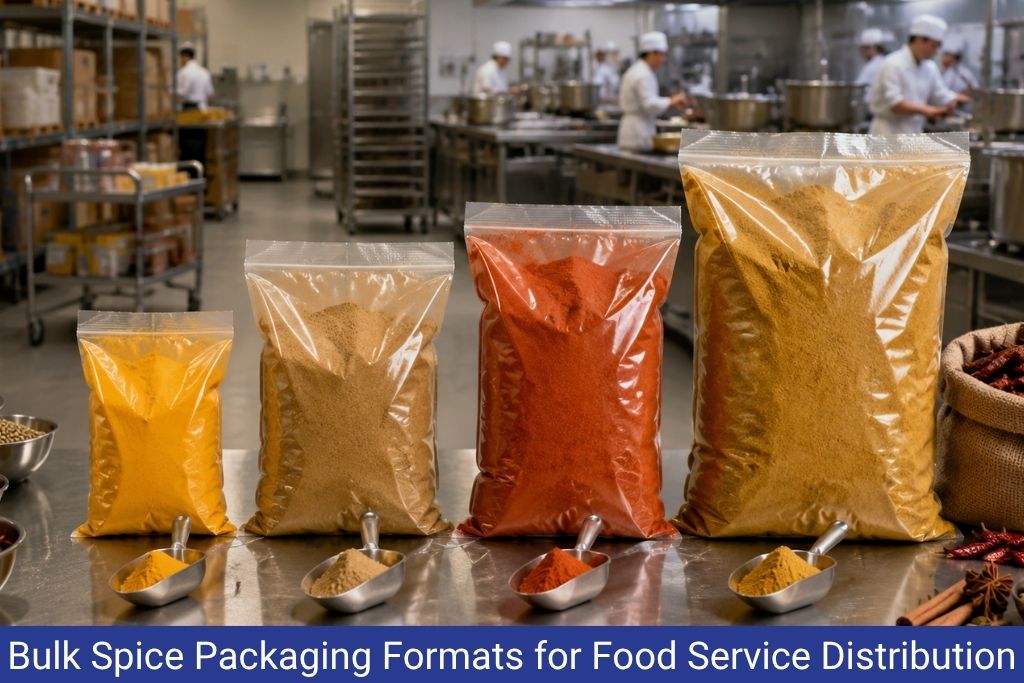
Standard bulk packaging for ground spices in the food service channel typically includes 5 kg, 10 kg, 15 kg and 25 kg formats. Multi-layer kraft paper bags with inner polyethylene liners remain the most common format for dried ground spices such as ginger powder, fennel powder and fenugreek powder at the 10–25 kg range. For premium or aromatic varieties like clove powder, nutmeg powder and garam masala, airtight foil-laminated pouches are preferred to minimize volatile oil loss during transit and storage.

For distributors serving the hotel, restaurant and catering segment, intermediate bulk formats – typically 1 kg to 5 kg resealable pouches – are increasingly common as kitchen portioning demands evolve. Ground spices exporters who offer flexible MOQ structures and the ability to pack across multiple formats provide a stronger value proposition to buyers managing diverse customer bases.

Tamper-evident sealing, lot number traceability on each pack and print-ready surfaces for private labeling are non-negotiable for most organized food service operators today.

Shelf Life Requirements: What Buyers Must Specify Before Ordering

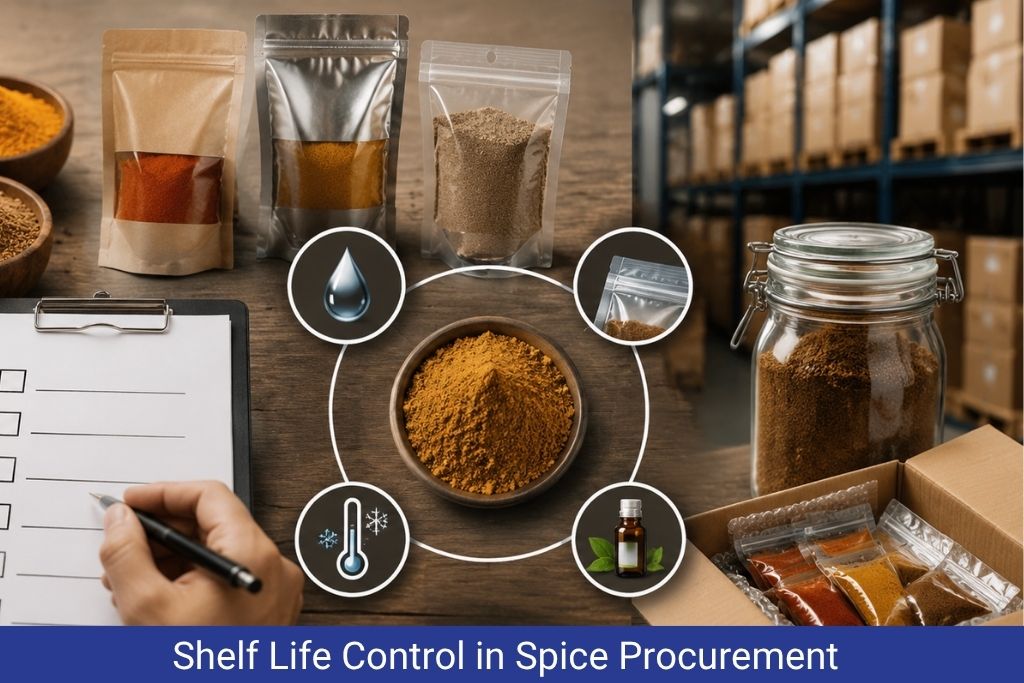
Shelf life in ground spices is not a fixed number – it is a function of moisture content, packaging integrity, storage temperature and the inherent volatile oil profile of each spice. For procurement officers and importers, specifying shelf life at the point of order is critical to avoiding quality disputes downstream.

Industry-standard minimum shelf life expectations for food service sector procurement generally sit at 18 to 24 months from the date of manufacture for most dried ground spices, including cinnamon powder, curry powder and coriander powder. Spices with higher volatile oil content – such as clove powder, nutmeg powder and garam masala – may have tighter windows and require cold chain or climate-controlled storage to maintain aromatic potency.

Buyers sourcing from ground spices manufacturers should request a Certificate of Analysis (CoA) with each shipment, specifying moisture content (ideally below 10%), total plate count and yeast and mold counts. For export consignments into the EU, GCC or North American markets, compliance with importing country maximum residue limits (MRLs) for pesticides is mandatory and should be verified with third-party lab testing from accredited bodies such as SGS, Intertek or Eurofins.

Giriraj Enterprise, known for handling a full range of ground spices including chilli powder, cumin powder and turmeric powder, typically provide extended shelf life documentation and lab-certified CoAs suited for international food service procurement.

Flavor Consistency: The Non-Negotiable Standard for Restaurant Chains

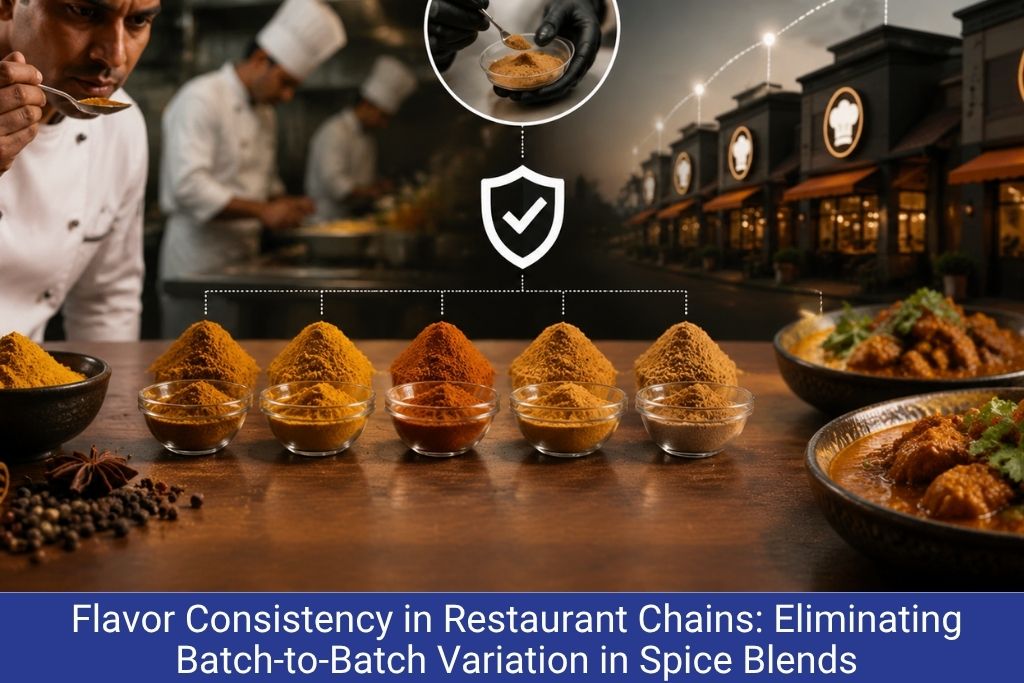
Flavor drift between batches is one of the most common complaints food service operators raise with their spice vendors. When a curry powder blend changes its heat profile or a garam masala shifts its top-note intensity from one delivery to the next, it creates real operational problems – recipe recalibration, chef training disruptions and customer complaints.

True flavor consistency requires sourcing from ground spices manufacturers who operate with standardized raw material intake protocols, fixed grind specifications and blend ratios locked to internal reference standards. HPLC analysis for capsaicin in chilli powder, gingerol profiling in ginger powder and curcuminoid measurement in turmeric powder are examples of the quality controls that underpin repeatable flavor delivery.

For distributors working with private label ground spices, maintaining flavor consistency across manufacturer batches is even more critical – because the label stakes are higher. Ground spices private label manufacturers who invest in in-house QC labs, retain reference samples from every production batch and offer SLA-backed consistency guarantees are the ones worth partnering with for long-term food service supply agreements.

Private Label Ground Spices: Considerations for Distributors and Importers

Private labeling is a significant growth area in the ground spices segment, particularly for distributors who serve branded hotel groups, retail-foodservice hybrid operators and regional restaurant chains wanting to maintain house-brand spice lines.

Choosing the right ground spices private label manufacturers involves evaluating minimum order quantities for custom SKUs, lead times for label procurement and changeover and the manufacturer’s ability to accommodate recipe customization – such as heat-level adjusted chilli powder blends or region-specific garam masala formulations.

Giriraj Enterprise offers private label solutions across its complete ground spice range, providing packaging customization, third-party testing support and export documentation aligned with global trade compliance requirements. This makes them a practical option for importers who need supply continuity alongside label flexibility.

Get Bulk Psyllium, Spices & Grains QUOTES TODAY!

WhatsApp

Supply Reliability: How to Assess Vendor Risk before You Sign a Contract

Supply disruptions in ground spices have real downstream consequences for food service operators. Monsoon variability in India, for instance, directly affects raw cumin, coriander and fenugreek harvests. Geopolitical trade factors can affect Sri Lankan cinnamon or Indonesian nutmeg availability.

When qualifying ground spices exporters, distributors should evaluate backward integration – does the manufacturer have direct farm linkages or ownership of raw material processing? Multi-origin sourcing capability, buffer inventory protocols and documented lead time commitments are equally important metrics. Vendors who can guarantee shipment timelines within a ±3-day window and offer real-time order tracking add measurable value to food service supply chains.

Annual contracts with quarterly review clauses, price adjustment mechanisms tied to commodity indices and force majeure provisions are standard in mature procurement relationships and should be included in vendor agreements from the outset.

FAQs

What packaging formats are standard for bulk ground spice procurement in food service?

Most food service distributors source ground spices in 5 kg, 10 kg and 25 kg multi-layer bags or foil-laminated pouches, depending on the product's volatility and the end-user's portioning requirements.

How do I verify flavor consistency across multiple batches from the same supplier?

Request batch-specific Certificates of Analysis with measurable parameters such as capsaicin content, curcuminoid percentage or moisture levels and compare them against your agreed reference standards before approving each shipment.

What minimum shelf life should I specify when ordering ground spices for food service distribution?

A minimum of 18 to 24 months from the manufacturing date is the industry standard, though high-volatile-oil spices like clove powder and nutmeg powder may require tighter storage controls to maintain quality throughout that window.

Can private label ground spices be customized for heat level or regional flavor profiles?

Yes, many ground spices private label manufacturers offer formulation adjustments - such as heat-level variants for chilli powder or region-specific garam masala blends - subject to minimum order quantity thresholds.

What certifications should I look for when importing ground spices for commercial food service use?

Look for ISO 22000 or FSSC 22000 food safety certification, HACCP compliance, FSSAI registration for India-origin suppliers and third-party pesticide residue testing reports from accredited labs aligned with the importing country's regulatory standards.

<< 1 >>


Conclusion

Sourcing ground spices for food service and restaurant distribution is a procurement discipline that demands technical rigor, vendor due diligence and contractual clarity. Packaging suitability, shelf life compliance, batch-level flavor traceability and supply continuity are the four pillars that determine whether a supplier relationship scales or stalls. Manufacturers like Giriraj Enterprise, who combine product range depth with export documentation support and private label capability, are well positioned to serve distributors and importers operating at the intersection of quality-critical and volume-driven procurement. Getting these fundamentals right at the sourcing stage saves significant operational cost and quality risk downstream.