




AI Summary
Identifying high-quality Psyllium Husk for commercial use requires a careful step-by-step evaluation rather than relying only on price or supplier claims. Buyers should assess the product’s source, purity, color, moisture content, particle consistency, packaging quality, and available documentation before placing a bulk order. Requesting samples and reviewing supplier reliability are also important for reducing sourcing risks and ensuring consistent product performance. For food, pharmaceutical, nutraceutical, and private label applications, quality directly affects formulation stability, shelf life, and customer satisfaction. A structured buying approach helps businesses choose Psyllium Husk that delivers better value, dependable supply, and long-term commercial benefits.
For commercial buyers, identifying high-quality Psyllium Husk is not just about appearance or price. It is about choosing a product that performs consistently in food, pharmaceutical, nutraceutical, and wellness applications. When you are buying in bulk, even a small variation in purity, color, moisture, or texture can affect your final product quality, shelf life, customer satisfaction, and brand reputation. That is why commercial sourcing requires a more detailed evaluation process than simple retail buying.
Psyllium Husk is widely used because of its natural soluble fiber content, water absorption ability, and functional role in digestive formulations, gluten-free foods, fiber supplements, and industrial health products. However, not all psyllium available in the market is processed to the same standard. Some suppliers focus only on volume, while serious commercial buyers need reliable quality, traceability, documentation, and consistency from batch to batch.
If your goal is to source the right Psyllium Husk for manufacturing, export, repacking, private labeling, or product formulation, the process must be systematic. You need to know what to inspect, what to ask, and what signs indicate that the material is suitable for professional use. The best way to approach this is step by step, with clear evaluation points.
Get Bulk Psyllium, Spices & Grains QUOTES TODAY!



Why Quality Matters in Commercial Psyllium Husk Procurement?
High-quality Psyllium Husk directly influences the performance of your finished product. In food applications, it affects texture, water binding, fiber enrichment, and product stability. In nutraceutical and pharmaceutical use, it affects formulation accuracy, user experience, and compliance expectations. In export supply, it affects buyer trust, repeat business, and regulatory acceptance.
Low-grade psyllium may contain excess dust, inconsistent particle size, poor swelling performance, impurities, or moisture imbalance. These issues can create production challenges and increase the risk of rejection by quality-conscious buyers. Commercial buyers cannot rely only on supplier claims. They need a practical evaluation framework that supports safer purchasing decisions.
Step 1: Check the Source of the Psyllium Husk
The first step is to understand where the Psyllium Husk is sourced from. High-quality psyllium is commonly associated with regions known for reliable cultivation and proper agricultural handling. A serious supplier should be able to explain the origin of the raw material and how it moves from farm procurement to processing.
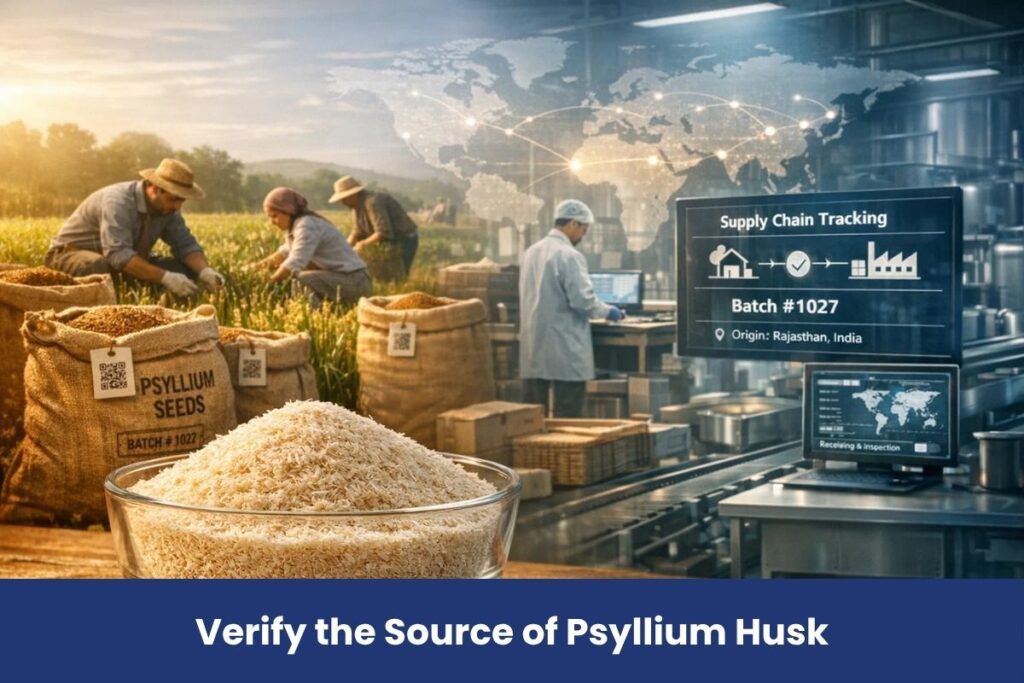
Source matters because raw material quality begins at the agricultural level. If the supplier works with established farming networks and controlled procurement systems, the chances of consistent quality are much higher. Commercial buyers should always ask about sourcing region, raw material handling, and whether the supplier can support batch-level traceability.
Step 2: Inspect Purity and Cleanliness of Psyllium Husk
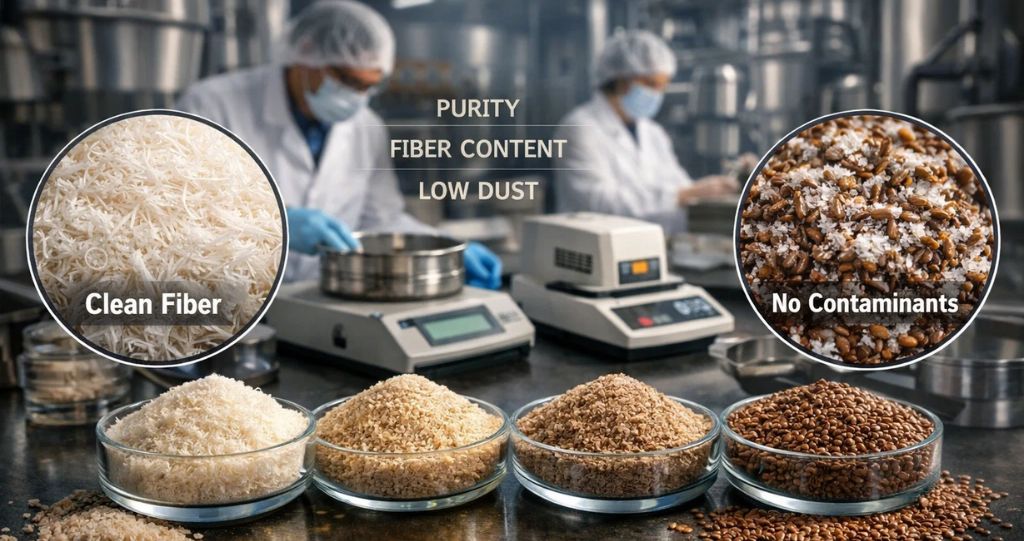
Purity is one of the most important indicators of quality. Commercial-grade Psyllium Husk should be properly cleaned and should not contain visible foreign matter, excess dust, husk waste, or contamination. A clean product reflects proper processing standards and better handling discipline.
When reviewing the material, look for visual uniformity and a neat, natural appearance. The husk should not appear dirty, overly dusty, or mixed with unwanted particles. Cleanliness becomes especially important in food, supplement, and pharmaceutical industries, where product safety and consumer acceptance are key. A cleaner husk generally supports better functionality and easier downstream processing.
Step 3: Review Color and Physical Appearance of Psyllium Husk
Color and physical appearance can give useful clues about overall product quality. Good-quality Psyllium Husk usually has a natural, uniform appearance without major discoloration or inconsistent tone. While slight natural variation may occur, the product should not look aged, dull, or poorly handled.
Commercial buyers should compare appearance across samples if possible. A supplier offering consistent visual quality is more likely to maintain proper processing control. Physical appearance also matters for repackaging, private labeling, and premium-grade positioning. In many markets, product appearance influences perceived quality as much as technical performance.
Step 4: Evaluate Moisture Content in Psyllium Husk
Moisture content is a critical factor in determining storage stability and shelf life. Excess moisture can lead to poor flow properties, clumping, reduced product stability, and greater risk during storage and transport. For bulk buyers, moisture imbalance can become a major operational problem, especially in export shipments.
A reliable supplier should test and control moisture levels before dispatch. Commercial buyers should request specification details and confirm that the product is packed in a way that protects it from humidity. Stable moisture content supports product integrity, safer warehousing, and more predictable use in manufacturing.
Step 5: Check Particle Size and Consistency of Psyllium Husk
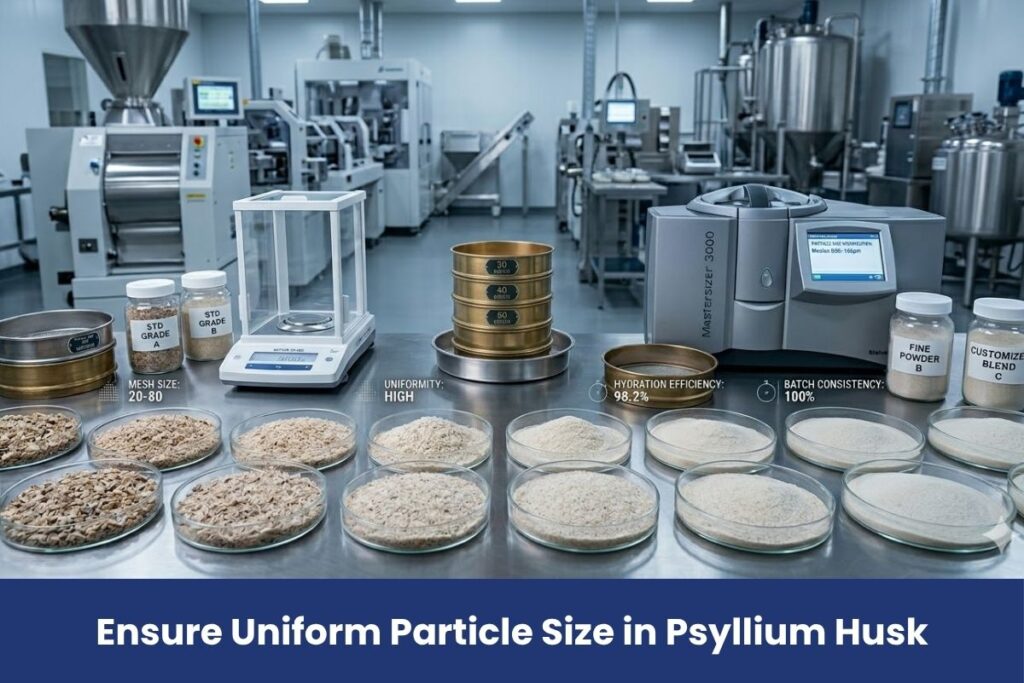
For commercial applications, consistency matters just as much as purity. Particle size should be appropriate for the intended use and should remain uniform across batches. Inconsistent husk texture can affect mixing, hydration, swelling, blending, and finished product behavior.
Some buyers may need finer grades, while others may prefer more standard husk texture depending on formulation goals. This is why it is important to define your application clearly before purchase. Ask the supplier whether the grade is standard or customized and whether consistency is maintained from lot to lot. Consistent physical properties make production easier and reduce formulation adjustments.
Step 6: Ask for Quality Testing and Psyllium Husk Product Documentation
Commercial procurement should never depend only on verbal assurance. A good supplier should be able to provide quality-related documents such as product specifications, quality reports, and relevant certifications. These documents help buyers verify whether the Psyllium Husk is suitable for food, health, export, or industrial use.
You should ask for details related to purity, moisture, physical parameters, and batch testing. Documentation is especially important for regulated industries and international buyers. It also helps with internal approval processes, audits, and customer confidence. A supplier who shares documentation openly usually reflects stronger operational transparency.
Step 7: Assess Psyllium Husk Packaging Standards
Even high-quality Psyllium Husk can lose value if the packaging is weak or unsuitable. Packaging should protect the husk from moisture, contamination, handling damage, and transportation stress. For commercial orders, packaging quality is part of product quality.
Standard bulk packaging such as 25 kg or 50 kg bags may be suitable for many buyers, but the material and sealing method also matter. If you are importing, exporting, repacking, or selling under a private label, packaging becomes even more important. Strong, secure, and properly labeled packaging helps preserve the product and supports smoother logistics.
Step 8: Request a Psyllium Husk Sample Before Confirming a Bulk Order
One of the smartest commercial buying steps is to request a sample before placing a large order. A sample allows you to inspect the husk physically, review its cleanliness, compare consistency, and test suitability in your own application. This reduces risk and improves confidence before bulk procurement.
A sample is especially useful for manufacturers and private label businesses that need predictable product performance. It also helps buyers compare multiple suppliers objectively. Never treat samples as a minor step. In commercial sourcing, sample approval is often the point where good buying decisions begin.
Step 9: Evaluate Psyllium Husk Supplier Reliability and Commercial Readiness
Quality is not only about the product itself. It is also about whether the supplier can maintain that quality over time. A commercially reliable supplier should be able to support repeat orders, stable communication, timely dispatch, and product consistency. Long-term buyers need operational strength, not just a good first shipment.
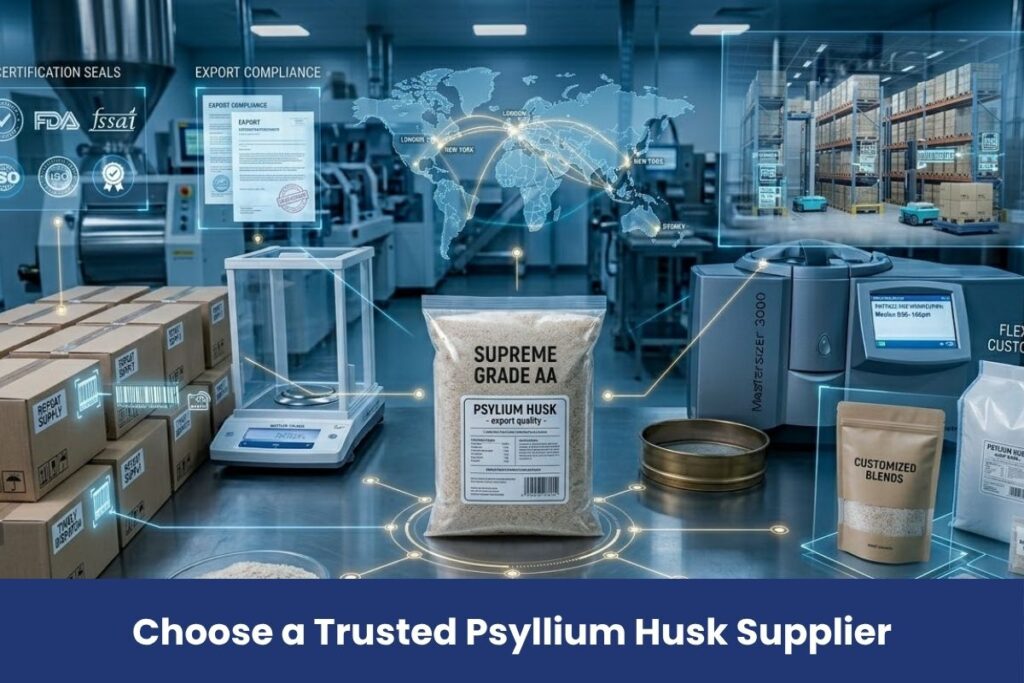
Check whether the supplier understands export requirements, documentation needs, packaging options, and business communication standards. Ask whether they can support customization, traceability, and recurring supply. A supplier with strong commercial readiness is usually a better long-term partner than one offering only low initial pricing.
Step 10: Compare Value, Not Just Psyllium Husk Price
The final step is to compare overall value rather than focusing only on the lowest quote. Lower-priced Psyllium Husk may look attractive at first, but poor quality can lead to higher costs later through rejection, reformulation, customer complaints, or disrupted supply. True value comes from a balance of purity, consistency, documentation, packaging, and supplier dependability.
Commercial buyers should evaluate price alongside specification quality, logistics readiness, and business support. A higher-quality husk may deliver better product performance and stronger long-term returns. Choosing wisely at the sourcing stage protects both operational efficiency and brand reputation.

Final Thoughts
Identifying high-quality Psyllium Husk for commercial use requires a structured evaluation process. Buyers should review sourcing, purity, appearance, moisture, consistency, documentation, packaging, sample performance, supplier reliability, and overall value before making a final decision. Each step plays an important role in reducing risk and improving procurement success.
FAQs Psyllium Husk
How to Identify High-Quality Psyllium Husk for Commercial Use?
What should I check first when buying Psyllium Husk for commercial use?
The first thing to check is the source and overall purity of the Psyllium Husk. A reliable supplier should clearly explain where the product is sourced from and how it is processed. Commercial buyers should also review cleanliness, consistency, and supporting documentation before making a decision.
Why is moisture content important in Psyllium Husk?
Moisture content is important because it directly affects the shelf life, storage stability, and product quality of Psyllium Husk. Excess moisture can lead to clumping, reduced performance, and handling issues during storage or transport. Proper moisture control helps maintain product integrity in bulk supply.
How can I verify the quality of Psyllium Husk before placing a bulk order?
You can verify quality by requesting samples, product specifications, and quality-related documents from the supplier. It is also useful to inspect the product’s color, texture, purity, and packaging condition. This helps ensure the material matches your intended commercial application.
Why is supplier reliability important when sourcing Psyllium Husk?
Supplier reliability is important because commercial buyers need consistent quality, timely delivery, and clear communication for repeat orders. A dependable supplier can support long-term business needs with better traceability, documentation, and packaging options. This reduces sourcing risk and improves procurement stability.
Is the cheapest Psyllium Husk always the best option for bulk buyers?
No, the cheapest option is not always the best for bulk buyers. Lower-priced Psyllium Husk may come with issues related to purity, consistency, moisture, or packaging quality. It is better to compare overall value, including product performance, documentation, and supplier support, before finalizing a purchase.

Mihir Shah is the CEO of Giriraj Enterprise, a trusted manufacturer, supplier, and exporter of Psyllium products, whole spices, ground spices, herbal products, guar gum and other agro products including Psyllium Husk, Psyllium Seeds, Psyllium Husk Powder and Kha Kha Powder. Founded in 1973 and based in Unjha, Gujarat, Giriraj Enterprise has grown significantly under Mihir’s leadership, establishing itself as a trusted name in the global market. With a focus on high-quality standards and adherence to international food norms, the company serves a wide customer base across the globe.
A strategic thinker with a passion for sustainable growth, Mihir has played a pivotal role in expanding the company’s production capacity, which now stands at 3,000 quintals per month, and in ensuring that Giriraj Enterprise remains at the forefront of innovation in the industry. His commitment to quality is reflected in the company’s stringent in-house quality testing and third-party verification, ensuring that all products meet the highest standards of excellence. He is dedicated to driving customer satisfaction by offering fast, reliable services both domestically and internationally.
Through his writing, Mihir shares valuable insights and knowledge about Psyllium, spices, herbal and other agro products, educating readers on their benefits and the role they play in promoting health and well-being. His goal is to provide factual, transparent information to help consumers and businesses make informed decisions.