




AI Summary
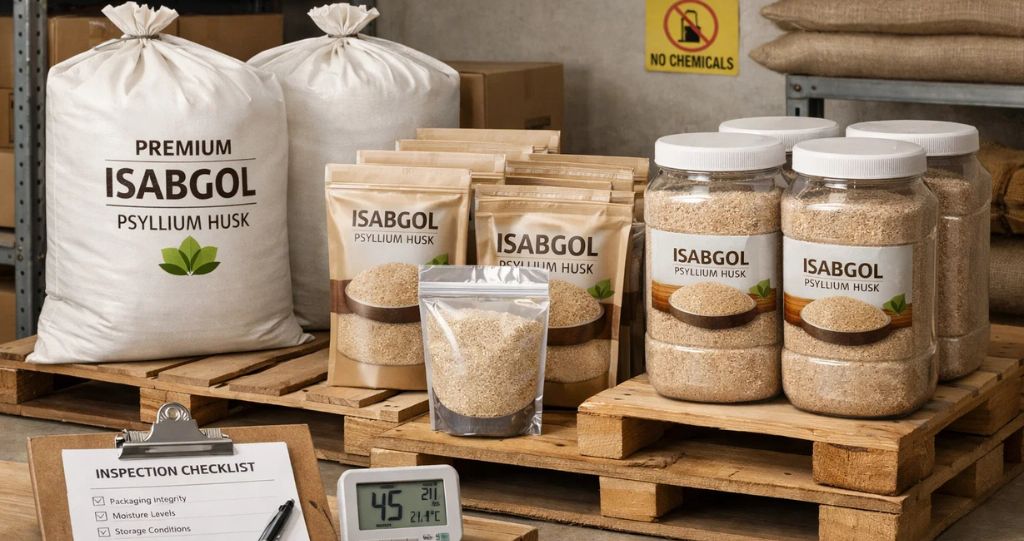
This article explains how to store Isabgol properly for maximum shelf life through a clear step-by-step process. It covers choosing a dry storage area, preventing moisture exposure, using strong packaging, avoiding sunlight and heat, pallet storage, separation from contaminants, resealing opened packs, FIFO stock rotation, regular inspections, and careful handling. The main idea is that Isabgol shelf life depends greatly on disciplined storage practices.
Introduction
Isabgol, also known as psyllium husk, is a moisture-sensitive natural product that requires careful storage to maintain its quality over time. Whether it is handled for retail sale, wholesale distribution, private labeling, or export supply, proper storage plays a major role in preserving its texture, purity, swelling properties, and usability. Even premium-quality Isabgol can lose value if it is not stored under suitable conditions.
Many people assume that shelf life depends only on manufacturing quality, but storage conditions are just as important. Exposure to humidity, direct sunlight, heat, strong odors, poor packaging, and careless handling can gradually reduce the product’s effectiveness and commercial value. In bulk business, improper storage can also lead to contamination risks, customer complaints, packing damage, or reduced product performance.
Since Isabgol is widely used in food, nutraceutical, digestive wellness, and industrial applications, buyers expect the material to remain clean, dry, and functionally stable throughout its intended shelf life. This is why wholesalers, exporters, and stockists must follow a clear storage process rather than relying on casual warehouse practices.
The good thing is that Isabgol does not require highly complex storage technology. What it does require is discipline. A dry environment, sealed packaging, correct stacking, controlled handling, and regular stock checks can make a significant difference. If these basics are followed properly, businesses can protect both product quality and commercial value.



Step 2: Keep Isabgol Away from Moisture at All Times
Moisture is one of the biggest threats to Isabgol quality. Because Isabgol naturally absorbs water, even small exposure to humidity can gradually affect its condition. This may lead to clumping, texture change, loss of free-flowing nature, or reduced functional performance.
For this reason, Isabgol should always be stored in moisture-protective packaging and placed in a dry zone. It should never be kept near wet walls, water pipes, wash areas, or unprotected floors. In warehouses, moisture control is especially important during monsoon periods or in humid climates where environmental conditions can change quickly.
The product should also be protected during opening and re-packing operations. If bags are opened for sampling, blending, or partial use, they should be resealed properly without delay. Preventing moisture entry is one of the most effective ways to maximize shelf life.
Step 3: Use Proper Isabgol Packaging That Protects the Product
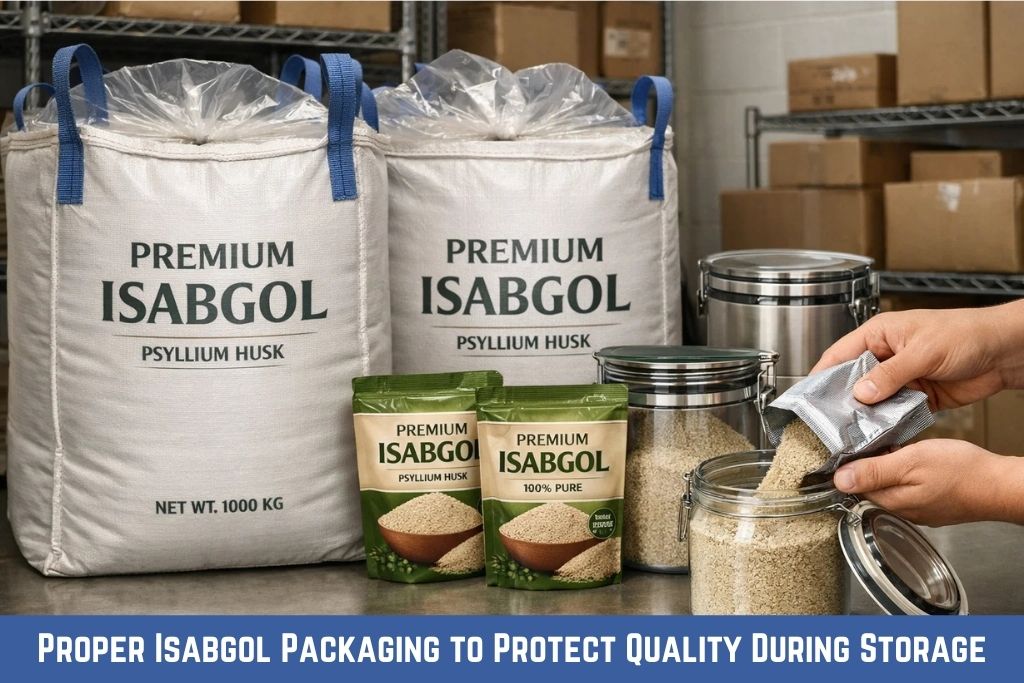
Packaging plays a direct role in preserving Isabgol quality during storage. The ideal packaging should protect the product from air, moisture, contamination, and handling damage. Bulk buyers usually prefer strong industrial-grade bags with suitable inner liners, while retail and private label businesses may require sealed pouches or containers.
The key point is that packaging should not simply hold the product; it should actively protect it. Torn bags, weak liners, loose sealing, and poorly closed containers can allow external conditions to affect the Isabgol. Even a short period of exposure can reduce quality if the storage environment is not ideal.
If the original package is opened, the remaining product should be transferred into a tightly sealed container or reclosed in a secure moisture-resistant pack. Proper packaging helps the product stay dry, clean, and stable throughout storage and transport.
Step 4: Protect Isabgol from Direct Sunlight and Heat
Isabgol should always be stored away from direct sunlight and excessive heat. Continuous exposure to heat can weaken packaging, change the product environment inside the pack, and negatively affect the overall storage condition. Direct sunlight may also raise product temperature, especially if bags or containers are placed near windows, loading docks, or sun-facing warehouse areas.
The goal is to keep the product in a cool and stable environment. Extreme heat fluctuations can create avoidable stress on packaging and may reduce the reliability of long-term storage. Warehouses and stock rooms should be arranged so that Isabgol is not stored near boilers, hot machinery, radiating walls, or transport points exposed to outdoor heat.
A stable temperature environment supports better shelf life and lowers the chance of packaging deterioration or internal product change.
Step 5: Store the Isabgol Product Above Floor Level on Pallets
One of the most practical storage habits is to keep Isabgol off the floor. Bags or cartons should be placed on clean pallets, platforms, or racks rather than directly on the ground. This protects the product from floor moisture, accidental spills, dirt, and handling damage.
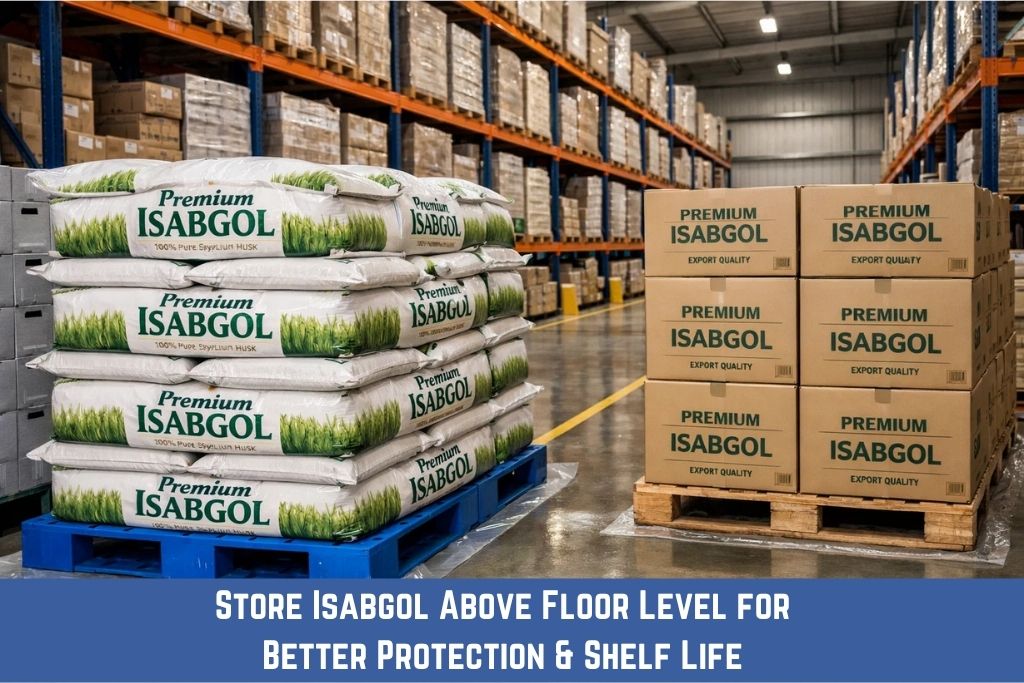
Floor-level storage can become risky in warehouses with humidity, cleaning activity, or unexpected water exposure. Using pallets also improves ventilation around the goods and makes stock inspection easier. In export and wholesale operations, proper pallet storage contributes to better hygiene and more professional warehouse management.
For maximum shelf life, the product should also be stacked carefully to avoid crushing, tearing, or unstable pile formation. Good stacking practice protects both packaging integrity and the condition of the stored material.
Step 6: Keep Isabgol Away from Strong Odors and Contaminants
Isabgol should be stored separately from materials that have strong smells, chemical vapors, dust generation, or contamination risk. Since it is used in food, wellness, and commercial applications, it must be protected from any external influence that may affect product acceptability.
Storage near chemicals, detergents, oils, spices with strong aroma, industrial solvents, or dusty raw materials can create quality problems. Even if contamination is not visible, buyers may reject material that appears compromised or improperly handled. For businesses supplying export or wholesale markets, this separation is an important part of maintaining confidence and commercial hygiene.
Dedicated storage space or clearly segregated storage zones help reduce this risk and support better shelf-life management.
Step 7: Reseal Opened Isabgol Packs Immediately After Use
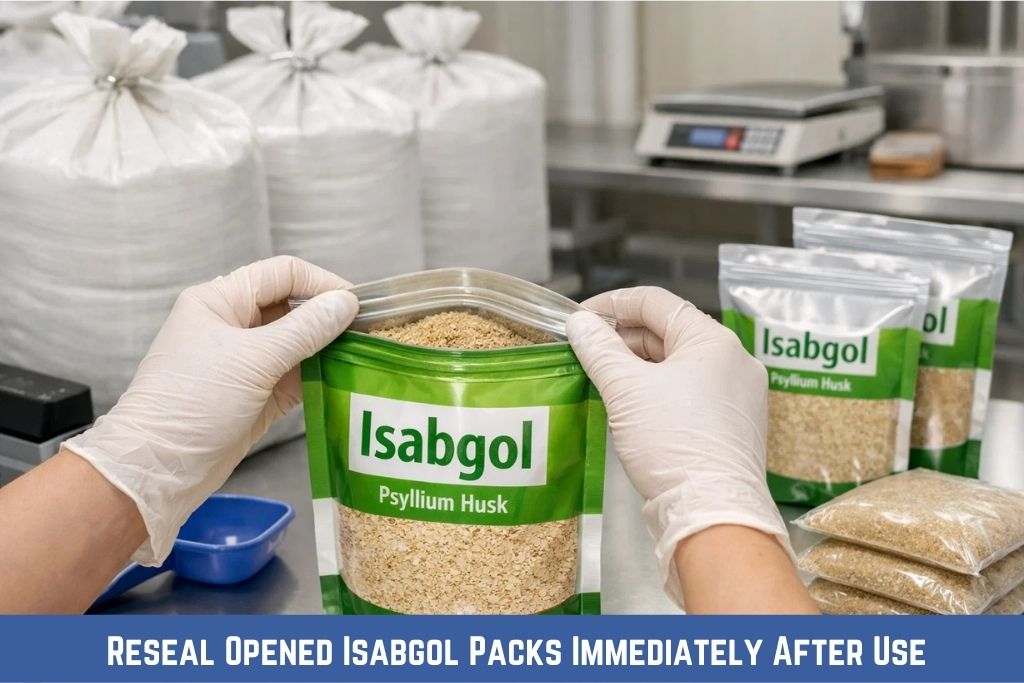
Whenever Isabgol is removed from its original pack for use, testing, or repacking, the pack should be resealed immediately. Open packs are highly vulnerable to moisture absorption, contamination, and accidental exposure to air and dust.
This step is especially important for warehouses, retailers, repackers, and private label operations where one bulk bag may be opened multiple times. Leaving the pack loosely tied or partially open for convenience can significantly reduce storage quality. The longer the product remains exposed, the greater the chance of deterioration.
A disciplined resealing process helps protect the remaining stock and prevents avoidable quality loss. In practical storage terms, this simple habit can greatly extend usable shelf life.
Step 8: Follow First-In, First-Out Isabgol Stock Rotation
Proper storage is not only about where the Isabgol is kept, but also about how inventory is managed. Businesses should follow the First-In, First-Out (FIFO) method so that older stock is used or shipped before newer stock. This prevents unnecessary over-aging and helps ensure that customers receive fresher material.
Without stock rotation, some lots may remain in storage too long while newly received stock is used first. This can create uneven inventory quality and increase the risk of shelf-life problems. FIFO is especially important for wholesale supply, export dispatch, and seasonal inventory buildup.
Clear labeling of arrival dates, batch numbers, and packing dates helps make stock rotation easier and more reliable.
Step 9: Inspect Isabgol Stock Regularly for Packaging and Product Condition
Storage should never be a one-time activity. Regular inspection is essential to ensure that Isabgol remains in good condition throughout its storage period. Warehouse staff or store managers should periodically check for damaged bags, broken seals, moisture signs, pest activity, and poor stacking conditions.
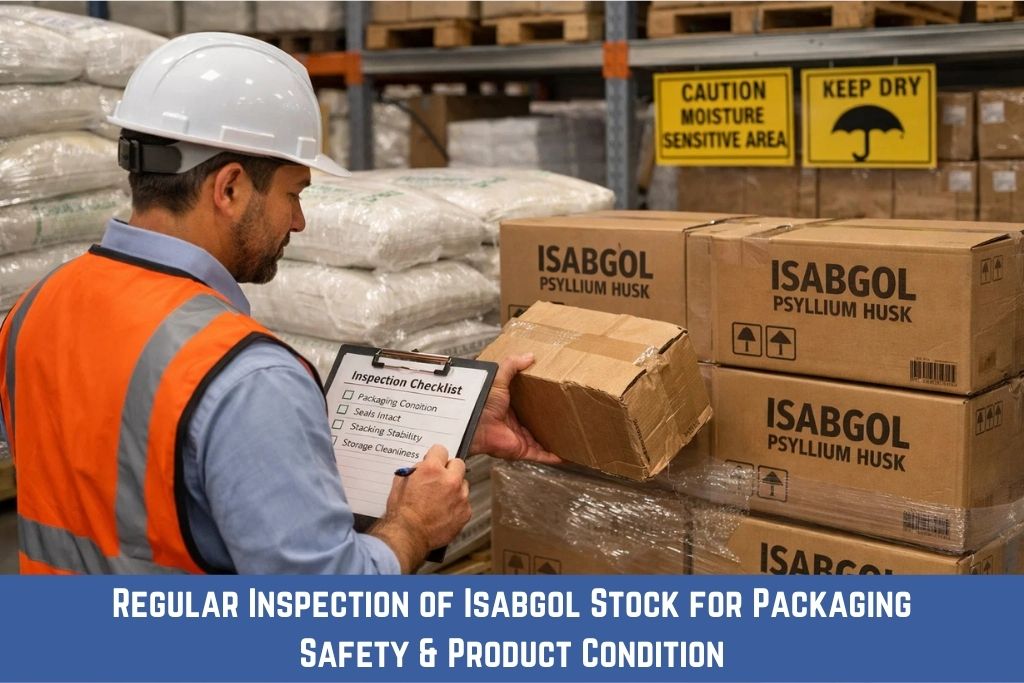
Routine inspections help identify small issues before they become major losses. For example, a slightly damaged bag can be isolated and repacked before contamination spreads or more product is affected. In export and wholesale operations, regular checking also supports better dispatch planning and quality assurance.
A simple inspection system adds strong value because it protects both inventory and customer trust.
Step 10: Maintain Isabgol Good Handling Practices During Movement and Dispatch
Even if Isabgol is stored correctly, rough handling during movement can damage the packaging and reduce product safety. Bags and cartons should be handled carefully during loading, unloading, internal shifting, and dispatch preparation. Dropping, dragging, or over-compressing packs can cause tearing or weaken seals.
Handling teams should be trained to move the material with care and keep it protected from sudden environmental exposure during transport preparation. Dispatch areas should also remain clean and dry so that the product does not lose quality during the final stage of storage.
Proper handling completes the storage process. Long shelf life depends not only on where the product is kept, but also on how consistently it is protected from arrival to shipment.

Conclusion
Storing Isabgol properly for maximum shelf life is a straightforward but highly important process. The key principles are dryness, cleanliness, secure packaging, protection from heat and sunlight, proper stock rotation, and disciplined handling. When these steps are followed carefully, Isabgol can retain its quality, market value, and usability for a much longer period.
For wholesale suppliers, exporters, retailers, and private label businesses, proper storage is also a sign of professionalism. It supports customer satisfaction, lowers the risk of product complaints, and protects the performance of the product across its commercial journey. A well-managed storage system can make a significant difference in both quality preservation and business reliability.
FAQs
Why is moisture control important when storing Isabgol?
Moisture control is important because Isabgol absorbs water easily. If exposed to humidity, it may clump, lose flowability, and suffer a decline in quality.
Can Isabgol be stored on the floor?
It is better not to store Isabgol directly on the floor. Using pallets or racks protects it from floor moisture, dirt, and accidental water exposure.
Should Isabgol be kept in sunlight?
No, Isabgol should be kept away from direct sunlight. Excess heat and sunlight can affect packaging condition and reduce storage stability.
What type of packaging is suitable for storing Isabgol?
Moisture-resistant, well-sealed, and durable packaging is best for storing Isabgol. Strong bags with inner liners or airtight containers are commonly preferred.
Why should opened Isabgol packs be resealed quickly?
Opened packs are more vulnerable to moisture, dust, and contamination. Immediate resealing helps preserve the remaining product and extend its shelf life.
Can Isabgol absorb odors from nearby products?
Yes, storing Isabgol near strong-smelling materials can affect its commercial acceptability. It should be kept away from chemicals, spices, oils, and other odor-heavy products.
What is FIFO in Isabgol storage?
FIFO means First-In, First-Out. It ensures older stock is used or shipped before newer stock so that inventory does not remain unused for too long.
How often should stored Isabgol be inspected?
Stored Isabgol should be inspected regularly for packaging damage, moisture signs, pest issues, and overall product safety. Routine checks help prevent larger storage losses.
Does handling affect Isabgol shelf life?
Yes, rough handling can damage the packaging and expose the product to contamination or moisture. Careful movement is part of proper storage management.

Mihir Shah is the CEO of Giriraj Enterprise, a trusted manufacturer, supplier, and exporter of Psyllium products, whole spices, ground spices, herbal products, guar gum and other agro products including Psyllium Husk, Psyllium Seeds, Psyllium Husk Powder and Kha Kha Powder. Founded in 1973 and based in Unjha, Gujarat, Giriraj Enterprise has grown significantly under Mihir’s leadership, establishing itself as a trusted name in the global market. With a focus on high-quality standards and adherence to international food norms, the company serves a wide customer base across the globe.
A strategic thinker with a passion for sustainable growth, Mihir has played a pivotal role in expanding the company’s production capacity, which now stands at 3,000 quintals per month, and in ensuring that Giriraj Enterprise remains at the forefront of innovation in the industry. His commitment to quality is reflected in the company’s stringent in-house quality testing and third-party verification, ensuring that all products meet the highest standards of excellence. He is dedicated to driving customer satisfaction by offering fast, reliable services both domestically and internationally.
Through his writing, Mihir shares valuable insights and knowledge about Psyllium, spices, herbal and other agro products, educating readers on their benefits and the role they play in promoting health and well-being. His goal is to provide factual, transparent information to help consumers and businesses make informed decisions.