


AI Summary

Indian whole spices are experiencing rising import demand across the Middle East, Europe and North America. This guide helps whole spices exporters, suppliers and manufacturers understand regional buying preferences, compliant packaging formats and import regulations – with actionable insights for scaling export business to key global markets.

Whole Spices Export Landscape: What Global Buyers Are Seeking Today

The global appetite for Indian-origin whole spices has grown considerably over the past decade, fueled by ethnic food trends, clean-label consumer movements and a renewed interest in functional ingredients. For whole spices exporters operating from India, understanding what specific regions demand – and how they want it delivered – is no longer optional. It directly determines whether a shipment clears customs or earns a repeat order.

Giriraj Enterprise, a trusted name among whole spices manufacturers and suppliers in India, works with buyers across multiple continents and has observed first-hand how regional demand patterns diverge sharply across the Middle East, Europe and North America.

Get Bulk Psyllium, Spices & Grains QUOTES TODAY!

WhatsApp

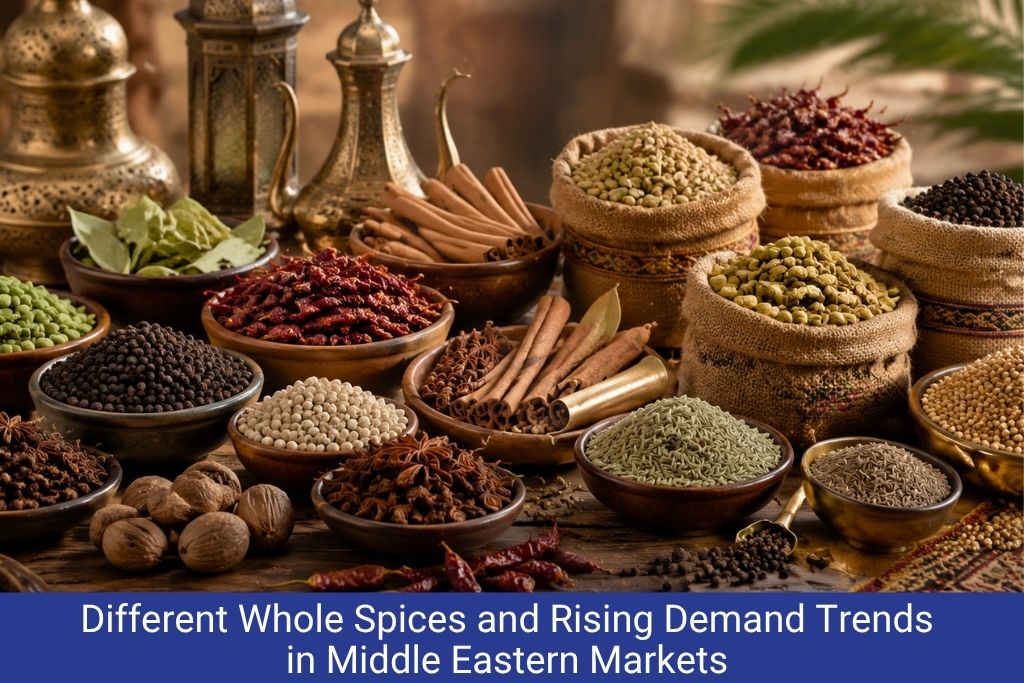
Different Whole Spices and Key Spice Demand in the Middle East

The Middle East remains one of the most consistent import destinations for Indian whole spices, driven by culinary tradition, large South Asian diaspora communities and a robust food manufacturing sector across the UAE, Saudi Arabia, Qatar, Oman and Kuwait.

Cumin seeds top the procurement list for most Middle Eastern food companies and whole spices wholesale buyers. The region prefers bold, aromatic cumin – specifically the Gujarat-origin variety – in machine-cleaned grades with moisture content below 10%. Fennel seeds and coriander seeds also move in high volumes for spice blending and ready-meal applications.

Red chillies, particularly dried whole variants with high colour value, are in strong demand across the Gulf for traditional rice dishes and meat preparations. Nigella seeds (kalonji) hold cultural significance in Arab cuisine and halal food manufacturing, making them a consistent high-volume item. Sesame seeds, especially hulled white varieties, are purchased in large bulk quantities for tahini production and bakery applications.

For whole spices suppliers targeting this region, halal certification is mandatory. Buyers in the UAE and Saudi Arabia additionally require SFDA compliance and country-of-origin documentation. Packaging preferences lean toward multi-layered PP woven bags of 25 kg to 50 kg for bulk and vacuum-sealed 1 kg retail packs for branded markets.

Whole Spices and Its Regulatory Compliance for European Import Markets

Europe operates under one of the strictest food import frameworks globally. The EU’s General Food Law, RASFF alerts and country-specific MRL (Maximum Residue Limits) requirements make compliance non-negotiable for any whole spices exporter seeking long-term market access.

Germany, the UK, the Netherlands, France and Spain are among the top destination markets. Fenugreek seeds have seen rising demand from the health food, supplement and functional food sectors across these markets. Ajwain seeds are increasingly sourced by European herbal supplement companies due to their digestive applications.

Dill seed commands consistent demand from German and Eastern European food processors for pickling and bread applications. Senna leaves and senna pods are imported largely for pharmaceutical and nutraceutical manufacturers, particularly in Germany, France and the UK – these require compliance with European Pharmacopoeia standards and organic certification where applicable.

Stevia leaves are entering EU markets through health food retailers and sugar-free product manufacturers, making them a growth opportunity for Indian suppliers with organic certification. Bay leaf, cinnamon and chilli flakes are steady movers in the European food service sector, with buyers preferring food-grade graded stock tested for aflatoxins, pesticide residues and microbial load.

Giriraj Enterprise aligns its export documentation with EU Entry Conditions and supports buyers with required certificates including phytosanitary certificate, fumigation certificate and third-party lab test reports. For the UK post-Brexit, UKCA compliance and DEFRA import rules apply separately from EU regulations.

Packaging for Europe must include full ingredient labelling in local languages, country of origin, best-before dates and allergen declarations where relevant. Retail buyers prefer 50g to 500g glass jars or resealable pouches; bulk B2B buyers use 5 kg to 25 kg food-grade bags.

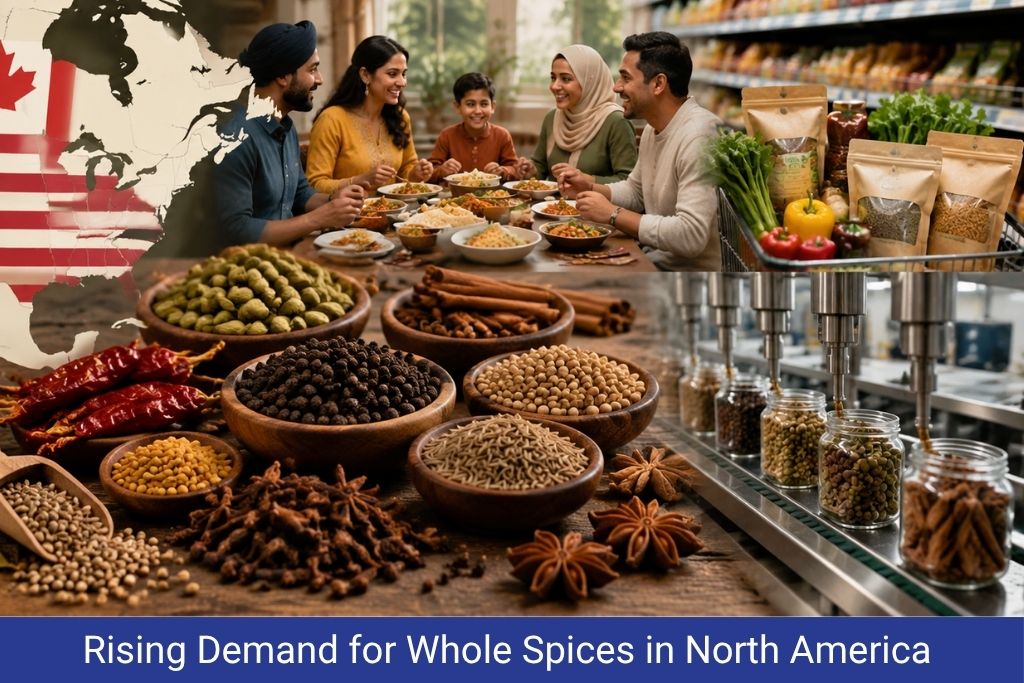
Shifting Demand Patterns of Whole Spices in North America

The United States and Canada represent high-value, high-compliance markets where demand is growing – but buyer expectations are exacting. The primary drivers include the expanding South Asian, Mexican and Middle Eastern diaspora communities, the organic food retail boom and food manufacturers scaling ethnic cuisine product lines.

Coriander seeds and cumin seeds are among the highest-volume items imported into the US from India, used extensively in spice blending, snack seasoning and packaged food manufacturing. Fennel seeds are in demand both for culinary use and as a natural digestive ingredient in wellness products. Chilli flakes, dried red chillies and turmeric (whole dried rhizomes) are sourced heavily by spice packers and private-label brands.

Turmeric, in particular, has seen a surge in import volumes tied to the wellness supplement market and golden milk product trends. North American buyers prioritise curcumin content specifications, low heavy metal levels and organic certification.

For whole spices wholesale buyers in North America, FDA compliance under 21 CFR (Code of Federal Regulations) is the baseline. The FDA’s FSMA (Food Safety Modernization Act) adds Foreign Supplier Verification Program (FSVP) obligations for importers, meaning Indian exporters must demonstrate documented food safety systems, including HACCP or ISO 22000 certification.

Senna pods and senna leaves are imported into the US primarily by nutraceutical and herbal supplement companies, requiring compliance with FDA dietary supplement regulations and USP monograph standards. Sesame seeds are subject to allergen labelling under the FASTER Act effective 2023, requiring clear disclosure on packaging.

Nigella seeds are gaining shelf space in natural grocery channels and online spice retailers. Stevia leaves, as a GRAS (Generally Recognized as Safe) ingredient, are imported for use in beverage and food formulations. Ajwain seeds and bay leaf are consumed mainly within South Asian retail channels and food service operators.

Packaging preferences in North America are moving toward sustainable formats – kraft paper pouches, recyclable tins and compostable bags – particularly for premium retail. B2B buyers use 10 lb to 50 lb food-grade poly-woven sacks with moisture barriers.

Whole Spices Wholesale Pricing: What Drives Buying Decisions across Regions

Beyond compliance, buyers across all three regions evaluate whole spices suppliers on consistent quality grading, lead times and pricing transparency. Middle Eastern buyers typically operate on long-term supply agreements with annual price reviews. European buyers increasingly prefer certified organic or Rainforest Alliance-compliant sourcing. North American buyers prioritise traceability, clean-label credentials and supply chain transparency documentation.

Giriraj Enterprise offers competitive FOB pricing from major Indian ports including Mundra, Nhava Sheva (JNPT) and Chennai, with flexible Incoterms to suit buyer logistics preferences across all three regions.

Get Your Custom Bulk Order Quote! Contact Us

WhatsApp

Conclusion

The global export opportunity for Indian whole spices is substantial, but success depends on aligning product quality, certification and packaging with the specific regulatory and commercial demands of each target region. Whether you are sourcing cumin seeds for the UAE, fenugreek for Germany or turmeric for the US wellness market, understanding what buyers actually require – beyond the spice itself – is what separates consistent exporters from occasional shippers. Giriraj Enterprise brings that regional market intelligence, compliance readiness and supply reliability to buyers seeking a dependable whole spices supplier from India.

FAQs

What certifications do Indian whole spices exporters need for EU markets?

At minimum, exporters need a phytosanitary certificate, third-party lab test reports for MRLs and aflatoxins and ideally an ISO 22000 or FSSC 22000 food safety certification. Organic-certified products additionally require EU Organic approval.

Which Indian whole spices are in highest demand in the Middle East?

Cumin seeds, coriander seeds, red chillies, nigella seeds and sesame seeds consistently top procurement lists in the Gulf region, with halal certification being a prerequisite for most buyers.

How should whole spices be packaged for North American retail buyers?

North American retail buyers prefer resealable pouches, kraft paper bags or glass jars in consumer-friendly sizes (1 oz to 16 oz), with clear allergen labelling origin disclosure and best-before dates meeting FDA labelling standards.

Are senna leaves and senna pods regulated differently from food spices in export markets?

Yes - senna leaves and senna pods are typically classified as medicinal/botanical ingredients and require compliance with pharmacopoeia standards, additional GMP certifications and specific import permits in the EU, US and Canada.

What is the typical minimum order quantity for whole spices wholesale export?

Most whole spices manufacturers and exporters accept MOQs starting at 1 metric ton per SKU for bulk orders, though this can vary based on spice variety origin season and destination country logistics requirements.

<< 1 >>