


AI Summary:

This article explores how B2B food manufacturers integrate quinoa seeds as a functional ingredient across ready-to-eat cereals, protein bars, baby food, pasta, flour blends and nutraceutical supplements. It also covers sourcing considerations, private label opportunities and how Giriraj Enterprise support procurement from quinoa seed manufacturers, exporters and suppliers – including those based in India.

Quinoa Seeds as a Functional Ingredient: Why Food Manufacturers Are Prioritising Them

Quinoa seed has moved well beyond health food stores. Today, it sits at the center of formulation strategies across multiple food and nutraceutical categories. B2B buyers – ranging from contract manufacturers to large FMCG brands – are incorporating it not because it is trendy, but because it performs. It delivers complete protein, gluten-free compliance and a neutral flavour profile that blends cleanly across formats. For food technologists, that combination is rare and valuable.

Unlike many plant proteins that require significant flavour masking or texture correction, quinoa integrates with minimal processing adjustments. This makes sourcing from reliable quinoa seed suppliers a strategic, not merely transactional, decision.

Export-Ready Psyllium, Spices & Grains Await! Contact Now

WhatsApp

Quinoa Seed Manufacturers and the Ready-to-Eat Cereal Segment: Formulation Fit

Ready-to-eat cereals are one of the highest-volume application areas for quinoa seeds in industrial food manufacturing. Puffed quinoa, quinoa flakes and toasted quinoa pieces are used as base ingredients or inclusions in granola blends, muesli mixes and fortified breakfast cereals. The seed’s natural crunch, heat stability and nutritional density make it a preferred alternative or complement to oat-based formats.

For B2B cereal manufacturers, sourcing from qualified quinoa seed manufacturers ensures batch-to-batch consistency in moisture content, particle size and protein percentage – all critical for automated production lines. Procurement teams evaluate suppliers on food-grade certifications, pesticide residue compliance and minimum order flexibility.

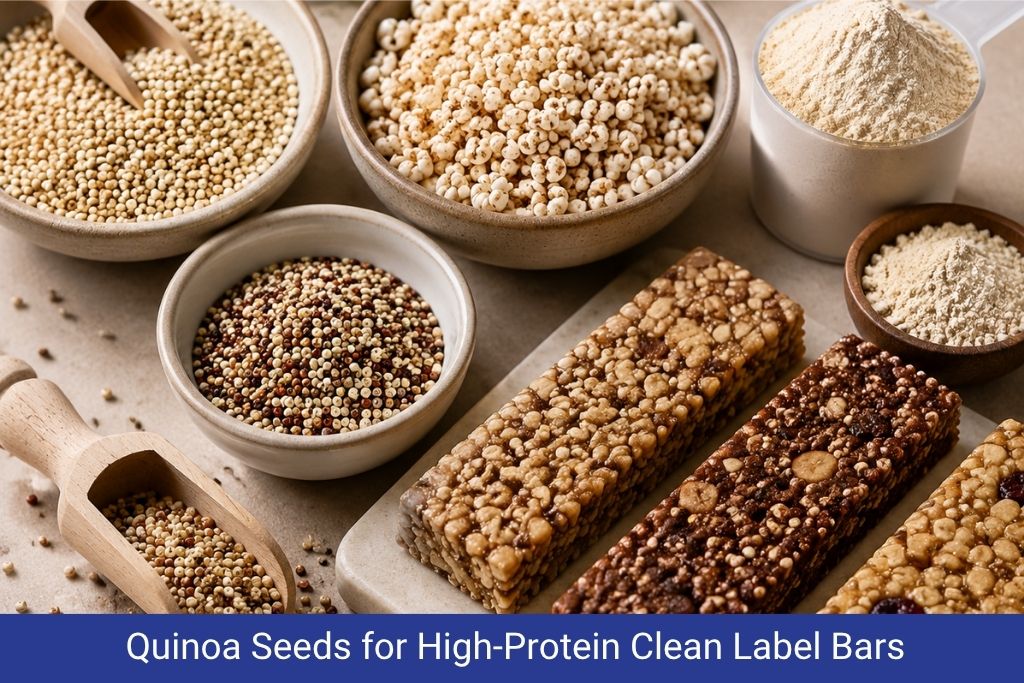
Quinoa Seed Suppliers for Protein Bar Manufacturing: Texture, Binding and Protein Density

The protein bar segment demands ingredients that contribute to macronutrient targets without compromising texture or shelf stability. Quinoa seeds – used whole, puffed or as quinoa protein isolate – help formulators hit 15–25g protein per bar while maintaining a clean label. Unlike whey or soy isolates, quinoa protein carries no allergen concerns and aligns with vegan and flexitarian positioning.

Quinoa seeds suppliers serving the sports nutrition and functional snack segment typically offer crisped quinoa, quinoa flour and texturised quinoa formats. When evaluating partners, bar manufacturers assess water activity compatibility, binding behaviour under compression and oil absorption rates – technical parameters that go beyond general ingredient specs.

Quinoa Seeds in Baby Food: Safety Standards and Nutritional Compliance

Baby food is perhaps the most compliance-intensive application for any ingredient. Quinoa seeds have gained traction in infant cereal blends, stage-2 purees and toddler snack formats due to their hypoallergenic status, digestibility and micronutrient content (iron, magnesium, zinc). However, this category demands the strictest supplier qualification process.

B2B buyers sourcing for baby food formulations prioritise heavy metal testing (especially cadmium and lead), saponin removal verification and compliance with Codex Alimentarius and EU 2023 infant food regulations. Quinoa seed exporters working in this segment must provide full traceability documentation, country of origin certification and third-party lab reports as standard deliverables – not optional add-ons.

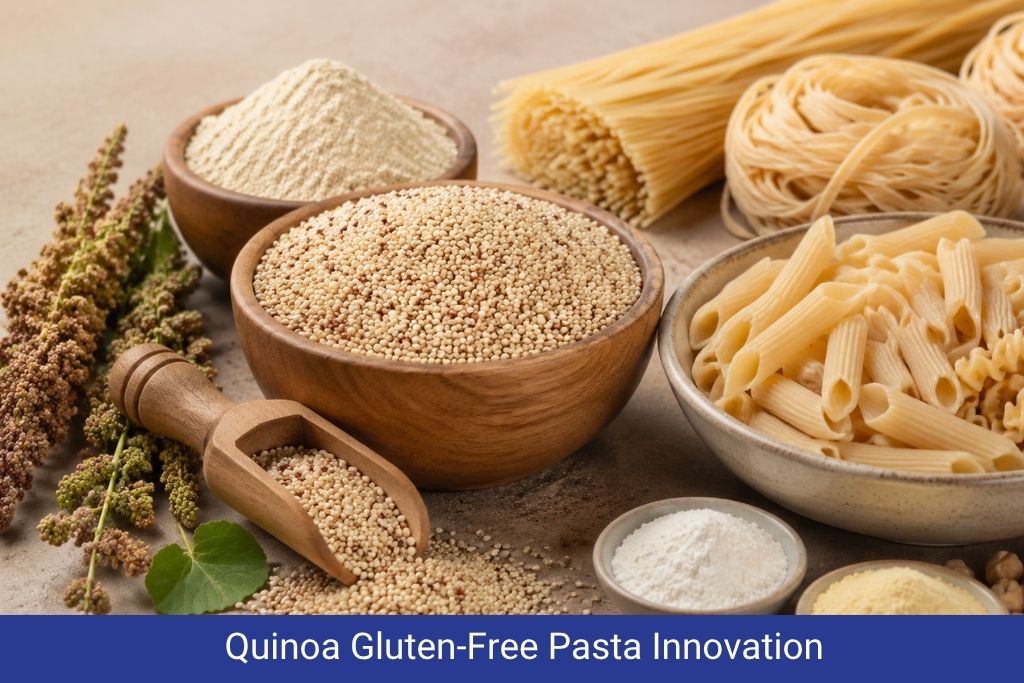
Quinoa Seed India Suppliers in Pasta and Noodle Manufacturing: Gluten-Free Innovation

The gluten-free pasta and noodle market has expanded significantly, driven by both celiac disease management and broader consumer wellness trends. Quinoa seeds – processed into flour – are blended with rice flour, corn starch or chickpea flour to create pasta formulations with improved protein content and lower glycaemic index compared to traditional wheat-based products.

Quinoa seed India-based suppliers have emerged as competitive sourcing options for pasta manufacturers in Europe, the Middle East and Southeast Asia, offering cost efficiency and growing technical capability. However, buyers must assess starch-to-protein ratios, gelatinisation behaviour and dough elasticity profiles when qualifying quinoa flour from new suppliers – as these parameters directly impact extruder settings and product yield.

Quinoa Seeds in Flour Blends: Functional Performance in Baked Goods Manufacturing

Industrial bakers and flour blend manufacturers use quinoa flour as a functional enrichment agent in multigrain bread, flatbreads, crackers and nutrition-dense biscuits. Quinoa contributes to increased protein and dietary fibre content without significantly altering flavour, making it suitable for clean-label, high-protein bakery SKUs.

From a technical standpoint, quinoa flour behaves differently from wheat flour – it lacks gluten structure, so it is almost always used in blended formats (typically 10–30% inclusion). B2B flour blend from quinoa seed manufacturers must standardise for ash content, particle fineness (mesh size) and fat content to ensure consistent water absorption and shelf life across batches.

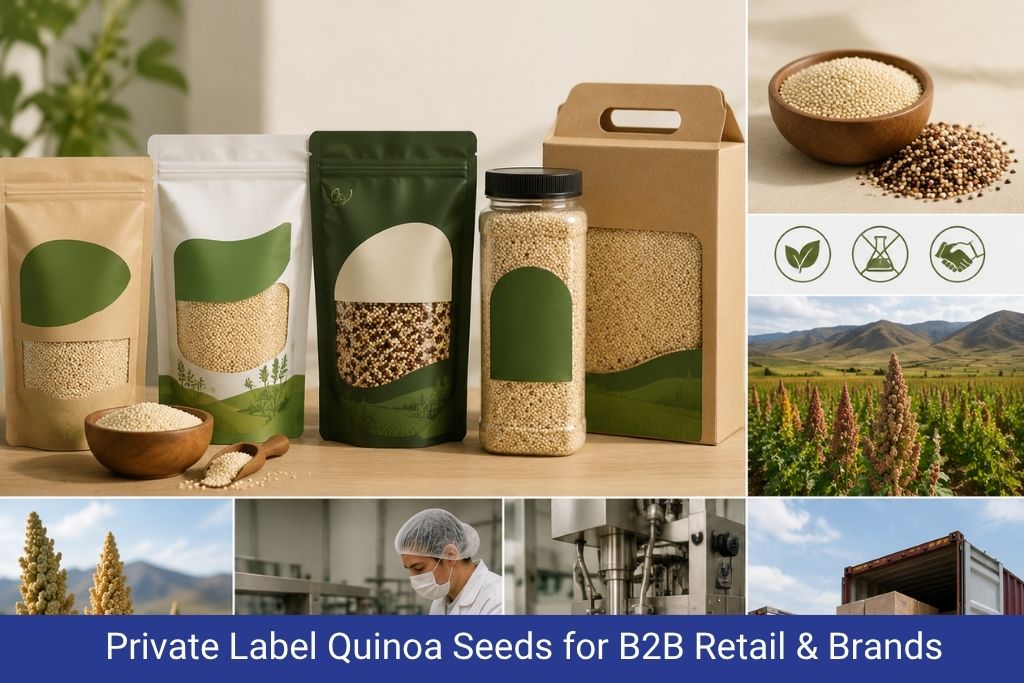
Private Label Quinoa Seeds: Opportunities for B2B Retailers and Brand Owners

Private label quinoa seeds represent a growing procurement category for retail chains, health food distributors and e-commerce brands that want to launch their own line of organic or specialty grains. Private label quinoa seeds allow buyers to customise packaging, portion formats (500g, 1kg, bulk), certifications (organic, non-GMO, fair trade) and origin labelling.

Quinoa seeds private label manufacturers offer end-to-end services – from raw material sourcing in Peru or Bolivia to contract cleaning, grading and packaging in export-ready formats. Giriraj Enterprise support B2B buyers in identifying and qualifying private label partners who meet retailer compliance and traceability requirements. For brands entering the functional food space, private label quinoa is a low-barrier, high-margin entry point.

Quinoa Seed Exporters and Nutraceutical Applications: Extraction, Encapsulation and Supplement Formats

The nutraceutical sector uses quinoa in ways that go far beyond whole grain. Quinoa saponin extracts are used for their emulsifying and bioactive properties in supplement capsules and functional beverages. Quinoa protein concentrate and isolate are used in meal replacement powders, clinical nutrition products and sports recovery formulations.

For nutraceutical manufacturers, sourcing from quinoa seed exporters who can supply pharmaceutical-grade or food-grade protein concentrates requires a different evaluation framework than commodity grain procurement. Key parameters include protein purity (%), amino acid profile certification, solubility index and compliance with GMP manufacturing standards. Exporters who can supply consistent, high-specification quinoa inputs are in short supply globally – making long-term supply agreements increasingly common in this segment.

Connect with Us for Export Deals! Contact Us

WhatsApp

Conclusion

Quinoa seed has established a firm role in modern food manufacturing – not as a novelty ingredient, but as a functional, versatile input across cereals, bars, baby food, pasta, flour blends and nutraceuticals. For B2B buyers, the sourcing decision goes beyond price: it requires rigorous supplier qualification, technical alignment and an understanding of application-specific performance parameters. Whether working with quinoa seed exporters for bulk commodity procurement or quinoa seeds private label manufacturers for branded retail lines, Giriraj Enterprise provide the sourcing intelligence and supplier network needed to make procurement decisions that hold up at scale and under regulatory scrutiny.

FAQs

What certifications should B2B buyers request from quinoa seed suppliers for food manufacturing?

Buyers should request organic certification, non-GMO verification, FSSC 22000 or BRC food safety certification, heavy metal testing reports and country of origin documentation as standard requirements.

How do quinoa seed manufacturers differ from general grain traders in B2B procurement?

Dedicated quinoa seed manufacturers offer processing capabilities and technical datasheets, while general traders typically supply unprocessed raw material without application-specific support.

What is the typical MOQ for private label quinoa seeds from export-ready suppliers?

Most quinoa seeds private label manufacturers set minimum order quantities between 500kg to 5 metric tonnes depending on packaging format, certification requirements and customisation level.

Are quinoa seed India suppliers competitive for European food manufacturers?

Yes - quinoa seed India suppliers offer competitive pricing and improving quality standards, though buyers should conduct factory audits and request recent third-party lab reports to verify compliance with EU import regulations.

Can quinoa seed be used in allergen-free manufacturing environments?

Quinoa is naturally gluten-free and free from the top 14 EU allergens, making it suitable for allergen-free production lines, provided cross-contamination controls are verified through supplier documentation.

<< 1 >>