

AI Summary

The global functional food and nutraceutical industry is rapidly adopting chia seeds as a high-value ingredient due to their superior nutritional profile. This article explores the global market landscape, key trade routes, growth drivers and how chia seed suppliers in India – including Giriraj Enterprise – are capturing international demand through competitive pricing, quality certifications and private label manufacturing capabilities.

Chia Seeds: Market Size and Global Trade Overview

Chia seeds have emerged as one of the fastest-growing commodities in the global functional food and nutraceutical sector. The global chia seed market has been witnessing consistent upward momentum, fueled by expanding demand for plant-based nutrition, clean-label products and functional superfoods across North America, Europe and Asia-Pacific markets.

Globally, chia seed trade has traditionally been dominated by supply from Latin American countries such as Mexico, Bolivia, Paraguay and Argentina. However, India has entered this trade corridor as a cost-competitive supplier and processing hub, with chia seed manufacturers in India increasingly meeting bulk and private label demands from international buyers seeking supply chain diversification.

Get Bulk Psyllium, Spices & Grains QUOTES TODAY!

WhatsApp

Growth Drivers Reshaping the Functional Nutraceutical Segment

Several macro-level forces are accelerating chia seed consumption within the nutraceutical and functional food segments globally.

Rising consumer awareness around omega-3 fatty acids, dietary fiber, plant-based protein and antioxidant-rich ingredients has made chia one of the most sourced raw materials for supplement brands, food processors and health-oriented retail chains. The benefits of chia seeds – including support for digestive health, cardiovascular wellness, blood sugar regulation and weight management – align directly with health claims permitted under functional food regulations in the EU, US and GCC markets.

The post-pandemic wellness boom further amplified demand, as consumers globally shifted toward preventive healthcare and immunity-supporting diets. Clean-label product formulations, vegan food lines and fortified beverages increasingly list chia as a primary or secondary ingredient, driving procurement volumes substantially.

Additionally, regulatory support for nutraceutical imports in key markets such as Germany, the Netherlands, the UAE, Australia and Canada has reduced trade barriers, enabling a broader base of chia seed exporters to compete in these high-value markets.

Key Importing Countries and Its Procurement Patterns

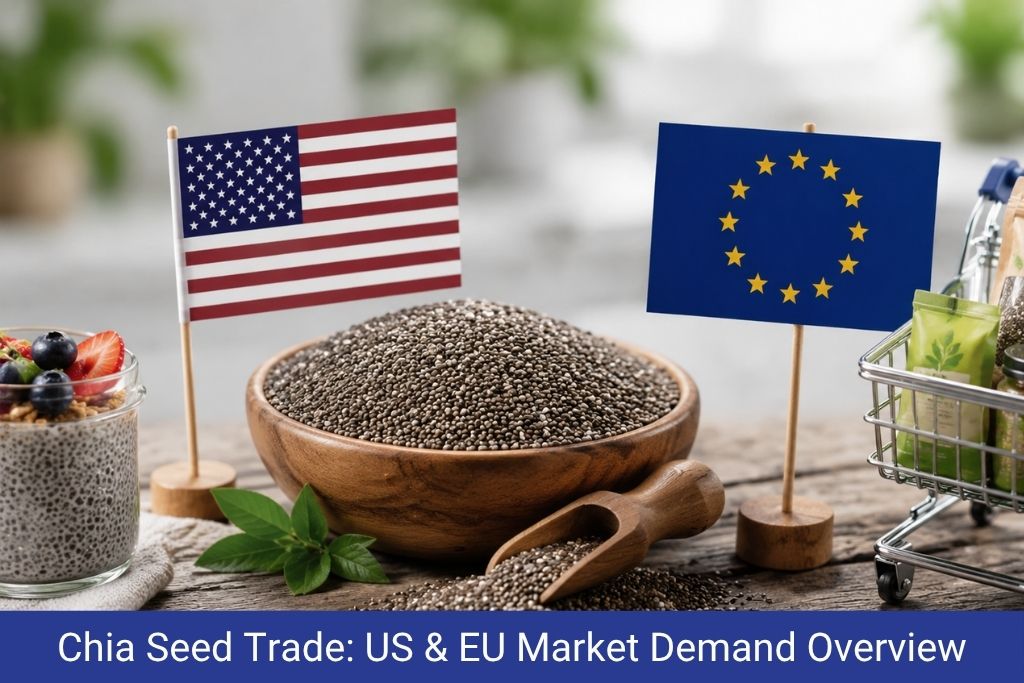
The United States remains the largest importer of chia seeds globally, absorbing a significant share of worldwide exports due to its mature health food retail market. The EU – led by Germany, the Netherlands, the UK and France – is the second-largest consuming bloc, driven by organic and clean-label food product mandates.

The GCC region, particularly the UAE and Saudi Arabia, has recorded a sharp uptick in chia seed imports in recent years, driven by a growing base of health-conscious urban consumers and the expansion of health-food retail chains. Australia, Japan and South Korea are also emerging as significant chia-importing nations, especially for organic and non-GMO certified variants.

Bulk importers in these regions typically procure chia seeds through distributors, commodity traders or directly from chia seed suppliers, prioritizing consistency in quality, certifications such as USDA Organic, EU Organic, Kosher and Halal, alongside competitive FOB pricing.

Chia Seed in India: Production Landscape and Export Growth

Chia cultivation in India has grown considerably over the past decade, with production concentrated in states such as Madhya Pradesh, Rajasthan and Maharashtra. Though India is not yet among the top global producers by volume, its agro-climatic suitability, lower production costs and existing infrastructure for seed processing and export have enabled rapid capacity scaling among Indian suppliers.

Chia seed in India is increasingly cultivated under contract farming models, where processors and exporters work directly with farming clusters to ensure consistent crop quality, traceability and compliance with international phytosanitary standards. This farm-to-export integration has become a distinguishing factor for Indian chia seed exporters competing against more established Latin American origins.

Giriraj Enterprise is among the trusted names in India’s chia seed export landscape, offering a well-structured supply chain that connects domestic cultivation with international market requirements. The company has built credibility among global buyers by maintaining stringent quality benchmarks across cleaning, grading and packaging processes.

Chia Seeds Manufacturers in India: Capabilities and Competitive Advantages

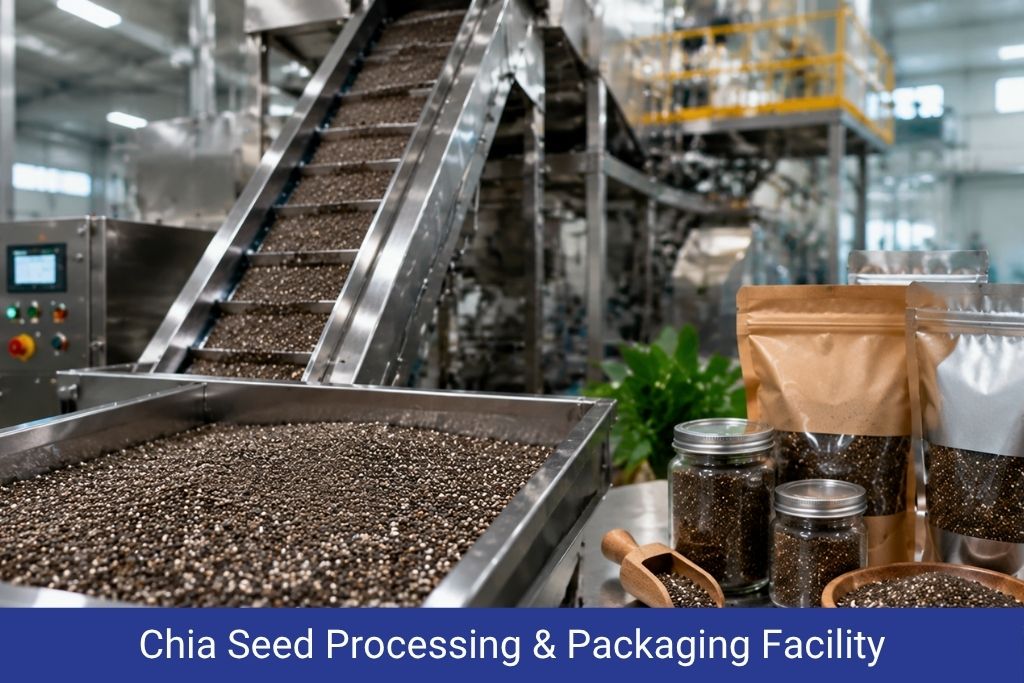
Chia seeds manufacturers in India have developed multi-tiered processing capabilities that serve both commodity bulk buyers and high-specification nutraceutical brands. Key capabilities include moisture-controlled processing, optical sorting for purity and multi-format packaging suited to retail, food service and industrial ingredient segments.

Indian manufacturers also offer competitive advantages in terms of cost efficiency compared to European or North American processors, without compromising on certifications. Many chia seeds manufacturers in India now hold FSSAI, ISO, HACCP and organic certifications, which are prerequisites for market entry into the EU, UK and North American retail supply chains.

The availability of skilled labor, proximity to raw material cultivation zones and robust logistics connectivity through major ports such as Nhava Sheva (JNPT), Mundra and Chennai position India as a reliable origin for long-term chia seed procurement contracts.

Private Label Chia Seeds: A Fast-Growing Segment for Indian Exporters

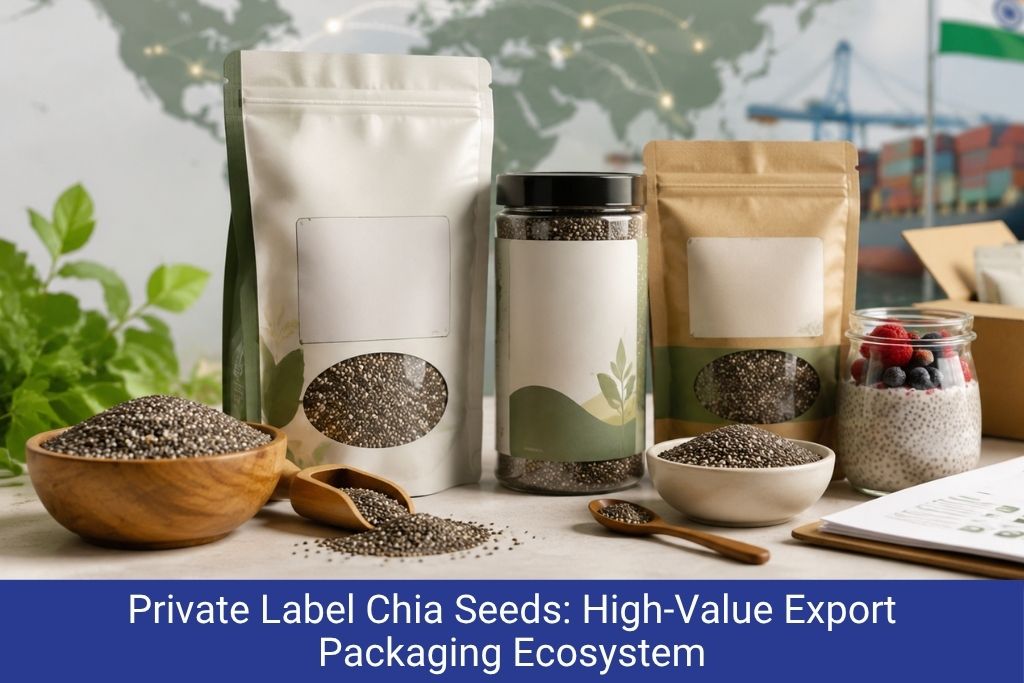
Private label chia seeds represent one of the most strategically significant and high-margin segments within the global chia trade. International health food brands, supermarket chains and e-commerce supplement companies increasingly prefer to source finished or semi-finished chia products under their own brand identity rather than established commodity labels.

Chia seeds private label manufacturers in India have responded to this demand by investing in consumer-ready packaging lines, custom formulation capabilities and regulatory documentation support for destination markets. This includes country-of-origin labeling, allergen declarations, nutritional fact panels compliant with FDA or EU food labeling directives and retail-ready shelf-life optimization.

Giriraj Enterprise offers private label chia seeds solutions tailored to international buyer specifications – covering pack sizes, packaging materials, branding requirements and certification documentation – making the process streamlined for importers seeking ready-to-market products from a single source.

The private label model also supports smaller health food brands entering the market without the capital investment required for dedicated manufacturing, enabling a wider range of global buyers to source from Indian chia seed suppliers cost-effectively.

Chia Seed Exporters from India: Meeting International Quality Standards

For chia seed exporters operating from India, adherence to international quality and food safety frameworks is non-negotiable. Export-grade chia seeds must meet parameters covering moisture content, foreign matter presence, microbial load and pesticide residue limits as prescribed by importing country authorities.

Indian exporters have made notable progress in aligning with Codex Alimentarius standards, EU Maximum Residue Levels (MRLs) and USDA National Organic Program (NOP) requirements. This has allowed Indian chia seed suppliers to access premium retail and nutraceutical channels that were previously dominated by Latin American or European processors.

Giriraj Enterprise maintains export documentation standards that facilitate smooth customs clearance across key importing regions, including phytosanitary certificates, certificates of analysis and organic transaction certificates where applicable.

Get Your Custom Bulk Order Quote! Contact Us

WhatsApp

Chia Seeds Suppliers and the Shift toward Traceability-Led Trade

Modern chia seeds suppliers are no longer evaluated solely on price. Global buyers – particularly in the nutraceutical, sports nutrition and functional beverage segments – now require detailed supply chain transparency, from seed variety and cultivation geography to processing facility audits and third-party lab testing.

Traceability-led procurement has become a standard expectation among European and North American importers and Indian suppliers who invest in batch-level documentation, QR-code-based traceability systems and blockchain-linked supply chain records are gaining a competitive edge in high-value tender processes.

This shift also reflects broader ESG (Environmental, Social and Governance) commitments among global food brands, which prefer sourcing from suppliers who can demonstrate sustainable agricultural practices, fair labor policies and reduced carbon footprint in logistics.

Conclusion

The global chia seed trade is evolving beyond commodity supply into a sophisticated, certification-driven and traceability-focused industry segment. As international demand from nutraceutical brands, functional food manufacturers and private label buyers continues to grow, Indian chia seed suppliers are well-positioned to meet this demand with competitive pricing, scalable processing infrastructure and strong compliance capabilities. Giriraj Enterprise stands as a credible partner in this space, offering quality-assured chia seeds and tailored export solutions that align with the evolving requirements of the global functional food and nutraceutical industry.

FAQs

What makes chia seeds a key ingredient in the nutraceutical industry?

Chia seeds are valued in nutraceuticals for their dense nutritional composition, including omega-3 fatty acids, dietary fiber and plant-based protein, which support multiple health claims recognized by regulatory bodies globally.

How are chia seeds manufacturers in India serving international markets?

Indian manufacturers supply export-grade chia seeds with international certifications such as USDA Organic, HACCP and ISO, catering to bulk commodity buyers as well as private label and branded nutraceutical clients.

What is driving the demand for private label chia seeds globally?

Growing numbers of health food brands and e-commerce supplement companies prefer private label sourcing to launch market-ready products without investing in their own manufacturing infrastructure.

Which certifications should chia seed exporters hold for EU and US market access?

Exporters targeting the EU and US require certifications such as EU Organic, USDA NOP Organic, HACCP and relevant MRL compliance documentation to meet retail and nutraceutical import standards.

How does Giriraj Enterprise support international buyers sourcing chia seeds from India?

Giriraj Enterprise provides end-to-end export solutions covering quality-certified chia seeds, private label packaging and complete regulatory documentation, enabling international buyers to source efficiently from a single, reliable supplier.

<< 1 >>