





The EU-India FTA 2026: Impact on Psyllium and Spices Industry

January 9, 2026
Mihir Shah
Share At:
Google AI ChatGPT Grok Perplexity

The ratification of the EU-India Free Trade Agreement (FTA) in early 2026 marks a historic turning point for Indian agribusiness. For decades, Indian exporters faced a complex web of non-tariff barriers, stringent sanitary and phytosanitary (SPS) measures, and fluctuating duties.

As a premier manufacturer and wholesale exporter based in Unjha, Giriraj Enterprise is strategically positioned to navigate this new landscape. This article provides a detailed analysis of how the FTA will reshape the market for Psyllium, Spices, and Herbal products across the European Union.

Psyllium Husk and Powder: Breaking the Duty Barrier

Psyllium has long been a staple export to Europe, driven by the continent’s massive health-supplement and gluten-free bakery sectors.

  • Impact: Prior to 2026, while basic customs duties were relatively low, the administrative costs of compliance were high. The FTA streamlines documentation, potentially reducing the “compliance tax” on bulk shipments.
  • The Opportunity: With the elimination of residual tariffs, Indian Psyllium Husk Powder (95% to 99% purity) becomes even more competitive against synthetic fibers.
  • Giriraj Strategy: We are increasing our production of “Euro-Grade” Psyllium, ensuring zero microbial contamination to meet the now-harmonized EU safety standards.

Get Bulk Psyllium, Spices & Grains QUOTES TODAY!

WhatsApp

Whole and Ground Spices: Quality-Led Market Expansion

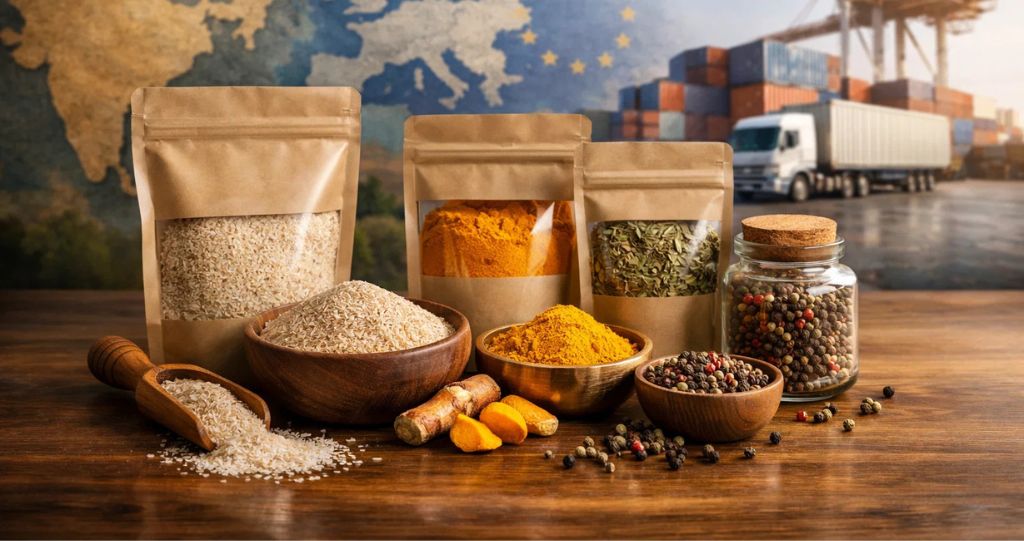
The EU is one of the world’s most sophisticated markets for spices, with a high demand for Cumin, Fennel, and Fenugreek.

  • Impact: The FTA addresses the “Maximum Residue Limits” (MRLs) issue. By aligning Indian testing protocols with EU standards, the risk of “consignment rejection” at European ports (like Rotterdam or Hamburg) is significantly minimized.
  • Product Analysis:
    • Cumin Seeds: Expect a 15-20% surge in demand as the food processing industry in Germany and France seeks reliable, large-scale supply chains.
    • Fennel & Fenugreek: Reduced duties will allow these spices to penetrate the European pharmaceutical and cosmetic industries more deeply.
  • Giriraj Strategy: We are strengthening our “Farm-to-Fork” traceability, allowing European buyers to track the origin of every bulk spice bag.

Kha Kha Powder and Industrial Psyllium

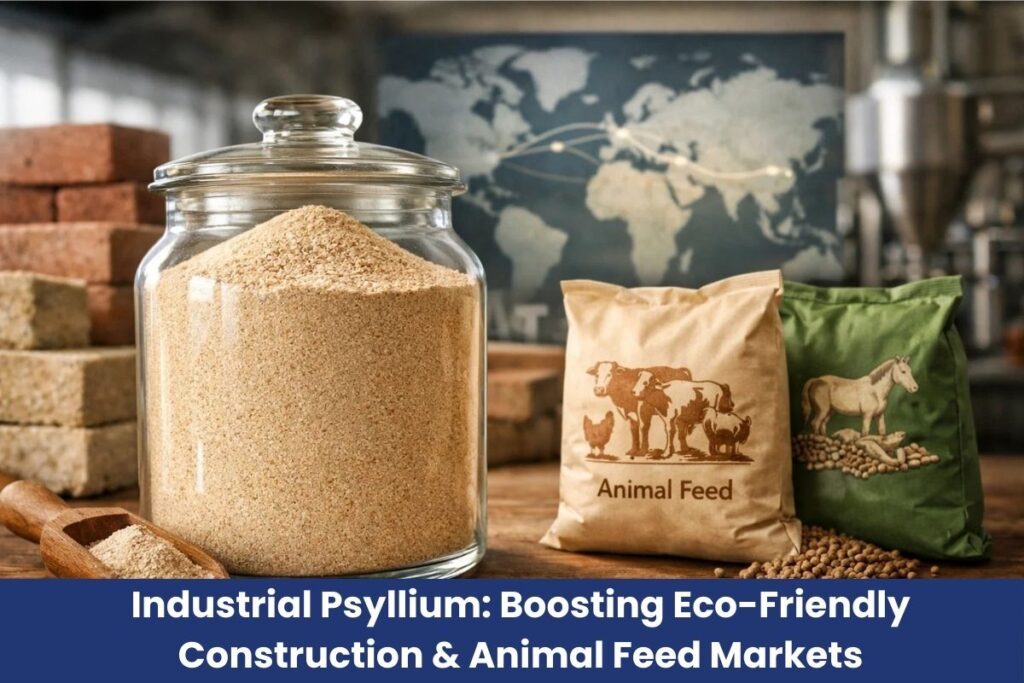
Often overlooked, the industrial applications of Psyllium (Kha Kha Powder) are vital for the European construction and animal feed sectors.

  • Impact: The FTA removes the “Industrial Use” tariffs that previously applied to psyllium byproducts. This makes Indian Kha Kha powder the most viable natural binder for European eco-friendly construction materials.
  • Market Growth: A projected 12% increase in exports to the EU’s animal feed and technical binder markets.

Herbal Products and Botanical Extracts

Europe’s “Green Wave” has created an insatiable appetite for Indian herbs like Senna and herbal powders.

  • Impact: The FTA facilitates the recognition of Indian Traditional Medicine standards. This simplifies the entry of herbal raw materials into the European nutraceutical market.
  • Giriraj Strategy: Expanding our Herbal Products portfolio to include specialized extracts that meet the specific labeling requirements of the EU’s “Novel Food” regulations.

Detailed Impact Matrix: 2026 Outlook

Product Category

EU Market Trend

Anticipated FTA Impact

Psyllium Husk (Organic/Conventional)

High demand for fiber-rich snacks.

0% Duty; Simplified SPS certification.

Ground Spices (Cumin/Mustard)

Growth in “Ready-to-Eat” ethnic meals.

Removal of technical barriers to trade (TBT).

Guar gum

Increased use in vegan dairy alternatives.

Faster customs clearance for “Essential Food Ingredients.”

Herbal Extracts

Shift toward natural preventative medicine.

Better alignment on Ayurvedic/Herbal standards.

Get Your Custom Bulk Order Quote! Contact Us

WhatsApp

Conclusion: Why Europe Should Look to Unjha

The EU-India FTA isn’t just about lower taxes; it’s about trust and transparency. As the barriers come down, the winner will be the exporter who can provide the highest purity at a global scale.

At Giriraj Enterprise, we have spent years preparing for this moment. Our facility in Unjha is ready to serve as the primary gateway for European wholesalers seeking premium Psyllium Husk, Spices, and Herbal Products. By combining India’s agricultural richness with the EU’s regulatory rigor, we are entering a season of unprecedented growth.

FAQs

Will the EU-India FTA eliminate all duties on Psyllium Husk and Spices?

Yes, the agreement finalized in January 2026 is expected to provide immediate duty elimination for spices and agricultural products. Prior to this, Indian exporters faced customs duties of up to 8% on various spice products. This zero-duty access makes Indian psyllium and spices significantly more price-competitive in the European market compared to non-FTA countries.

How does the FTA address the strict EU standards on pesticide residues (MRLs)?

A core pillar of the 2026 FTA is regulatory cooperation. The agreement establishes a framework for aligning Indian testing protocols with EU Maximum Residue Limits (MRLs). For a leading exporter like Giriraj Enterprise, this means more predictable trade and a reduced risk of "border rejections" (which previously occurred due to trace chemicals like Ethylene Oxide or Chlorpyrifos).

Can the FTA help offset the impact of high US tariffs on Indian exports?

Absolutely. With the USA implementing reciprocal tariffs of up to 50% in 2025, the EU-India FTA acts as a vital "strategic pivot." By granting duty-free access to a market of 450 million high-value consumers, the FTA allows Indian wholesale businesses to shift their volume from the expensive US market to a more stable and favorable European trade zone.

What is the "Statement on Origin," and how does it simplify exports?

Under the new agreement, the process of proving a product's origin is being digitized. Exporters can now use self-certification through a "Statement on Origin." This eliminates the need for manual, paper-based "Certificates of Origin" from government agencies for every shipment, significantly reducing the time and administrative cost of shipping bulk Kha Kha Powder or Whole Spices to the EU.

Will the agreement protect unique Indian products like "Unjha Cumin"?

The FTA is being negotiated alongside a separate agreement on Geographical Indications (GIs). This will provide legal protection for iconic regional brands. For a business based in Unjha, this ensures that the premium quality and reputation of spices from the world’s largest cumin hub are protected from imitations in the European market, allowing for better value realization and branding.

<< 1 >>