





July 7, 2026
Mihir Shah
Share At:
Google AI ChatGPT Grok Perplexity

AI SUMMARY

Psyllium husk powder is commercially available in three primary purity grades: 85%, 95%, and 99%. Each grade is defined by its husk content relative to seed endosperm and outer seed coat. The 85% grade suits industrial and animal feed applications; 95% is the pharmaceutical and nutraceutical standard; 99% is reserved for compendial and high-purity pharmaceutical uses. Indian manufacturers supply all three grades globally, with Gujarat being the primary production hub. When sourcing psyllium husk powder in bulk, understanding the grade specification – including swell volume, moisture, ash content, and acid-insoluble ash – is essential for product compliance and formulation success.

Introduction: Why Psyllium Husk Powder Grades Matter

Psyllium husk powder is one of India’s most significant herbal export commodities, with the global psyllium market valued at over USD 600 million. For manufacturers, formulators, and wholesale buyers, understanding psyllium husk powder grades is not merely academic – it directly impacts regulatory compliance, formulation performance, and cost efficiency.

Whether you are sourcing psyllium husk powder for food industry applications, pharmaceutical tablet manufacturing, or cosmetic thickening, selecting the right purity grade is the foundation of a successful supply chain. This guide explains the three commercial grades – 85%, 95%, and 99% – and maps each to its ideal application.

Get Bulk Psyllium, Spices & Grains QUOTES TODAY!

Message us on WhatsApp

WhatsApp

Bulk Psyllium Spices & Grains

What Is Psyllium Husk Powder? A Technical Overview

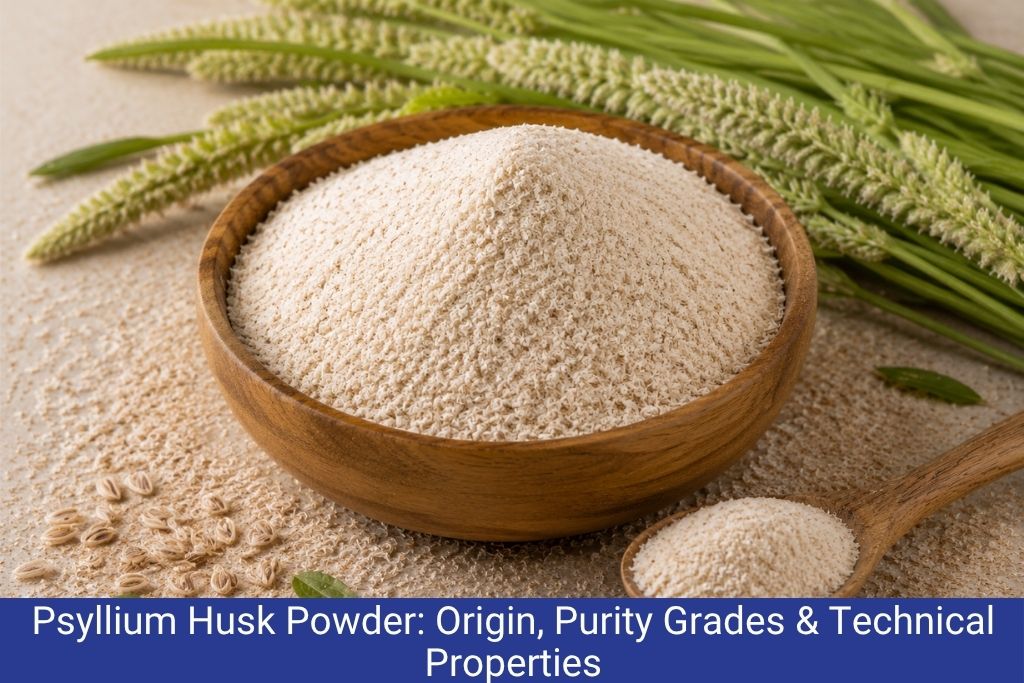
Psyllium husk powder is derived from the seed husks of Plantago ovata, a plant cultivated primarily in the Mehsana, Banaskantha, and Patan districts of Gujarat, India. India accounts for approximately 70–80% of global psyllium production and export.

The ‘purity grade’ of psyllium husk powder refers to the proportion of pure husk material (composed of mucilage-rich seed coat) relative to extraneous matter, seed endosperm fragments, and fine powder. Higher grades indicate greater husk content, which directly correlates with swell volume (the key functional metric in pharmaceutical and food applications).

Key physicochemical parameters that define a psyllium husk powder grade include:

  • Swell volume (mL/g) – a pharmacopeial test for water absorption capacity
  • Moisture content (%) – typically ≤12% across all grades
  • Total ash (%) – indicator of inorganic impurities
  • Acid-insoluble ash (AIA) – critical for pharmacopeial compliance
  • Husk purity (%) – the defining metric for grade classification

The Three Commercial Grades: Specifications at a Glance

85% Grade Psyllium Husk Powder

The 85% grade, sometimes referred to as industrial or food-grade psyllium powder, contains a minimum of 85% pure husk by weight. It is the most economical grade and is widely used in applications where ultra-high purity is not mandated.

Typical specifications for 85% grade:

  • Husk purity: ≥85%
  • Swell volume: 40–50 mL/g
  • Moisture: ≤12%
  • Total ash: ≤4.0%
  • Acid-insoluble ash: ≤1.0%

Primary applications: Animal feed, industrial thickening, food-grade binding agents (non-pharmacopeial), pet food formulations, and cost-sensitive OTC laxative blends.

95% Grade Psyllium Husk Powder - The Nutraceutical Standard

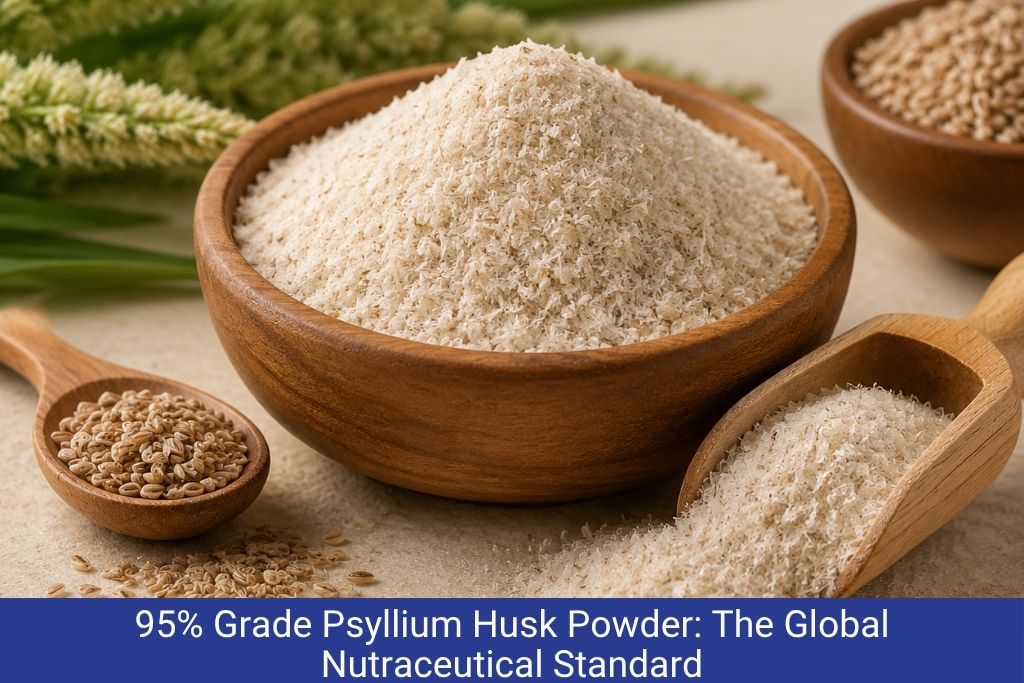
The 95% grade is the most widely traded grade globally and represents the sweet spot between cost efficiency and purity. It meets the general requirements of most pharmacopeial standards for dietary supplement and nutraceutical applications.

Typical specifications for 95% grade:

  • Husk purity: ≥95%
  • Swell volume: 50–55 mL/g
  • Moisture: ≤10%
  • Total ash: ≤3.5%
  • Acid-insoluble ash: ≤0.5%

Primary applications: Dietary supplements, OTC laxative sachets, food fiber fortification, cosmetic thickening agents, and psyllium husk powder bulk export to the USA, EU, and Middle East markets.

99% Grade Psyllium Husk Powder - Pharmaceutical and Compendial Grade

The 99% grade represents the highest commercial purity available and is manufactured under strict GMP conditions. This is the grade specified when psyllium 99% purity is required for pharmacopeial compliance – particularly under USP, BP, or IP monographs.

Typical specifications for 99% grade:

  • Husk purity: ≥99%
  • Swell volume: ≥55 mL/g (often 60+ mL/g)
  • Moisture: ≤8%
  • Total ash: ≤2.5%
  • Acid-insoluble ash: ≤0.3%
  • Heavy metals: Meets USP/BP limits
  • Microbial limits: Compliant with pharmacopeial specifications

Primary applications: Pharmaceutical dosage forms (tablets, capsules, sachets), regulated nutraceuticals, European market OTC medicines, and private label psyllium husk powder for premium brands.

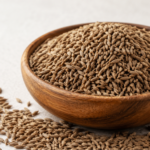
Psyllium Seeds

Grade Comparison Table: 85% vs 95% vs 99% Psyllium Husk Powder

Parameter 85% Grade 95% Grade 99% Grade
Husk Purity ≥85% ≥95% ≥99%
Swell Volume 40–50 mL/g 50–55 mL/g ≥55 mL/g
Moisture ≤12% ≤10% ≤8%
Total Ash ≤4.0% ≤3.5% ≤2.5%
AIA ≤1.0% ≤0.5% ≤0.3%
Best For Industrial/Animal Feed Nutraceuticals/Food Pharma/Compendial
Price Point Economical Mid-range Premium

How to Specify Psyllium Husk Powder When Placing Orders

When contacting psyllium husk powder manufacturers in India, your purchase specification should include:

  • Grade: 85% / 95% / 99% husk purity
  • Mesh size: 40, 60, or 80 mesh (affects dispersibility and texture)
  • Test method: USP, BP, IP, or in-house specification
  • Packaging: PP bags (25 kg), HDPE drums, or custom requirements
  • Certifications required: ISO, GMP, FSSAI, Halal, Kosher, Organic

Export Ready Psyllium, Spices & Grains Await! CALL US

Message us on WhatsApp

WhatsApp

Supply

Sourcing Psyllium Husk Powder from India: What Buyers Should Know

India is the world’s leading supplier of all three psyllium husk powder grades. Gujarat-based manufacturers supply psyllium husk powder bulk quantities to buyers in the USA, Germany, the UK, UAE, Australia, and Japan.

Key considerations when selecting a psyllium husk powder supplier in India:

  • Verify GMP certification – essential for pharmaceutical-grade (99%) procurement
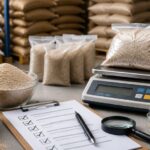
  • Request Certificate of Analysis (CoA) with swell volume data for every batch
  • Confirm country of origin documentation for customs compliance
  • Ask for stability data if the powder will be stored for more than 12 months
  • Check lead times – standard export orders typically ship within 7–14 working days

Frequently Asked Questions

What is the difference between 95% and 99% psyllium husk powder?

The 95% grade contains a minimum of 95% pure husk material and is suitable for nutraceutical and food applications. The 99% grade meets pharmacopeial standards (USP/BP/IP) with stricter limits on ash, heavy metals, and microbial counts. The 99% grade commands a higher price due to its pharmaceutical-grade manufacturing requirements.

For dietary supplement applications, specify a minimum swell volume of 40 mL/g (often 55 mL/g for premium products). Swell volume is the primary quality indicator – higher values indicate greater mucilage content and superior fiber performance.

Yes, 85% grade is commonly used in food industry applications including pet food, bakery binders, and fiber enrichment where regulatory bodies do not mandate pharmacopeial compliance. However, many food manufacturers prefer 95% grade for its improved consistency and cleaner labelling credentials.

Most Indian exporters have a minimum order quantity (MOQ) of 500 kg to 1 MT for psyllium husk powder bulk orders. Some suppliers offer trial lots of 25–100 kg for new buyer qualifications. Full container loads (FCL) of 18–20 MT are standard for large-volume buyers.

Purity is typically assessed using swell volume (IP/BP/USP method), microscopy for husk identification, and percentage husk content by mechanical separation. Reputable manufacturers issue a Certificate of Analysis covering all key parameters with each shipment.

Yes. Organic certified psyllium husk powder (NOP/EU organic) is available in 85%, 95%, and 99% grades from select Indian manufacturers. Organic certification requires annual audits and adds approximately 20–40% to the price over conventional grades.