



AI Summary
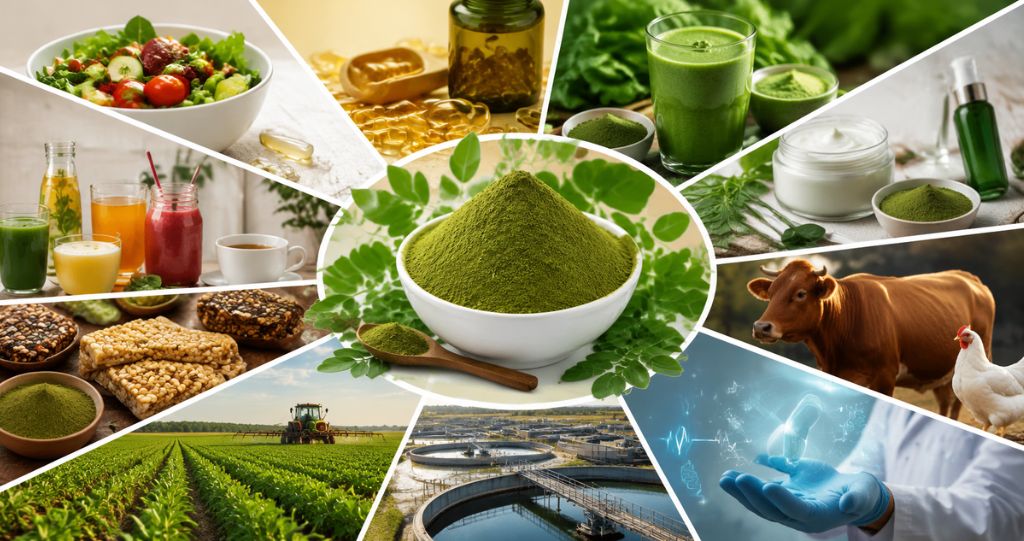
The top 10 industries using moringa powder worldwide are dietary supplements, functional foods and beverages, cosmetics and skincare, pharmaceuticals, animal feed and pet nutrition, bakery and snacks, sports nutrition, herbal tea, baby and senior nutrition, and agriculture as a biostimulant. Moringa leaf powder contains around 25 percent protein, all nine essential amino acids, bioavailable iron, calcium, and antioxidants such as quercetin and chlorogenic acid, which makes it one of the most versatile B2B botanical ingredients in trade today. Each industry buys to different specifications covering mesh size, microbial limits, and grade. Giriraj Enterprise, among trusted moringa powder manufacturers in India, supplies certified bulk moringa powder tailored to every one of these sectors.
Introduction
Moringa oleifera leaf powder occupies an unusual position in the global ingredients market because a single raw material serves industries with almost nothing else in common, from pharmaceutical formulation to poultry feed. The nutritional profile explains this reach: complete protein with all nine essential amino acids, iron levels several times higher than spinach on a dry weight basis, meaningful calcium and magnesium, and a dense antioxidant package led by quercetin and chlorogenic acid. Commercial demand of moringa powder has consequently spread far beyond the health store shelf where it first appeared in western markets a decade ago. For exporters and importers alike, understanding which industries buy, what specifications each demands, and how purchase volumes compare is the foundation of a sound moringa business strategy. The ten sectors below account for essentially all international trade volume, ranked broadly by their share of global purchasing.
Dietary Supplement Companies Buying Moringa Supplement Ingredients
The dietary supplement industry is the largest commercial consumer of moringa worldwide, converting powder into capsules, tablets, gummies, and blended greens formulas sold across pharmacies, health stores, and ecommerce platforms. Supplement brands buying moringa supplement ingredients demand standardized specifications: protein content verified above 20 to 25 percent, mesh size around 80 to 100 for smooth capsule filling, moisture below 8 percent, and microbial profiles meeting USP limits including absence of Salmonella and E coli. Heavy metal compliance dominates supplier selection because supplement products face regulatory testing in the US, EU, and Canada, and a single failed lead result can trigger recalls that destroy a brand. Volume per buyer ranges from a few hundred kilograms for boutique brands to multiple containers annually for contract manufacturers filling private label programs. This industry also drives most of the organic certified demand, since organic claims command 30 to 50 percent retail price premiums. Supplement buyers reward suppliers who provide complete regulatory dossiers with long, stable contracts.



Functional Food and Beverage Brands Using Green Superfood Powder
Smoothie mix companies, energy drink formulators, and wellness beverage brands use moringa as a core green superfood powder ingredient, typically blending it with spirulina, wheatgrass, chlorella, and barley grass in daily greens products. Moringa earns its place in these blends through a milder, less bitter flavor than spirulina and a vivid natural green color that survives processing better than many alternatives. Beverage applications impose specific technical demands: powder must disperse without clumping, avoid gritty mouthfeel, and hold color through pasteurization or hot fill processes, which pushes buyers toward fine 100 to 200 mesh grades. Ready to drink wellness shots, a fast growing retail category in North America and Europe, consume increasing volumes of extract grade material. Formulators usually include moringa at 5 to 15 percent of a blend, so even modest brands generate steady repeat orders as their finished products scale. Suppliers who provide solubility data and application support win preferential positions with product development teams in this sector.
Cosmetic and Skincare Manufacturers Sourcing Moringa Leaf Powder
The beauty industry sources moringa leaf powder for face masks, exfoliating scrubs, cleansing bars, and hair treatment formulations, drawn by its vitamin E content, natural antimicrobial behavior, and marketable botanical story. Clay mask manufacturers blend fine moringa powder with kaolin and bentonite for green detox positioning, while artisan soap makers use it for both color and skin conditioning claims. Cosmetic grade specifications differ from food grade in useful ways: microbial limits still apply under ISO 22716 cosmetic GMP expectations, but food certifications are not always mandatory, though many buyers request them anyway as a quality proxy.
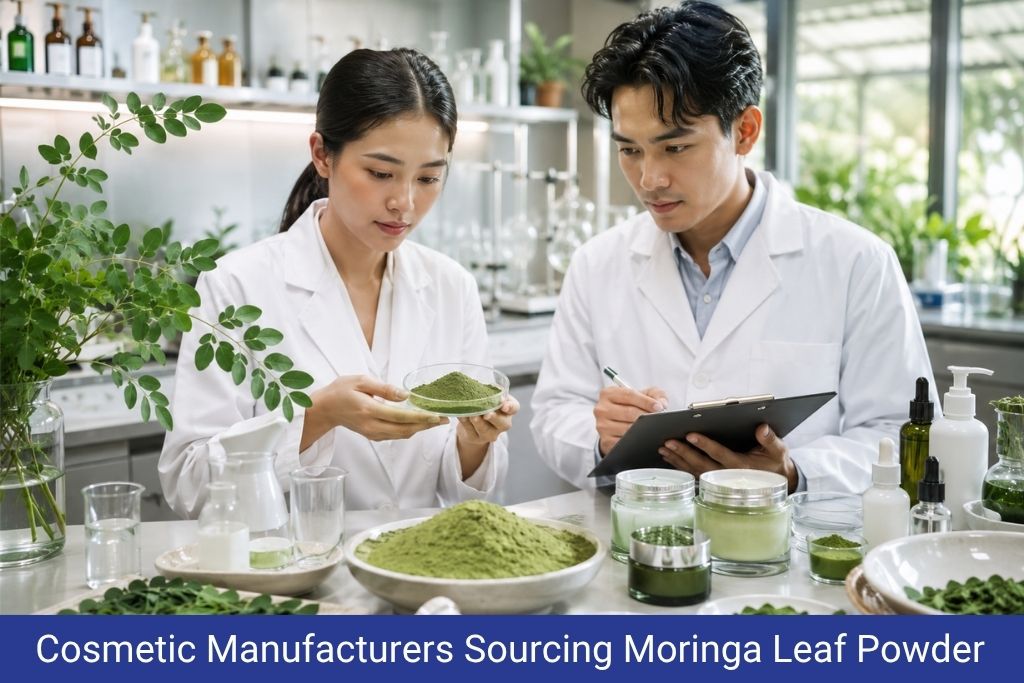
Particle size matters enormously here, since scrub applications want controlled coarse fractions while mask and cleanser applications need silky fine milling that leaves no grit on skin. The premium hair care segment additionally uses moringa seed derivatives, creating cross selling opportunities for suppliers handling the full plant. Beauty industry orders are smaller than food sector volumes but carry noticeably higher per kilogram pricing.
Pharmaceutical Companies Formulating with Moringa Oleifera Extract
Pharmaceutical and Ayurvedic medicine producers represent the most technically demanding buyers, using standardized Moringa oleifera powder and extracts in formulations targeting blood sugar management, inflammation, anemia, and lactation support. India’s large Ayurvedic industry, including major branded houses, consumes substantial domestic volumes in classical and proprietary formulations, while international phytopharmaceutical companies buy extract grades standardized to marker compounds. Documentation requirements reach pharmacopeia level: suppliers must provide identity confirmation, assay results, complete impurity profiles, residual solvent data for extracts, and batch manufacturing records supporting drug master files. Clinical research on moringa continues to expand, with published studies examining glycemic response and anti inflammatory activity, and each positive publication feeds formulation interest in this channel. Pharma buyers qualify suppliers slowly through audits and stability studies, sometimes taking a year before the first commercial order. Once qualified, however, a supplier becomes extremely difficult to displace because requalification costs deter switching.
Animal Feed and Pet Nutrition Producers Adding Moringa Meal
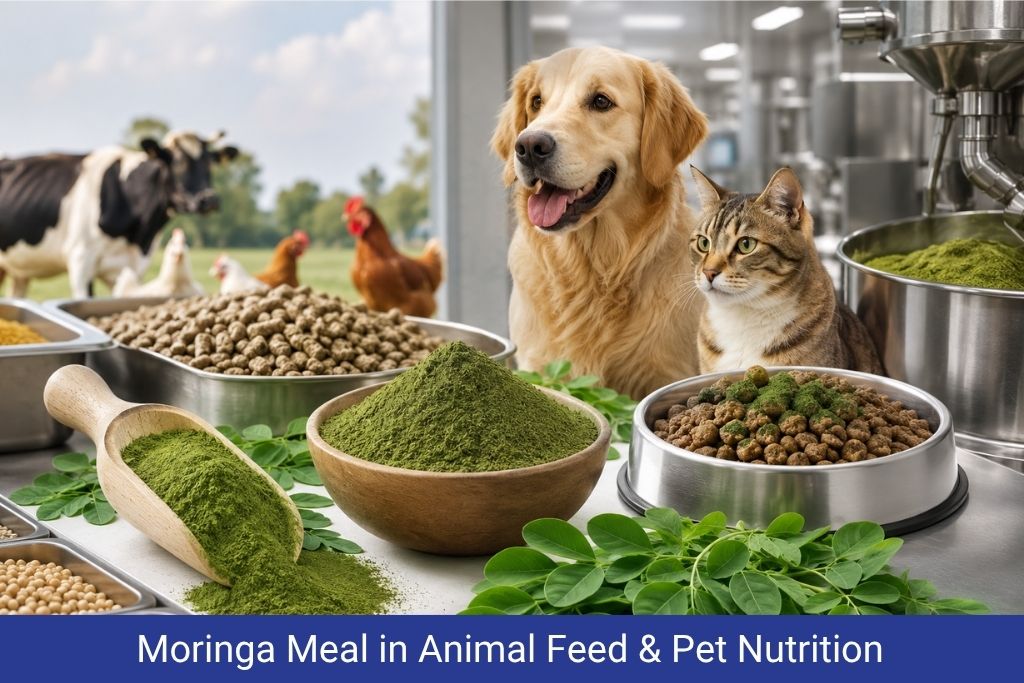
Livestock and pet nutrition companies include moringa meal as a natural protein and vitamin booster in poultry rations, cattle feed, aquaculture diets, and premium pet food formulations. Research trials across multiple countries have documented improved feed conversion ratios, better egg yolk color in layers, and enhanced milk yield in dairy cattle at inclusion rates between 2 and 10 percent, giving feed formulators evidence based reasons to buy.
The economics work because feed grade moringa, produced from leaves with slightly relaxed visual standards, sells below food grade pricing while still delivering 20 percent plus protein. The premium pet food segment is the fastest growing corner of this industry, as humanization of pet diets pushes brands toward recognizable superfood ingredients that justify premium shelf pricing. Feed buyers purchase in the largest single volumes of any moringa customer category, often taking multi container annual contracts. Suppliers benefit from this channel as an outlet for material that narrowly misses food grade color specifications, improving overall yield economics.
Our Other Product
Ashwagandha PowderBakery and Snack Manufacturers Enriching Products with Moringa Flour Blend
Bakeries and snack producers incorporate a moringa flour blend into bread, pasta, noodles, crackers, cookies, and extruded snacks, typically at 2 to 5 percent inclusion to gain green color and nutritional fortification without compromising texture or taste. Food technologists have established that moringa at these levels boosts protein, iron, and fiber claims on packaging while the mild flavor stays below most consumers’ detection threshold, which is precisely what mainstream brands want from fortification. Green moringa pasta and moringa noodles have become established retail products in Japan, Southeast Asia, and specialty western channels, while African and South Asian school feeding programs use moringa fortified baked goods to address micronutrient deficiency at population scale. Bakery buyers specify fine mesh for even dough distribution, strong green color retention through baking temperatures, and food safety documentation matching their retail customer audits. This industry values supply consistency above all, since a recipe locked into production cannot tolerate batch to batch color or flavor variation. Contract volumes grow predictably as fortified product lines expand distribution.
Sports Nutrition Brands Choosing Plant Protein Moringa Powder
The sports nutrition industry blends plant protein moringa powder into vegan protein formulas alongside pea, rice, and hemp proteins, using moringa less for its protein quantity than for its micronutrient contribution. Athletes on plant based diets commonly run short on iron and magnesium, and moringa supplies both in bioavailable form, letting formulators make recovery and energy metabolism claims that differentiate their products in a crowded category. Moringa also appears in pre workout greens, electrolyte blends, and endurance fuel products where its antioxidant content supports exercise recovery positioning.
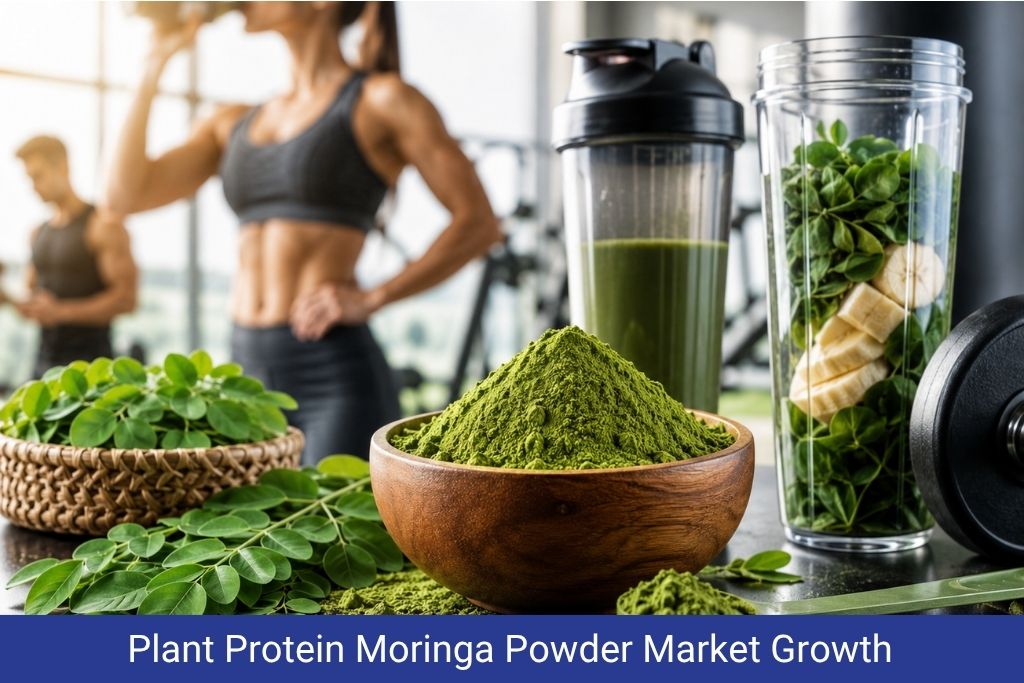
The global plant based protein market has grown at double digit rates, pulling moringa demand upward with it, particularly in North America, the UK, Germany, and Australia where vegan athletic nutrition is most developed. Sports brands demand banned substance safety, so suppliers able to support Informed Sport or similar third party testing programs access the professional athlete segment where pricing is strongest. Order patterns follow new product launches, making relationships with brand formulation teams commercially valuable.
Our Other Product
Triphala PowderHerbal Tea Producers Blending Moringa Tea Cut Leaves
Tea companies buy both tea cut moringa leaves and fine powder, serving two distinct product formats across Europe, Japan, and North America. Tea bag manufacturers need tea cut grades with controlled particle size distribution, typically 1 to 5 millimeters, that flow correctly through high speed bagging machinery while releasing flavor and color during steeping. Powder grades serve the moringa latte and matcha alternative segment, where cafes and retail brands position moringa as a caffeine free green beverage with an earthy, spinach adjacent flavor profile. Wellness tea blends pair moringa with ginger, lemongrass, tulsi, and mint, and European herbal tea houses have made moringa a standard catalog item rather than a novelty. Buyers in this industry emphasize aroma freshness, bright green appearance in the cup, and low dust content for tea cut grades, alongside standard food safety documentation. Seasonal purchasing peaks ahead of winter wellness marketing pushes in western markets. Tea industry orders provide reliable baseline volume with lower price sensitivity than commodity food channels.
Baby Food and Senior Nutrition Formulators Using Fortified Moringa Ingredients
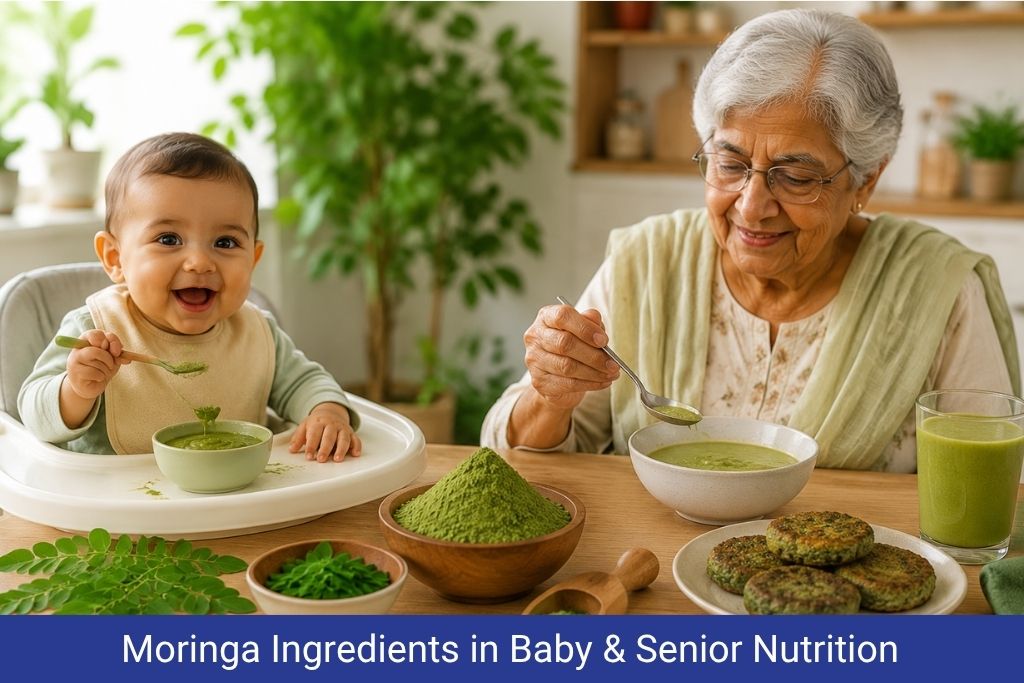
Nutrition programs and commercial formulators deploy fortified moringa ingredients in infant cereals, complementary feeding products, and easy digest senior nutrition formats, concentrated in regions fighting micronutrient deficiency. International development organizations and government feeding programs across Africa and Southeast Asia have incorporated moringa into school meals and maternal nutrition initiatives because it delivers iron, calcium, and vitamin A precursors from a locally understood plant at low cost per nutritional unit.
Commercial baby food brands in these regions follow with retail products, while senior nutrition formulators in developed markets use moringa in protein enriched drinks targeting sarcopenia and general malnutrition in aging populations. This industry imposes the strictest microbial and contaminant standards of any moringa buyer, since infant and elderly consumers are the most vulnerable populations, and suppliers must demonstrate validated pathogen controls and often steam sterilization capability. Tender based institutional purchasing creates large but competitive volume opportunities. Suppliers serving this segment build documentation depth that strengthens their position with every other industry on this list.
Agriculture Companies Applying Moringa Biostimulant
Agricultural input companies buy moringa powder and leaf extract to manufacture moringa biostimulant sprays, one of the least known but fastest developing industrial applications. Moringa leaves contain natural zeatin, a cytokinin class plant growth hormone, and foliar sprays made from moringa extract have shown yield improvements of 10 to 25 percent across trials on vegetables, cereals, and legumes. As global agriculture shifts toward organic and residue free production, demand for botanical biostimulants has surged, and regulatory frameworks in the EU and India now formally recognize the biostimulant category, opening structured commercial channels. Agri input formulators buy in bulk industrial volumes with cost focused specifications, caring more about active compound consistency than the visual color standards food buyers impose. This tolerance again lets suppliers direct off grade material productively. The biostimulant segment effectively connects moringa to the enormous agricultural inputs market, providing a growth avenue completely uncorrelated with consumer superfood trends and adding resilience to any moringa supplier’s demand portfolio.

How Giriraj Enterprise Serves Every Industry Buying Wholesale Moringa Powder
Each industry above buys against distinct specifications, and Giriraj Enterprise structures its wholesale moringa powder supply to match every one of them:
- Multiple mesh sizes from 1 to 5 millimeter tea cut through 200 mesh fine powder, milled to order
- Food, cosmetic, and feed grade segregation with lot level batch traceability from farm to container
- Heavy metal, pesticide residue, and full microbial testing on every production lot with COA issued per shipment
- Private label and contract packing programs for brands building their own identity, supporting entrepreneurs researching how to sell moringa powder under their own labels
- Steam treatment capability for buyers with strict pathogen specifications in infant, senior, and supplement applications
- Consistent year round supply secured through farmer network relationships across India’s primary moringa cultivation belt
Frequently Asked Questions
Which industry uses the most moringa powder?
The dietary supplement industry is the largest consumer worldwide, converting moringa into capsules, tablets, and greens blends. Functional foods and beverages form the second largest segment and are growing faster.
What grade of moringa powder do cosmetic companies need?
Cosmetic buyers need microbially tested powder with strong green color and application specific particle size, fine for masks and cleansers or controlled coarse for scrubs. Food certification is not always mandatory but is frequently requested as a quality assurance signal.
Can moringa powder be used in animal feed?
Yes. Moringa meal is an established ingredient in poultry, cattle, aquaculture, and premium pet nutrition, with documented improvements in feed conversion, egg quality, and milk yield at 2 to 10 percent inclusion rates.
What inclusion rate works for moringa in bakery products?
Most bakery and snack applications use 2 to 5 percent moringa flour blend, which delivers nutritional fortification and green color while keeping flavor and texture within mainstream consumer acceptance.
Where can businesses buy bulk moringa powder for industrial use?
Giriraj Enterprise supplies bulk moringa powder in 25 kg export packaging with complete testing documentation, serving supplement, food, beverage, cosmetic, feed, and agricultural buyers across all major international markets.

Mihir Shah is the CEO of Giriraj Enterprise, a trusted manufacturer, supplier, and exporter of Psyllium products, whole spices, ground spices, herbal products, guar gum and other agro products like Quinoa Seeds, Chia Seeds including Isabgol, Plantago ovata Seeds, Ispaghula Husk Powder and Kha Kha Powder. Founded in 1973 and based in Unjha, Gujarat, Giriraj Enterprise has grown significantly under Mihir’s leadership, establishing itself as a trusted name in the global market. With a focus on high-quality standards and adherence to international food norms, the company serves a wide customer base across the globe.
A strategic thinker with a passion for sustainable growth, Mihir has played a pivotal role in expanding the company’s production capacity, which now stands at 3,000 quintals per month, and in ensuring that Giriraj Enterprise remains at the forefront of innovation in the industry. His commitment to quality is reflected in the company’s stringent in-house quality testing and third-party verification, ensuring that all products meet the highest standards of excellence. He is dedicated to driving customer satisfaction by offering fast, reliable services both domestically and internationally.
Through his writing, Mihir shares valuable insights and knowledge about Psyllium, spices, herbal and other agro products, educating readers on their benefits and the role they play in promoting health and well-being. His goal is to provide factual, transparent information to help consumers and businesses make informed decisions.