



AI Summary
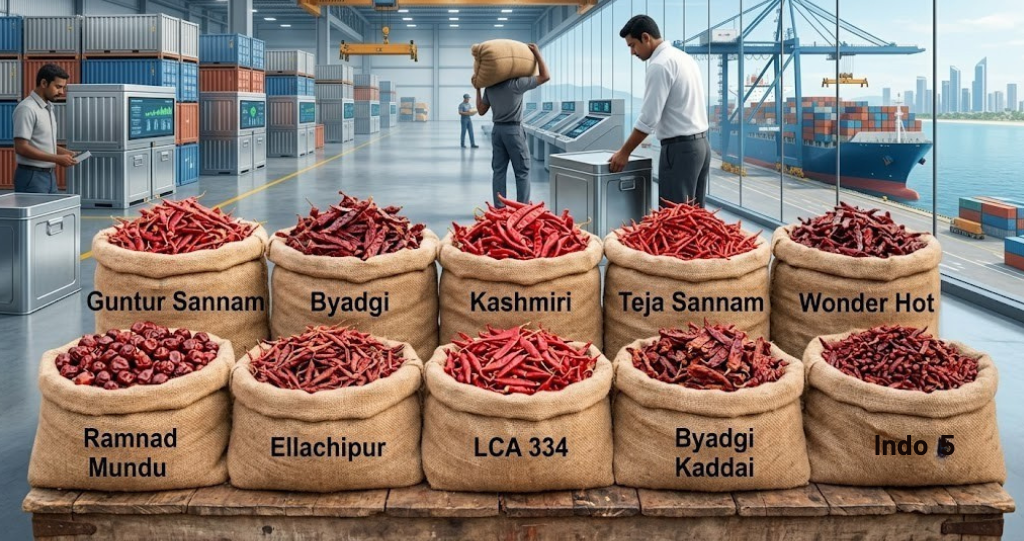
The top 10 red chilli varieties exported from India are Teja S17, Sannam S4, Byadgi KDL, Guntur Sannam, Kashmiri chilli, Wonder Hot, 334 Sannam, Mundu, Endo 5, and Wrinkled 273. Each variety carries a distinct commercial identity defined by Scoville heat units, ASTA color value, pod appearance, and end use, ranging from extraction grade Teja above 75,000 SHU to color grade Byadgi exceeding 150 ASTA. India exports over 500,000 tonnes of dry red chilli annually to China, Bangladesh, Thailand, the USA, and the Middle East. Giriraj Enterprise, among reliable red chillies exporters from India, supplies stem cut, stemless, powdered, and flaked forms of all major varieties with aflatoxin and pesticide tested documentation.
Introduction
India is the world’s largest producer and exporter of dry red chilli, shipping over 500,000 tonnes annually and setting global price benchmarks through the Guntur market in Andhra Pradesh, Asia’s biggest chilli trading yard. International buyers never purchase chilli generically; they specify exact varieties because each one delivers a different combination of two critical metrics, capsaicin driven pungency measured in Scoville Heat Units and extractable redness measured in ASTA color value. An oleoresin extractor in China wants maximum heat and cares little for pod beauty, while a Japanese seasoning house wants brilliant color at minimal pungency, and a Bangladeshi grinder wants balanced economy grades. Matching the right variety to the right buyer is therefore the entire craft of the chilli export business. Regional specialization across Andhra Pradesh, Telangana, Karnataka, and Tamil Nadu means each variety also carries a geographic identity that experienced importers recognize instantly. Here are the ten varieties that dominate international trade and the commercial role each one plays.



Teja S17: The Hottest Commercial Dry Red Chilli Export Variety
Teja S17, grown intensively across Khammam and Warangal in Telangana and adjoining Andhra Pradesh districts, delivers 75,000 to 100,000 Scoville Heat Units, making it the hottest mainstream variety in Indian dry red chilli export trade. Its exceptional capsaicin concentration makes Teja the preferred raw material for oleoresin extraction plants, and China alone absorbs enormous Teja volumes every season for both extraction and hot pot seasoning industries. Thailand, Malaysia, and Indonesia buy Teja for their fiery sauce and sambal manufacturing, while Mexican style hot sauce producers in the Americas increasingly source it as an economical heat base. The pods are slender, wrinkled, and deep red, typically 5 to 8 centimeters long, with thin skin that grinds and extracts efficiently. Teja prices swing sharply with Chinese buying activity, so importers watch Khammam market arrivals closely between February and April. Exporters offering stemless Teja with verified aflatoxin compliance capture the strongest premiums, since extraction buyers pay on capsaicin yield and reject contaminated lots outright.
Sannam S4: The Workhorse of Guntur Red Chilli Suppliers
Sannam S4 is the highest volume export variety in the entire Indian chilli basket, and virtually every serious red chilli supplier builds core business around it. Balancing medium heat around 30,000 to 35,000 SHU with respectable ASTA color of 60 to 90, Sannam serves the broad middle of global demand where buyers want genuine pungency plus usable color at economical pricing. Sri Lanka, Bangladesh, Vietnam, Malaysia, and Middle Eastern grinders purchase Sannam by the thousands of tonnes for conversion into everyday chilli powder, curry blends, and food service seasonings.
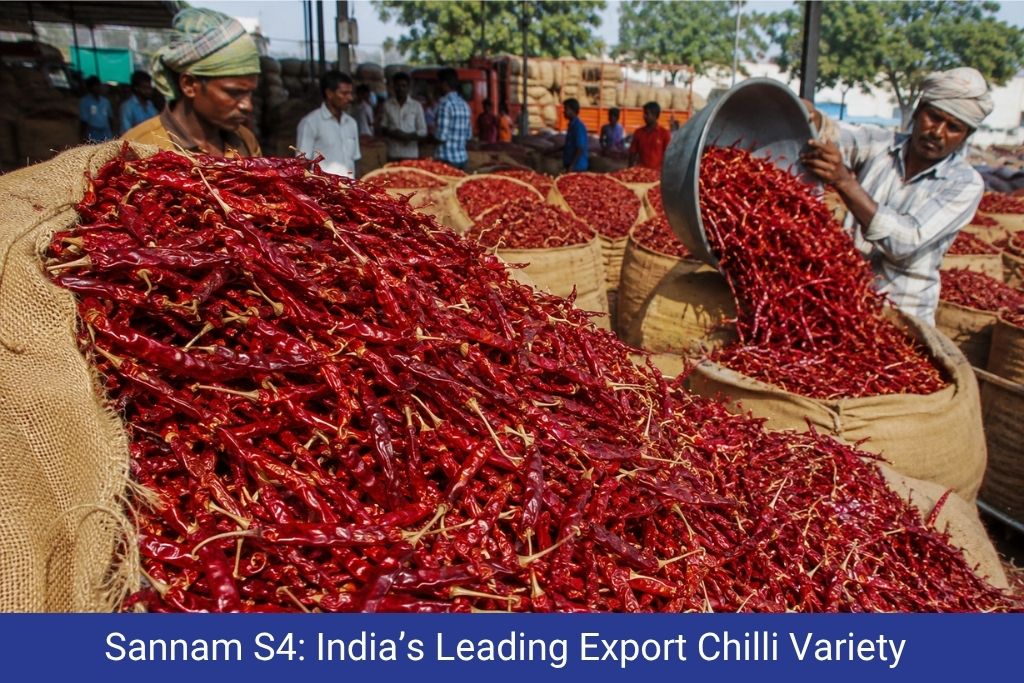
Pods run 6 to 9 centimeters with moderately thick skin that withstands ocean transit and mechanical handling without excessive breakage, a practical virtue importers value. The variety’s massive production base across Guntur, Prakasam, and Krishna districts ensures liquidity; buyers can always find Sannam, and price discovery is transparent through daily Guntur yard quotations. For new importers entering Indian chilli, Sannam S4 is almost always the recommended first purchase because its quality band is well understood and its market never disappears.
Byadgi KDL: Premium Color Grade Chilli with Low Pungency
Karnataka’s famous Byadgi KDL commands the color end of the market, delivering ASTA values above 150 with mild heat of only 8,000 to 15,000 SHU, a combination that makes it irreplaceable for natural color extraction and premium culinary applications. The deeply wrinkled, dark cherry red pods from Haveri and Dharwad districts yield high concentrations of capsanthin, the carotenoid pigment that oleoresin plants extract as natural red food coloring for sauces, snacks, cosmetics, and even poultry feed pigmentation. Spice brands blend Byadgi powder into products where consumers want rich red appearance without punishing heat, including tandoori marinades, kashmiri style blends, and Korean adjacent applications. Byadgi carries a Geographical Indication tag protecting its regional identity, and authentic material trades at substantial premiums over imitation wrinkled varieties grown elsewhere. The crop is climatically sensitive, so production swings create sharp price volatility that buyers hedge through early season contracting. Exporters with direct Haveri procurement relationships and cold storage capacity supply genuine Byadgi year round, a capability importers specifically seek out.
Guntur Sannam: GI Tagged Red Chillies India Is Known For
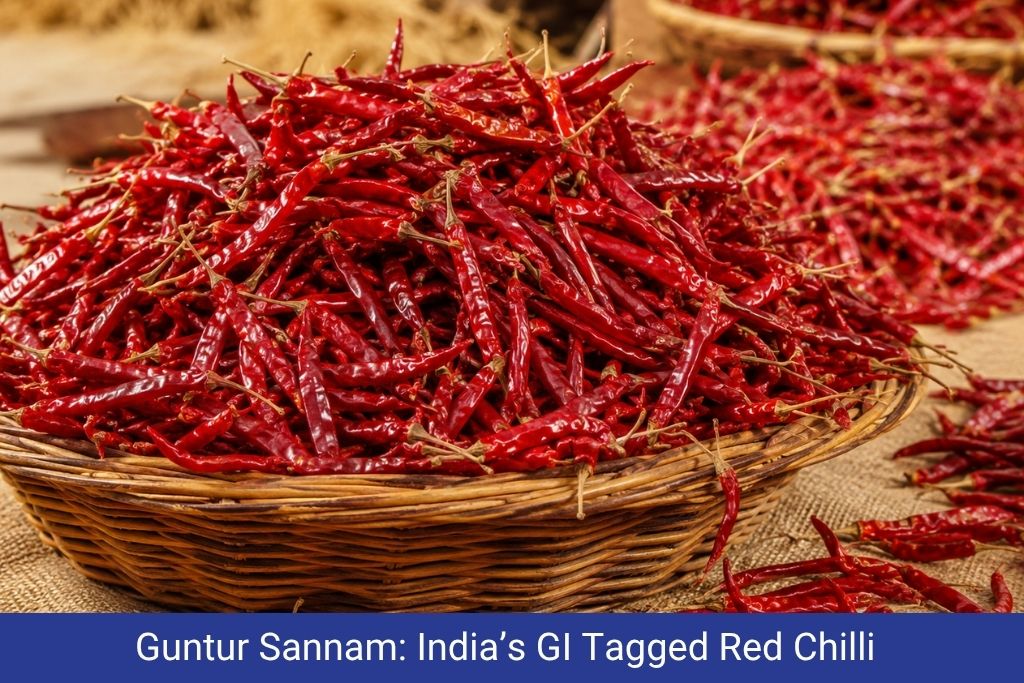
Guntur Sannam holds its own Geographical Indication tag and functions as the international brand ambassador for red chillies India exports, recognized by name across Asian spice markets the way Champagne is recognized in wine. Grown in the red soils around Guntur city, the variety produces thick, glossy, fiery pods of 35,000 to 40,000 SHU that grinders prize for consistent pungency delivery and good powder yield. Sri Lanka historically anchors Guntur Sannam demand and treats it as the reference standard for curry powder manufacturing, while Bangladesh, Nepal, and Southeast Asian buyers specify it by name in purchase contracts.
The GI status matters commercially because it certifies origin authenticity, protecting buyers from cheaper look alike varieties blended into shipments, and premium importers increasingly demand GI documentation. Harvest concentrates between January and April, after which the enormous cold storage infrastructure around Guntur, holding millions of bags, maintains export availability through the year. For blenders building branded consumer products, the ability to print Guntur origin on packaging adds shelf credibility worth paying for.
Our Other Product
TurmericKashmiri Chilli: The Signature Mild Red Chilli for Culinary Color
Kashmiri chilli provides deep crimson color at very low heat, typically 1,000 to 2,000 SHU, making it the essential mild red chilli for cuisines and products where appearance leads and pungency must stay gentle. Indian restaurant cooking worldwide depends on it; tandoori chicken, rogan josh, and butter chicken achieve their signature red hues through Kashmiri chilli powder rather than artificial coloring, driving steady demand from the UK, USA, Gulf, and every market with significant Indian food service presence. True Kashmiri production from Jammu and Kashmir is limited, so commercial trade includes similar mild high color varieties grown in Karnataka and Himachal Pradesh sold under the Kashmiri style designation, a distinction honest exporters clarify in specifications. Retail spice brands package Kashmiri powder as a premium single origin product, while food manufacturers use it in marinades, snack seasonings, and ready meal sauces needing visual warmth without heat complaints. Buyers evaluate lots on ASTA color above 100, fineness of grind, and freedom from added dyes, with sudan testing mandatory for developed markets. Its premium pricing and brand recognition make Kashmiri chilli a high margin catalog item for quality focused exporters.
Wonder Hot: Hybrid Chilli for Chilly Flakes Production
Wonder Hot, a widely planted hybrid, produces long, glossy, uniformly red pods of 10 to 15 centimeters that suit crushed chilly flakes and visual seasoning applications better than almost any traditional variety. Pizza chains, pasta brands, and snack seasoning manufacturers across Europe and North America consume growing volumes of chilli flakes, and they specify material with bright red flake color, controlled seed percentage, and moderate heat around 25,000 to 35,000 SHU that seasons without overwhelming western palates.
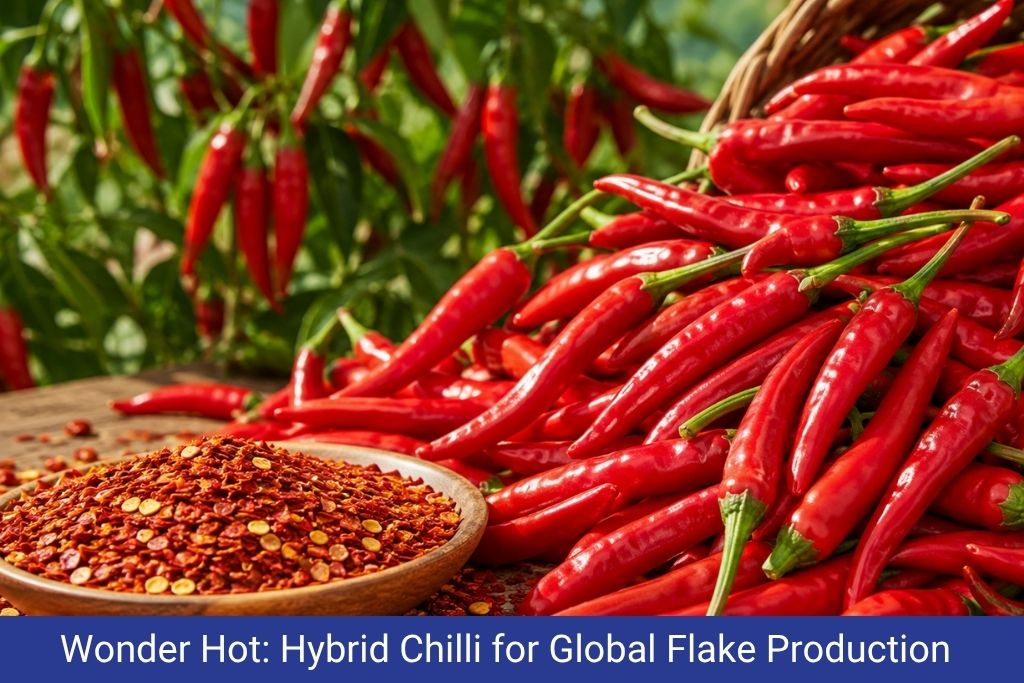
Wonder Hot’s fleshy, even walled pods crush into attractive flakes with minimal dust, giving processors better yields of sellable product per tonne of raw chilli. The hybrid’s strong disease resistance and high per acre yields have expanded its cultivation across Andhra Pradesh, Madhya Pradesh, and Karnataka, keeping raw material available and competitively priced. Exporters produce flakes to customer particle specifications, commonly 2 to 5 millimeter crush with seed content negotiated by contract, and steam sterilization is frequently applied for microbial compliance. As global pizza and fast casual dining expand, Wonder Hot based flakes represent one of the fastest growing value added chilli formats.
334 Sannam: Bulk Grade for Red Chilli Wholesale Markets
The 334 variety serves the price sensitive foundation of the red chilli wholesale trade, offering acceptable heat near 25,000 to 30,000 SHU and workable color at rates below premium Sannam grades. Bangladesh and Vietnam anchor demand for 334, importing it in bulk for mass market chilli powder where retail price points leave no room for premium raw material, and African markets increasingly join this buying pattern as their processed spice sectors formalize. The pods are slightly smaller and lighter skinned than Guntur Sannam, with more visual variation that matters little to grinding buyers focused on cost per unit of pungency. For exporters, 334 provides volume turnover and container fill flexibility, often shipping alongside premium varieties to balance freight economics on mixed orders. Quality risks concentrate in aflatoxin and moisture management, since economy grades sometimes receive less careful drying, so disciplined suppliers differentiate themselves by applying the same testing standards to 334 as to premium lots. Buyers burned by rejected cheap cargo from careless shippers gravitate toward exporters who treat bulk grades with full compliance seriousness.
Our Other Product
Garam MasalaMundu: Round Pod Chilli for Traditional Spice Blends
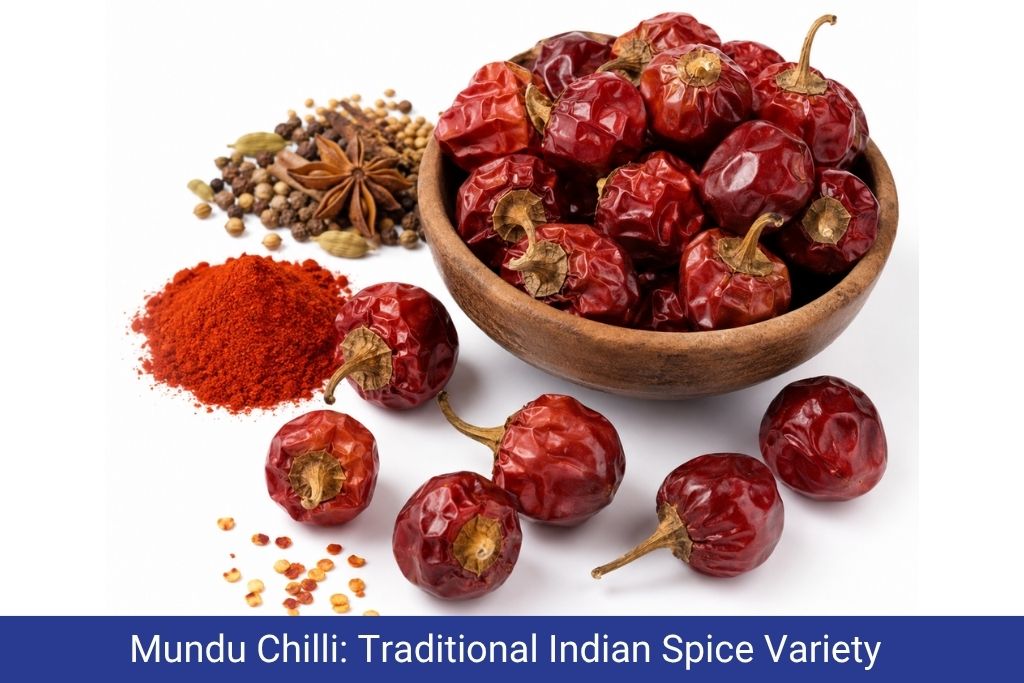
The round Ramnad Mundu from Tamil Nadu stands apart visually and functionally from every long variety on this list, with spherical, thin skinned pods that deliver a distinctive nutty flavor alongside moderate heat. South Indian cuisine specifically requires Mundu for authentic sambar powder, rasam blends, and tempering applications, and the large Tamil diaspora across Sri Lanka, Malaysia, Singapore, the Gulf, and western countries sustains dedicated export demand no other variety can substitute.
Grown in the dry districts of Ramanathapuram and Virudhunagar, Mundu production is geographically concentrated and seasonal, giving supply a tightness that supports firm pricing for authentic material. The thin skin grinds easily and releases flavor quickly, which blend manufacturers value, though it also makes the pods fragile in handling, requiring careful packing to limit breakage during ocean transit. Ethnic spice brands in export markets list Mundu by name on packaging as an authenticity signal to knowledgeable consumers. Exporters with Tamil Nadu procurement networks serve this niche profitably, since buyers needing genuine Mundu have few sourcing alternatives and reward reliable suppliers with loyalty.
Endo 5: Extraction Grade Chilli for Oleoresin Manufacturers
Endo 5 exists almost entirely to feed the oleoresin and paprika extract industry, bred and grown for maximum combined capsaicin and pigment yield rather than culinary appearance. Extraction plants in India, China, and Europe process Endo 5 into paprika oleoresin and capsicum extract, the standardized natural ingredients behind red coloring and heat in global snack seasonings, sauces, processed meats, and pharmaceutical topical products. Buyers in this segment evaluate lots on laboratory numbers alone, contracting against minimum color units and capsaicin percentages, which shifts the commercial conversation from pod aesthetics to analytical certificates. Cultivation concentrates in Telangana and Andhra Pradesh where farmers grow it under buyback arrangements with extraction companies, though open market volumes flow to independent exporters serving overseas extractors. Because extraction destroys the pod entirely, cosmetic defects like discoloration or breakage carry no penalty, letting suppliers direct such material productively instead of discounting it into culinary channels. As food multinationals continue replacing synthetic dyes with natural colors, extraction demand grows structurally, making Endo 5 and its extraction grade peers a quietly expanding corner of Indian chilli export.
Wrinkled 273: Economy Stemless Chilli for Powder Grinding
Wrinkled 273 rounds out the export basket as an economical grinding variety whose deeply wrinkled, quick drying pods convert efficiently into everyday chilli powder for cost driven markets. The wrinkled skin structure accelerates field drying, reducing moisture risk and aflatoxin exposure during the critical post harvest window, a practical advantage that quality conscious buyers of economy grades appreciate. African markets, Central Asian buyers, and domestic Indian masala grinders absorb most 273 volumes, purchasing on landed cost per kilogram of finished powder rather than variety prestige. Heat sits near 20,000 to 28,000 SHU with modest color, adequate for general seasoning where premium ASTA values would be wasted expense. Exporters typically ship 273 stemless to maximize usable weight, since grinding buyers pay for pod material rather than stalks, and stemless presentation improves powder yield calculations in their costing. The variety’s role in the market is honest volume: it lets exporters serve price points premium varieties cannot reach while keeping containers moving year round. Suppliers who maintain testing discipline on these economy grades protect buyers from the compliance failures that plague careless bottom of market trade.

Why Import Red Chilli Varieties from Giriraj Enterprise
- Direct procurement from Guntur, Khammam, Byadgi, and Tamil Nadu markets ensures variety authenticity backed by origin documentation
- Machine cleaned, metal detected, and sortex processed pods offered in stem cut and stemless presentations to buyer preference
- Aflatoxin and pesticide residue testing aligned to EU, US, Chinese, and Japanese import norms with batch wise Certificates of Analysis
- Steam sterilization capability for microbial reduction serving developed market specifications
- Custom grinding into chilli powder and crushing into chilly flakes under private label programs with buyer specified particle sizes
- Cold storage backed inventory keeping every major variety available for shipment in all twelve months
Read Our Article
How Whole Spices Enhance Wellness and Vitality? Spice Up Your LifeFrequently Asked Questions
Which Indian red chilli variety is the hottest for export?
Teja S17 is the hottest mainstream export variety at 75,000 to 100,000 Scoville Heat Units, and it dominates supply to oleoresin extractors and hot sauce manufacturers, particularly in China and Southeast Asia.
Which chilli variety has the best color value?
Byadgi KDL leads with ASTA color values above 150 at mild heat, making it the preferred raw material for natural color extraction and for premium chilli powder where rich red appearance matters more than pungency.
Which countries buy the most Indian red chillies?
China, Bangladesh, Thailand, Sri Lanka, the UAE, Malaysia, Vietnam, and the USA are the largest buyers, together absorbing the majority of India’s 500,000 plus tonnes of annual dry chilli exports.
What is the difference between stem cut and stemless chilli?
Stem cut chilli retains a short trimmed stalk while stemless removes it entirely. Grinding buyers prefer stemless because it maximizes usable pod weight per tonne purchased, while some retail markets accept stem cut presentation.
Can Giriraj Enterprise supply steam sterilized red chilli?
Yes. Giriraj Enterprise offers steam sterilized red chilli pods, powder, and flakes that meet the strict microbial specifications of European, American, and Japanese food companies, with supporting laboratory documentation on every batch.

Mihir Shah is the CEO of Giriraj Enterprise, a trusted manufacturer, supplier, and exporter of Psyllium products, whole spices, ground spices, herbal products, guar gum and other agro products like Quinoa Seeds, Chia Seeds including Isabgol, Plantago ovata Seeds, Ispaghula Husk Powder and Kha Kha Powder. Founded in 1973 and based in Unjha, Gujarat, Giriraj Enterprise has grown significantly under Mihir’s leadership, establishing itself as a trusted name in the global market. With a focus on high-quality standards and adherence to international food norms, the company serves a wide customer base across the globe.
A strategic thinker with a passion for sustainable growth, Mihir has played a pivotal role in expanding the company’s production capacity, which now stands at 3,000 quintals per month, and in ensuring that Giriraj Enterprise remains at the forefront of innovation in the industry. His commitment to quality is reflected in the company’s stringent in-house quality testing and third-party verification, ensuring that all products meet the highest standards of excellence. He is dedicated to driving customer satisfaction by offering fast, reliable services both domestically and internationally.
Through his writing, Mihir shares valuable insights and knowledge about Psyllium, spices, herbal and other agro products, educating readers on their benefits and the role they play in promoting health and well-being. His goal is to provide factual, transparent information to help consumers and businesses make informed decisions.