



July 10, 2026
Mihir Shah
Share At:
Google AI ChatGPT Grok Perplexity

AI SUMMARY

Isabgol (ispaghula, psyllium husk) is available for wholesale purchase directly from Gujarat-based manufacturers and exporters. Wholesale isabgol prices in India range from INR 80–250 per kg depending on grade, season, and order volume. Minimum order quantities (MOQs) typically start at 500 kg for domestic buyers and 1 MT for export. Quality testing – covering swell volume, moisture, ash content, and microbial limits – is essential before finalizing a supplier. This guide provides a practical framework for procurement managers, nutraceutical brands, food companies, and traders to make informed wholesale isabgol purchases.

Introduction: Why Wholesale Isabgol Procurement Requires a Structured Approach

Isabgol – the popular Indian name for psyllium husk derived from Plantago ovata – is one of India’s top agricultural export commodities. With global demand driven by the dietary fiber, pharmaceutical, and pet food industries, wholesale buyers face a complex procurement landscape: multiple supplier tiers, seasonal price volatility, grade variations, and export compliance requirements.

This guide is designed for procurement professionals, brand owners, trading companies, and distributors who need a reliable framework for buying isabgol wholesale from India.

Understanding the Isabgol Supply Chain in India

Production and Geography

India produces approximately 70,000–80,000 metric tonnes of isabgol annually, with Mehsana, Banaskantha, Sabarkantha, and Patan districts of Gujarat accounting for over 90% of national output. The crop is harvested between February and April, with processing and export activity peaking from March through August.

The isabgol supply chain flows as follows:

  • Farmers → Primary processors (cleaning/grading mills) → Secondary processors (powder/husk manufacturers) → Exporters/traders → International buyers

Large manufacturers often integrate multiple stages – processing, grading, packaging, and export – under one roof, offering greater quality control and competitive isabgol price per kg.

Export Ready Psyllium, Spices & Grains Await! CALL US

Message us on WhatsApp

WhatsApp

Supply

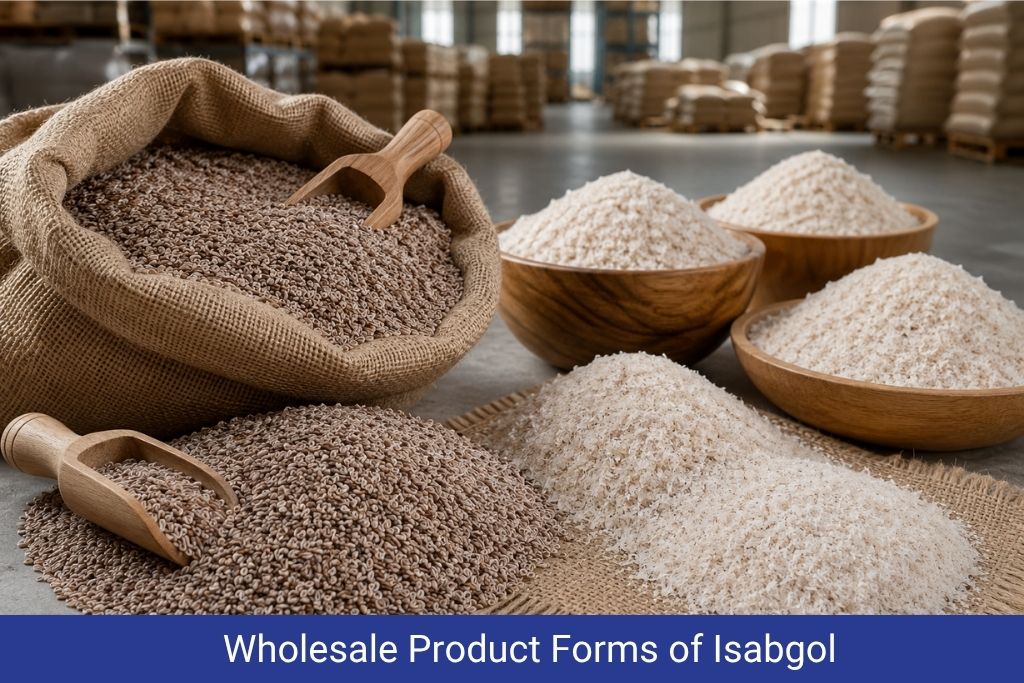
Product Forms Available for Wholesale

Wholesale buyers can source isabgol in multiple product forms. Understanding the form required before approaching suppliers is critical:

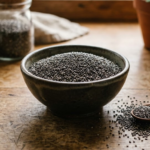
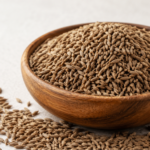
  • Isabgol Seeds (Psyllium Seeds): Whole, cleaned seeds – used for further processing or animal feed. Lower price point.
  • Isabgol Husk (Psyllium Husk): The cleaned, separated seed coat – the primary commercial product. Available in 85%, 95%, and 99% purity grades.
  • Isabgol Husk Powder (Psyllium Husk Powder): Husk ground to powder – used in pharmaceuticals, food, and cosmetics. Same purity grading applies.
  • Kha Kha Powder (Psyllium Industrial Powder): The by-product of husk separation – used in industrial applications, adhesives, and animal feed. Lowest price point.

Wholesale Isabgol Price per KG in India: What to Expect

Price Ranges by Grade (Current Market Benchmarks)

Isabgol prices in India are influenced by harvest yield, domestic demand, export demand, and seasonal factors. The following table presents indicative wholesale price ranges at the factory/ex-works level in India:

Product INR/kg (Ex-Works) USD/kg (FOB India) Notes
Isabgol Seeds ₹80–120 $1.00–1.50 Bulk commodity grade
Isabgol Husk 85% ₹120–160 $1.50–2.00 Industrial/animal feed
Isabgol Husk 95% ₹170–220 $2.10–2.70 Nutraceutical standard
Isabgol Husk 99% ₹220–300 $2.70–3.60 Pharma/compendial grade
Isabgol Husk Powder 95% ₹200–260 $2.50–3.20 Additional processing cost
Kha Kha Powder (Industrial) ₹60–100 $0.75–1.25 By-product stream

Note: Prices above are indicative for 2025–2026 and are subject to change based on crop yield, INR/USD exchange rate, and certification requirements. Organic-certified isabgol commands a 30–50% premium over conventional prices.

Factors That Affect Isabgol Price

Understanding the drivers of isabgol price volatility helps buyers plan procurement and lock in pricing at the right time:

  • Harvest year and yield: Poor monsoon or untimely rains in Gujarat can reduce supply significantly, driving prices up 20–40%
  • Export demand: Increased demand from the USA, Europe, or new markets tightens available supply
  • Grade specification: Each step up in purity grade adds approximately 30–50% to the base price
  • Certifications: Organic, GMP, Halal, Kosher – each certification adds compliance costs that are passed to buyers
  • Packaging: Custom packaging, blister-ready formats, or retail-ready sachets add significant per-unit cost
  • Order volume: FCL (Full Container Load, ~18–20 MT) orders typically attract 5–15% discount vs LCL shipments

Minimum Order Quantities (MOQ): What to Expect

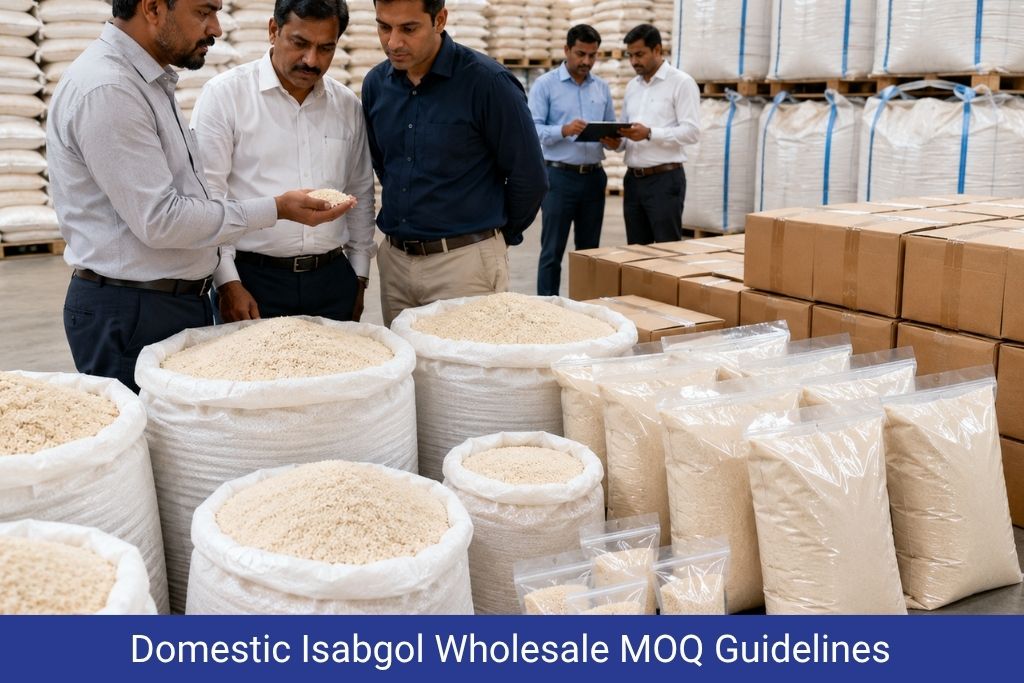
Domestic (India) Wholesale MOQ

For domestic Indian buyers (dietary supplement manufacturers, food processors, traders):

  • Isabgol husk – MOQ typically 500 kg to 1 MT
  • Isabgol husk powder – MOQ typically 500 kg
  • Small trial lots (25–100 kg) are sometimes available for new buyers at a modest premium

Export (International) Wholesale MOQ

For international buyers placing wholesale isabgol orders from India:

  • Standard export MOQ: 1 MT (LCL shipment)
  • Full container load: 18–20 MT (FCL, 20-foot container)
  • Trial shipment: Many suppliers accommodate 500 kg trial orders for first-time buyers, often at a 5–10% premium over standard pricing
  • Private label isabgol: MOQ of 1 MT minimum with 30–60 days lead time for custom packaging setup
Guar Gum Powder

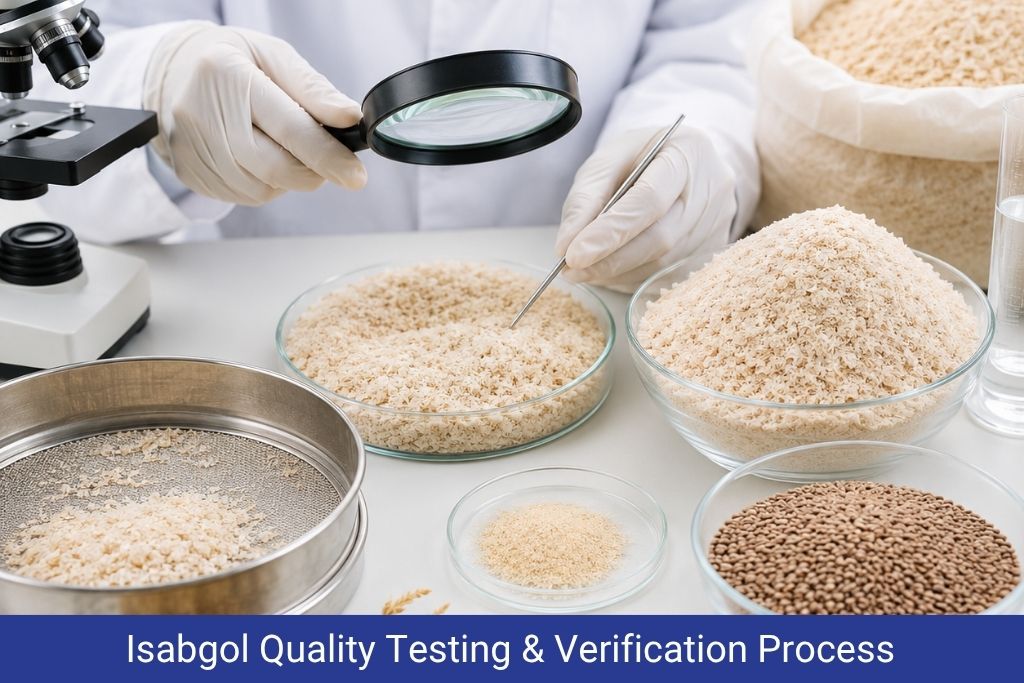
Quality Testing: How to Verify Isabgol Quality Before Purchase

Essential Tests to Request

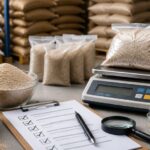
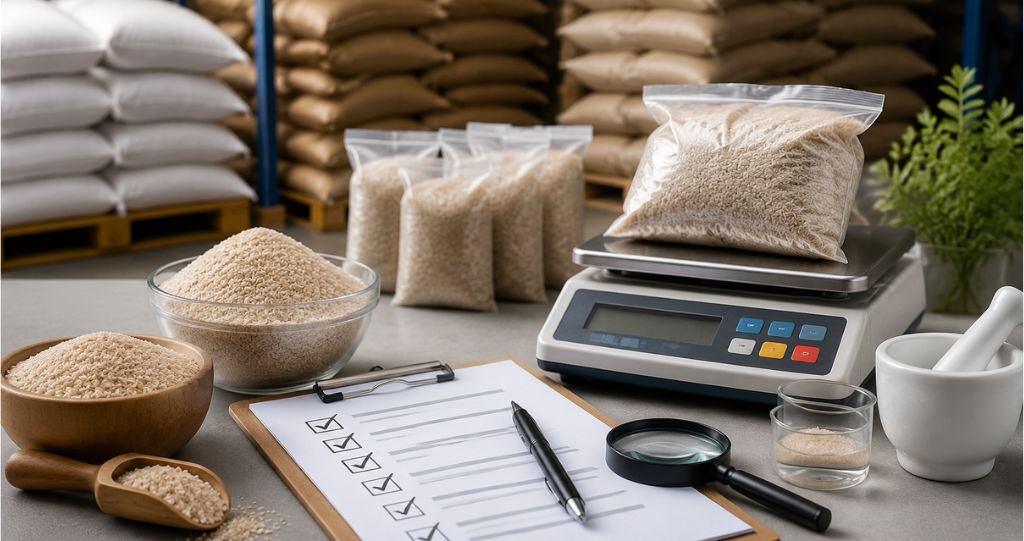
Before finalizing any wholesale isabgol purchase, buyers should request a Certificate of Analysis (CoA) from each batch covering the following parameters:

  • Husk purity (%): The primary specification – confirms the grade you are paying for
  • Swell volume / Swelling index (mL/g): The most important functional quality parameter – minimum 40 mL/g for USP/BP compliance; premium material 50–60+ mL/g
  • Moisture content (%): Should be ≤12% – higher moisture indicates poor storage or post-harvest handling
  • Total ash (%): ≤4% per pharmacopeial standards
  • Acid-insoluble ash (%): ≤1% – indicator of soil contamination
  • Foreign matter (%): Visual and sieve analysis
  • Microbial limits: Total aerobic count, E. coli, Salmonella absence
  • Heavy metals: If supplying pharmaceutical or EU markets
  • Pesticide residues: If supplying EU or organic-certified channels

Third-Party Testing

For large-volume or first-time supplier relationships, always commission independent third-party testing before releasing payment. Indian testing laboratories accredited by NABL (National Accreditation Board for Testing and Calibration Laboratories) are the standard benchmark.

Recommended approach: Send a sealed sample directly to an independent NABL-accredited laboratory, rather than relying solely on the supplier’s in-house CoA.

Get Bulk Psyllium, Spices & Grains QUOTES TODAY!

Message us on WhatsApp

WhatsApp

Bulk Psyllium Spices & Grains

Supplier Selection: 10 Questions to Ask Before Placing an Order

When evaluating potential wholesale isabgol suppliers in India, ask these ten questions:

  • What certifications do you hold? (ISO, GMP, FSSAI, Halal, Kosher, Organic)
  • Can you provide a Certificate of Analysis (CoA) for your last 3 production batches?
  • What is your annual production capacity? (Indicates ability to supply at scale)
  • Do you perform swell volume testing in-house or via a third-party laboratory?
  • What are your export documentation capabilities? (Phytosanitary, COO, COA, MSDS)
  • Can you support private label packaging and custom specifications?
  • What is your lead time from order confirmation to readiness for shipment?
  • Do you have experience exporting to my target market? (Compliance knowledge matters)
  • What is your policy on claims for short weight, off-specification material, or shipment damage?
  • Can you provide three commercial references from current buyers in my market?

Red Flags When Buying Wholesale Isabgol

Be cautious of suppliers who:

  • Cannot provide a CoA with actual swell volume data (not just a statement of compliance)
  • Quote prices significantly below market – often a signal of adulterated or downgraded material
  • Are unwilling to provide pre-shipment samples for testing
  • Cannot produce export documentation or phytosanitary certificates
  • Have no verifiable export track record or references
  • Request 100% advance payment without escrow or trade finance options for new relationships

Frequently Asked Questions

What is the current wholesale isabgol price per kg in India?

As of 2025–2026, wholesale isabgol husk (95% grade) ex-works India is approximately INR 170–220 per kg (roughly USD 2.10–2.70/kg). Prices fluctuate based on annual harvest, export demand, and grade specification. For the most accurate pricing, contact 3–5 Gujarat-based suppliers and compare quotations with matching specifications.

The standard minimum order quantity for isabgol export from India is 1 MT for LCL (Less than Container Load) shipments. Full container loads are typically 18–20 MT. Some suppliers accommodate 500 kg trial orders for first-time buyers, sometimes at a small premium. Domestic Indian buyers can often access smaller quantities starting from 100–500 kg.

Request the CoA with swell volume data expressed in mL/g, tested per USP, BP, or IP methodology. For independent verification, send a sealed sample to an NABL-accredited laboratory in India (such as SGS, Eurofins, or Intertek) and commission a swell volume test. This costs approximately USD 30–80 per sample and is strongly recommended for new supplier qualifications.

Yes. Organic certified isabgol (compliant with NOP for USA or EU Regulation 2018/848) is available from select Gujarat manufacturers. Organic isabgol commands a 30–50% price premium and has longer lead times due to limited supply. Annual NOP/EU organic audit certificates should be requested from the supplier.

For standard isabgol import, typical documentation includes: Commercial Invoice, Packing List, Bill of Lading/Airway Bill, Certificate of Origin (Form A / GSP for duty preference), Phytosanitary Certificate (issued by NPPO India), Certificate of Analysis, MSDS, and any applicable halal/kosher/organic certificates. Buyers in the EU or UK may additionally require a Declaration of Conformity with pesticide residue limits.

Yes. Most mid-to-large Indian isabgol manufacturers offer private label and contract manufacturing services. You supply the artwork; they handle filling, sealing, and labelling into your specification. MOQ for private label isabgol is typically 1 MT with 4–8 weeks lead time for initial label setup. Confirm FDA/EU food labelling compliance review is included in the service.

Isabgol and ispaghula refer to the same product – the seed husk of Plantago ovata. ‘Isabgol’ is the common Indian/Hindi market name; ‘ispaghula’ is the pharmacopeial and UK/European trade name. When placing orders, specify clearly: product form (seeds/husk/powder), purity grade (85/95/99%), and any applicable pharmacopeial standard (USP/BP/IP). This eliminates specification ambiguity across naming conventions.