





July 9, 2026
Mihir Shah
Share At:
Google AI ChatGPT Grok Perplexity

AI SUMMARY

Moringa powder – derived from dried Moringa oleifera leaves – has gained significant traction in the global cosmetics and skincare industry owing to its rich content of vitamins (A, C, E), antioxidants (quercetin, chlorogenic acid), amino acids, and behenic acid. It is incorporated into face packs, serums, scrubs, hair care products, and anti-ageing creams at concentrations ranging from 0.5% to 10%. The global moringa products market is growing rapidly, driven by demand from the USA, Europe, Japan, and the Middle East. Indian manufacturers supply high-quality moringa powder at competitive prices, making India a leading export origin.

Introduction: The Rise of Moringa in Clean Beauty and Cosmetics

Moringa oleifera – widely called the ‘miracle tree’ – has transitioned from a traditional Ayurvedic ingredient to a globally recognized cosmetic active. With the clean beauty movement accelerating demand for plant-based, sustainably sourced ingredients, moringa powder skincare applications have expanded dramatically across skincare, haircare, and wellness product categories.

For cosmetic formulators, brand owners, and wholesale buyers, understanding how moringa powder performs in formulations, what concentrations are effective, and how to source quality material from India is increasingly important.

Nutritional and Phytochemical Profile Relevant to Cosmetics

The functional benefits of moringa powder in cosmetics are underpinned by its exceptionally rich phytochemical profile. Dried moringa leaf powder contains:

  • Vitamins: Vitamin A (beta-carotene), Vitamin C, Vitamin E – all with antioxidant and skin-conditioning properties
  • Amino acids: 18 of 20 standard amino acids, including skin-conditioning agents such as arginine, glycine, and hydroxyproline precursors
  • Flavonoids: Quercetin and kaempferol – anti-inflammatory and UV-protective
  • Isothiocyanates: Moringin – exhibits antimicrobial activity relevant to acne and scalp care formulations
  • Fatty acids: Behenic acid (C22) – the same fatty acid prized in hair conditioning products
  • Minerals: Calcium, magnesium, and zinc – co-factors for collagen synthesis and wound healing

This multi-functional profile makes moringa powder a versatile active ingredient capable of addressing multiple skin concerns – from antioxidant protection and brightening to hydration and anti-inflammatory effects.

Get Your Custom Bulk Order Quote! Contact Us

Message us on WhatsApp

WhatsApp

Bulk Order

Formulation Applications: Where Moringa Powder Is Used in Cosmetics

Moringa Face Pack and Mask Formulations

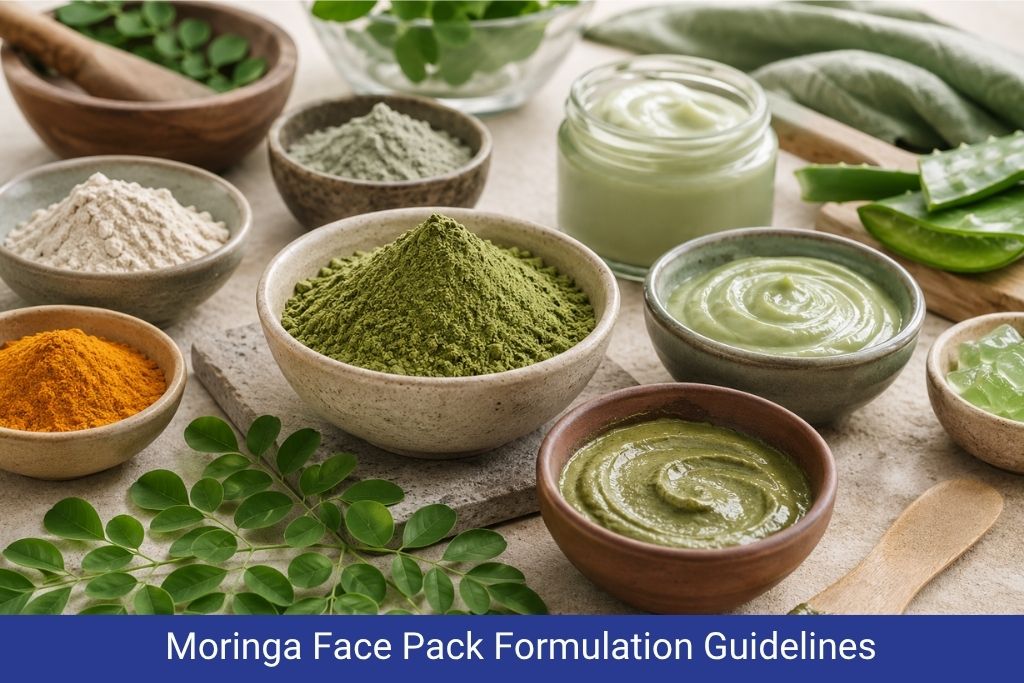
The moringa face pack is one of the most established cosmetic applications. Moringa powder is used as both an active ingredient and a texture contributor in clay-based and cream masks. Key formulation considerations for moringa face pack formulation:

  • Typical usage rate: 2–10% in face pack/mask formulations
  • Commonly combined with: bentonite clay, kaolin, turmeric powder, aloe vera gel
  • Shelf life impact: Due to antioxidant content, moringa can contribute to the oxidative stability of formulations, though the powder itself should be stored sealed, away from humidity
  • Color contribution: Moringa powder imparts a natural green color – valuable for green-beauty positioning, but requires consumer expectation management for use in rinse-off formats

Anti-Ageing Serums and Creams

Moringa is increasingly formulated into premium anti-ageing products, where its antioxidant vitamins (C and E) protect against free radical damage and its amino acids support collagen synthesis. In leave-on formulations:

  • Typical usage rate: 0.5–3% in serums; 1–5% in creams and lotions
  • Formulation challenge: Moringa powder is not water-soluble; it must be suspended or an extract must be used in water-phase formulations. Dry blending into emulsions or using standardized moringa extracts are common approaches.
  • Synergies: Pairs well with hyaluronic acid, niacinamide, and vitamin C serums for brightening

Hair Care - Shampoos, Conditioners, and Scalp Treatments

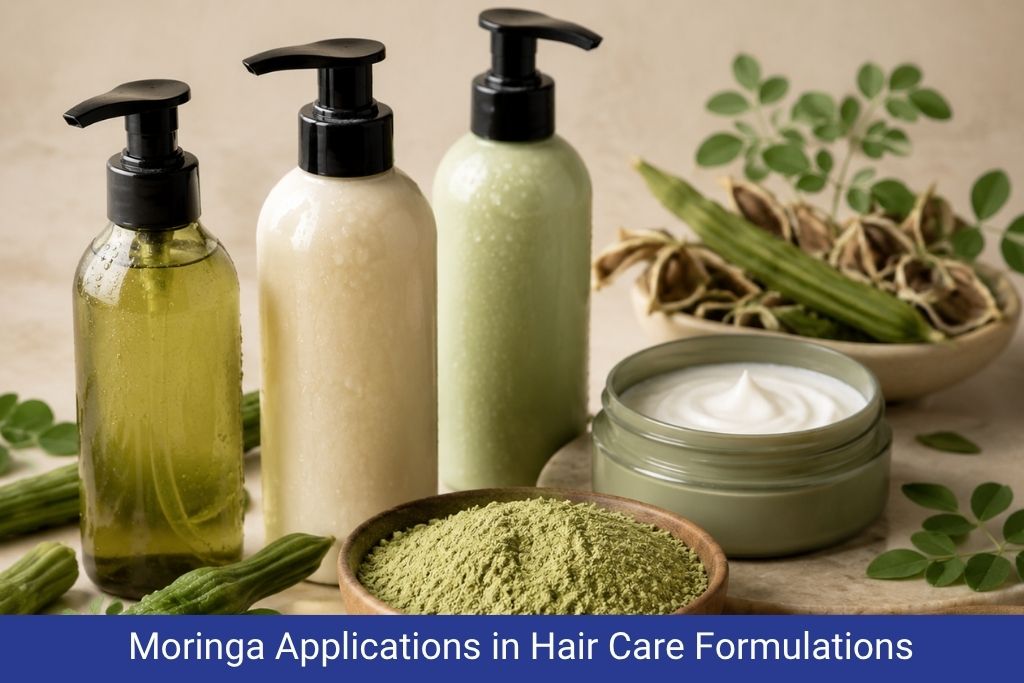
Moringa powder’s behenic acid content makes it especially relevant to hair care. Behenic acid is found in commercial hair conditioning actives such as cetyl alcohol blends and is valued for its smoothing and frizz-reducing properties.

  • Typical usage rate: 1–5% in hair masks; 0.5–2% in shampoo/conditioner
  • Scalp care positioning: Moringa’s antimicrobial isothiocyanates position it well for dandruff control and scalp health products
  • Clean beauty credential: As a plant-derived conditioning agent, moringa supports silicone-free and sulfate-free product positioning

Body Scrubs and Exfoliating Products

In scrub formulations, moringa powder contributes both active skin benefits and mild physical exfoliation when used at higher concentrations:

  • Typical usage rate: 3–8% in body scrubs
  • Best particle size: 80–100 mesh (fine) for a gentle scrub; 40–60 mesh for more pronounced exfoliation
  • Formulation tip: Combine with sugar or salt carriers and nourishing oils for a clean-label botanical scrub positioning
Amla Powder Without Seeds

Recommended Concentrations for Moringa Powder in Cosmetics

Application Min % Max % Notes
Face pack / Clay mask 2% 10% Rinse-off; color visible
Anti-ageing serum 0.5% 3% Extract preferred in water phase
Day/night cream 1% 5% Suspension needed
Hair mask 1% 5% Behenic acid benefits
Shampoo/conditioner 0.5% 2% Functional + label claim
Body scrub 3% 8% 80 mesh for gentle exfoliation
Eye cream 0.5% 1% Low % to avoid irritation

Global Market Demand: Moringa Powder in Cosmetics

United States

The US moringa products market is one of the fastest-growing globally. Demand for moringa powder in the USA spans both the dietary supplement and personal care sectors. Moringa-based skincare is prominently positioned in the natural and organic beauty retail channel (Whole Foods, iHerb, Thrive Market). The moringa powder price in the USA at retail ranges from USD 15–50 per 100g for premium cosmetic-grade material, indicating significant margin opportunity

Europe and the Middle East

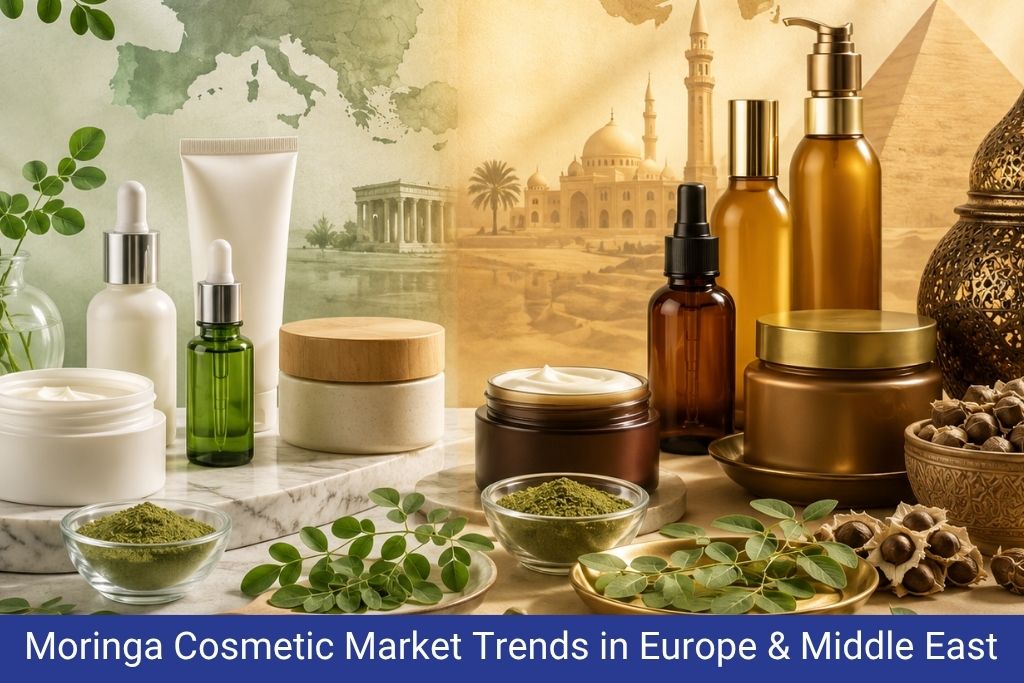
European demand for moringa in cosmetics is driven by the clean beauty and Ecocert/COSMOS certification trend. Germany, the UK, and France are leading markets. Middle Eastern demand is growing rapidly, particularly for moringa-based hair care (aligned with cultural hair care traditions). Moringa in Egypt and the wider North African market is also expanding as local production increases.

Japan and South Korea

Asia-Pacific cosmetic markets have shown strong uptake for moringa in face packs and brightening formulations. Japanese consumers associate moringa with both detox and anti-pollution skincare – a high-growth positioning in urban markets.

Connect with Us for Export Deals! Contact Us

Message us on WhatsApp

WhatsApp

Contact us

Sourcing Moringa Powder from India for Cosmetic Applications

India is a leading supplier of cosmetic-grade moringa powder, with Andhra Pradesh, Tamil Nadu, and Rajasthan as major production states. When sourcing moringa powder for cosmetics:

  • Specify cosmetic grade: Request certificates confirming heavy metal limits, pesticide residue testing, and microbial limits suitable for cosmetic use
  • Particle size: 80 mesh or finer for most cosmetic applications – request sieve analysis in CoA
  • Color standardization: Natural green color can vary by season; request color specification (CIE L*a*b* values) if batch-to-batch consistency matters
  • Certifications: ISO 22716 (GMP for cosmetics), Ecocert or COSMOS for organic claim, REACH compliance documentation for EU export
  • MOQ: Most Indian moringa powder exporters have MOQs of 100–500 kg for cosmetic grade

Frequently Asked Questions

Is moringa powder safe for use in leave-on cosmetics?

Yes, moringa powder is generally recognized as safe for topical cosmetic use at the concentrations typically used (0.5–5%). It does not appear on restricted ingredient lists under EU Cosmetics Regulation 1223/2009 or the FDA’s cosmetic ingredient database. However, as with any botanical ingredient, patch testing is recommended for sensitive skin formulations, and cosmetic manufacturers should conduct stability and safety assessment as part of their product development process.

For most face pack and mask applications, 80 mesh (approximately 177 micron) moringa powder provides an ideal balance of smooth texture, dispersibility, and active release. For scrub applications where physical exfoliation is desired, 40–60 mesh is appropriate. For serums or emulsions, a fine extract (water-soluble or hydroglycolic) is preferred over raw powder.

Moringa powder’s natural green color from chlorophyll can temporarily stain skin and is visible on application. In rinse-off products (face packs, scrubs) this is generally acceptable. In leave-on products, formulators typically use moringa extract rather than crude powder to avoid visible green tint on skin.

Wholesale moringa powder prices from Indian suppliers for cosmetic grade range from approximately USD 3–8 per kg (FOB India) depending on organic certification, particle size specification, and order volume. Organic certified cosmetic-grade moringa typically commands a premium of 40–80% over conventional. Retail prices in Western markets are 5–10x the wholesale price, reflecting significant value-add through brand and product formulation.

Moringa’s key differentiator from amla (vitamin C focus) and ashwagandha (adaptogenic stress positioning) is its multi-functional profile – simultaneously addressing antioxidant protection, conditioning (behenic acid), anti-inflammatory, and nutritional skin support. This makes moringa particularly versatile for multi-benefit product claims, which are increasingly valued by clean beauty consumers.