



AI Summary
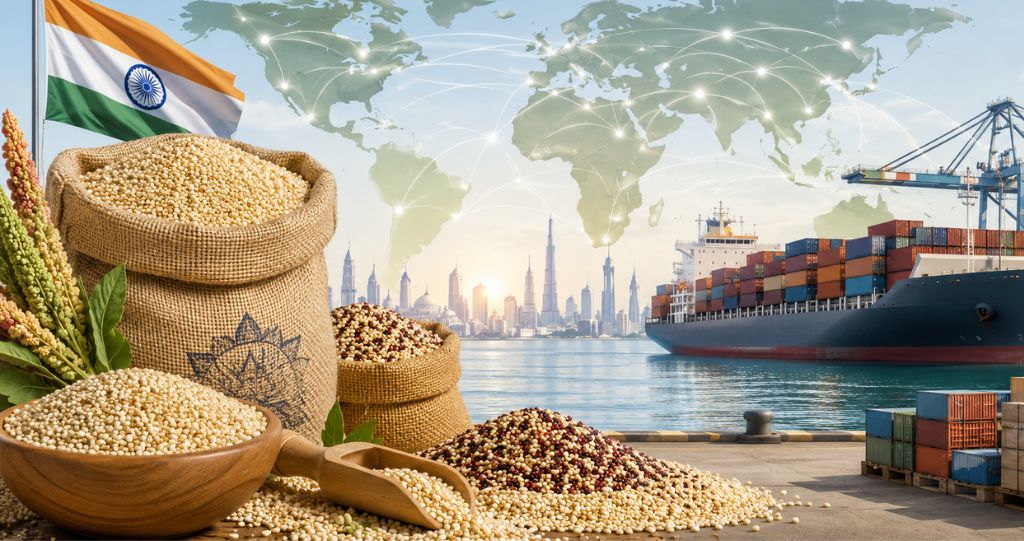
The top 10 quinoa seed export markets for Indian suppliers are the United States, the United Kingdom, Germany, the United Arab Emirates, Canada, Australia, the Netherlands, Saudi Arabia, Japan, and Singapore. Indian quinoa, cultivated across Rajasthan, Andhra Pradesh, Karnataka, and Uttarakhand, competes with traditional South American origin on price while meeting international purity, saponin removal, and pesticide compliance norms. Freight advantages of 10 to 15 days to Asian and Gulf destinations further strengthen Indian quinoa export competitiveness. Giriraj Enterprise supplies machine cleaned, saponin washed white quinoa seeds at 99 percent purity with complete export documentation for all these destinations in bulk and private label formats.
Introduction
Quinoa occupies a special position among global health foods because it is a complete protein grain containing all nine essential amino acids, a claim almost no other plant staple can make, alongside natural gluten free status and low glycemic behavior. This nutritional resume made quinoa the flagship of the plant based movement and pushed world consumption from a niche Andean crop to a supermarket staple within fifteen years. Peru and Bolivia pioneered supply and still dominate volume, but their price volatility and long shipping routes opened space for new origins. Indian quinoa seed exporters entered this gap with cultivation programs across Rajasthan, Andhra Pradesh, Karnataka, and the Himalayan foothills of Uttarakhand, and Indian material now flows to buyers on every continent. Shorter transit to Asia and the Middle East, competitive farm costs, and professional export processing give Indian suppliers structural advantages that keep widening. These are the ten markets rewarding those advantages most, along with what each one specifically demands.
United States: Premium Demand for Organic Quinoa Seeds
The United States is the world’s largest quinoa consumer, importing well over 30,000 tonnes annually across retail, food service, and ingredient channels, and it anchors any serious Indian quinoa export strategy. American demand splits between conventional grain for food manufacturing and a large premium segment buying organic quinoa seeds certified under USDA NOP, where retail prices run roughly double conventional levels. Indian suppliers holding NOP certification are steadily winning share from South American origins because landed costs from Indian ports frequently undercut Andean material by meaningful margins, especially during Peruvian price spikes. US buyers demand FDA facility registration, thorough pesticide screening, and consistent cooking quality, since American consumers judge quinoa on fluffiness and absence of bitter saponin aftertaste. Ready to eat grain bowls, quinoa based snacks, and boxed side dishes create industrial demand beyond bagged retail grain. Importers who successfully trial Indian origin typically consolidate it into annual programs, valuing the supply diversification against weather driven Andean shortfalls.



United Kingdom: Health Retail Growth for Gluten Free Quinoa Grain
UK supermarkets, meal kit companies, and health brands position gluten free quinoa grain across ready meals, salad ranges, and grain pouches, making Britain one of Europe’s most developed quinoa markets per capita. The UK gluten free category alone exceeds a billion pounds in retail value, and quinoa features prominently as the premium carbohydrate within it, appearing in everything from microwave pouches to quinoa crisps. British buyers emphasize consistent 99 percent purity with minimal black or red seed admixture in white grades, because visual uniformity matters on retail shelves, and they audit suppliers against BRCGS aligned expectations even for raw grain. Post Brexit customs independence means UK importers increasingly contract Indian suppliers directly rather than pulling stock through EU distributors, shortening the chain and improving margins on both sides. Private label programs for major grocery chains generate the largest single orders, with tenders specifying exact grain size, moisture, and microbiological parameters. Indian exporters able to pass UK retailer technical audits find this market delivers stable volumes at prices above continental European averages.
Germany: Europe’s Largest Buyer of White Quinoa in Bulk
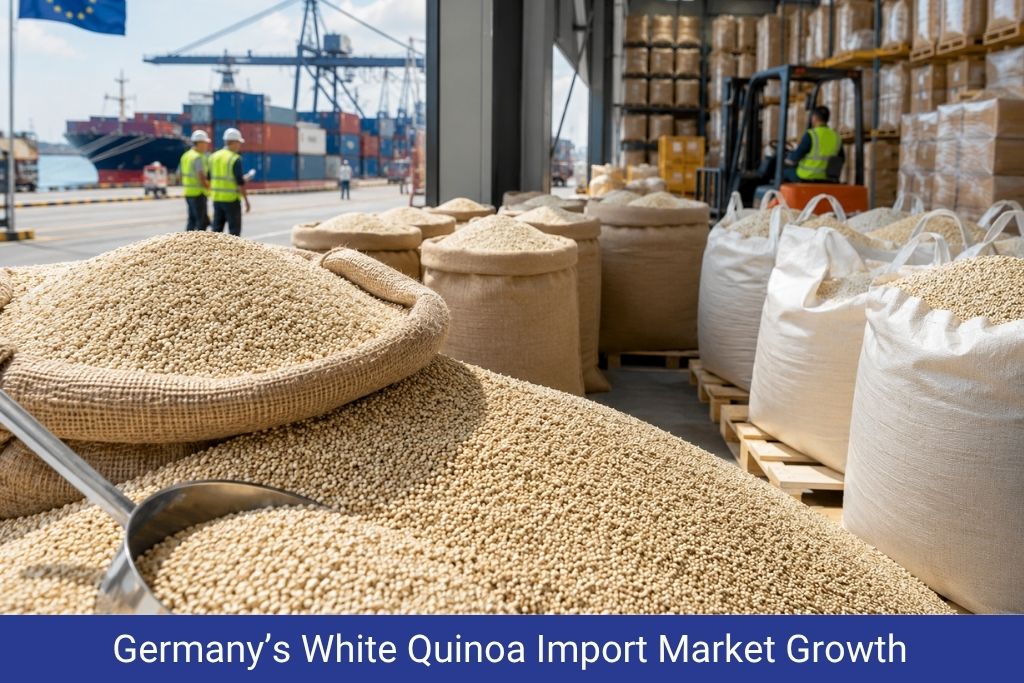
German importers purchase white quinoa in bulk for repacking and distribution across the entire European Union, combining Germany’s own substantial organic consumption with its role as continental wholesale hub. German organic retail, the largest such market in Europe, treats quinoa as a category staple, and Bioland or Naturland aligned buyers frequently require organic certification exceeding baseline EU standards. Compliance with EU pesticide maximum residue limits is the single decisive factor in supplier selection here, because German laboratories test incoming containers rigorously and a single MRL failure results in rejection, mandatory reporting, and effective blacklisting of the shipper.
Indian suppliers who invest in residue monitored farm programs convert this German strictness into an advantage, since passing German scrutiny becomes a marketing credential across Europe. Volume contracts typically run annually with quarterly shipment schedules, giving qualified exporters predictable production planning. German buyers also increasingly ask for carbon footprint documentation and social compliance information, foreshadowing requirements likely to spread across all European quinoa procurement.
United Arab Emirates: Regional Hub for Quinoa Seed Wholesale
Dubai traders buy quinoa seed wholesale for GCC supermarket chains, hypermarkets, and the hotel and catering sector, then re export onward across the Gulf, East Africa, and Central Asia. The UAE’s affluent, health conscious, and heavily expatriate population adopted quinoa early, and it now appears routinely in supermarket grain aisles, restaurant menus, and meal delivery services across Dubai and Abu Dhabi. Indian shippers hold a decisive freight advantage of 10 to 15 days over South American origins, with Mundra to Jebel Ali transit completing within a week, which lets Gulf traders run lean inventories and respond to demand without the working capital burden of trans Pacific lead times. Halal certification and Gulf conformity documentation are standard requirements, and Arabic language labeling support wins retail programs. Ramadan meal planning and the winter tourism season create predictable demand peaks that experienced exporters schedule around. For Indian quinoa suppliers, the UAE frequently serves as the first export market where new processors prove their capabilities before attempting stricter western destinations.
Canada: Clean Label Buyers of Royal Quinoa Alternatives
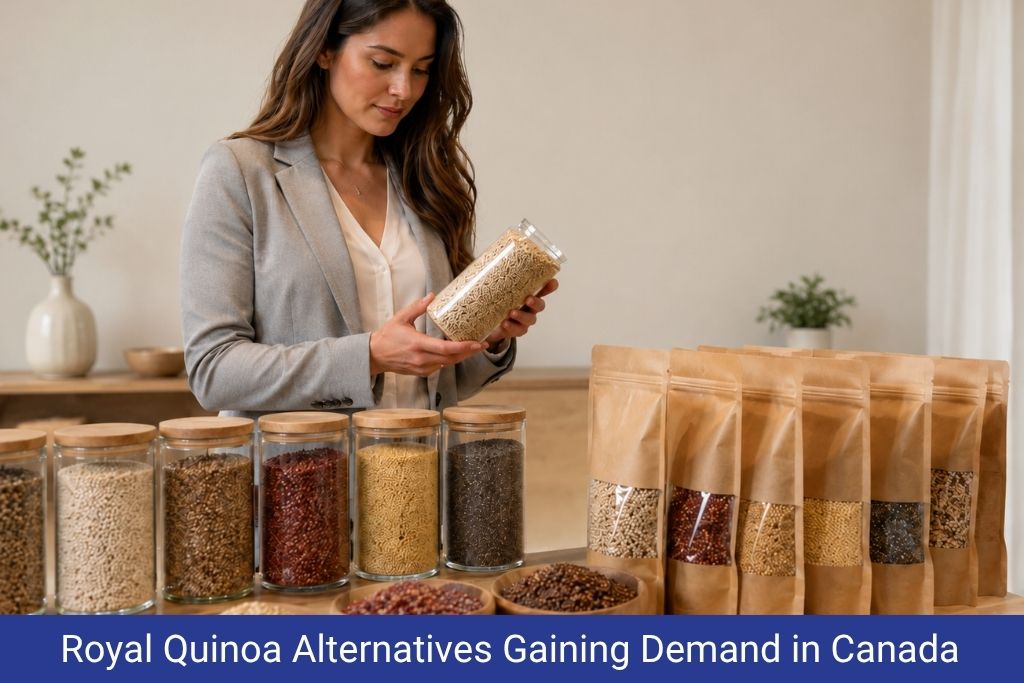
Canadian brands historically imported Bolivian royal quinoa, the large grained altiplano variety considered the category benchmark, but sustained Andean price inflation has pushed them toward Indian white quinoa of comparable grain size at substantially lower cost. Canada consumes quinoa enthusiastically relative to its population, supported by strong plant based eating trends and a large South Asian diaspora already familiar with the grain, and Canadian food manufacturers use it across cereals, snack bars, and frozen entrees.
Buyers apply clean label scrutiny, demanding non GMO declarations, allergen statements, and complete traceability, while Health Canada import rules require standard food safety documentation that professional Indian exporters handle routinely. Grain size comparison against royal quinoa is the critical technical hurdle; Indian lots with bold, uniform seeds above 1.8 millimeters compete directly, while smaller grades sell into industrial milling channels for quinoa flour and flakes. Toronto and Vancouver importers often serve both Canadian retail and cross border US customers, multiplying the value of each qualified relationship. Loyalty runs deep once quality is proven, with relationships commonly extending across many years of quarterly orders.
Australia: Strict Biosecurity Buyers of Processed Quinoa Seeds
Australia demands fully cleaned, saponin washed processed quinoa seeds accompanied by fumigation certificates, phytosanitary documentation, and precise packing declarations, enforced through one of the world’s toughest biosecurity inspection regimes. Containers arriving at Australian ports face physical inspection, and any live insect detection, seed contamination, or documentation gap triggers mandatory treatment, re export, or destruction at the importer’s cost, so Australian buyers work exclusively with professional export houses holding clean inspection histories. Domestic Australian quinoa farming exists in Tasmania and Western Australia but covers only a fraction of national consumption, leaving structural import demand that Indian suppliers increasingly fill alongside Peruvian material. Australian consumers pay premium retail prices, and the market skews strongly toward organic and health positioned products sold through both mainstream grocers and a dense independent health food channel. Buyers here also value white, red, and tricolor quinoa assortments for retail variety, rewarding suppliers who can deliver multiple types in consolidated shipments. Passing Australian biosecurity consistently becomes a credential Indian exporters leverage with cautious buyers in other developed markets.
Our Other Product
Nigella Seeds (Kalonji)Netherlands: Rotterdam Distribution of Conventional Quinoa Supply
Dutch trading companies consolidate conventional quinoa supply through Rotterdam for onward distribution to Scandinavia, Eastern Europe, and southern European food manufacturers, buying full containers on structured annual contracts. The Netherlands imports far more quinoa than its domestic market consumes, functioning as Europe’s grain trading floor where price discovery happens and where new origins earn or lose continental credibility.
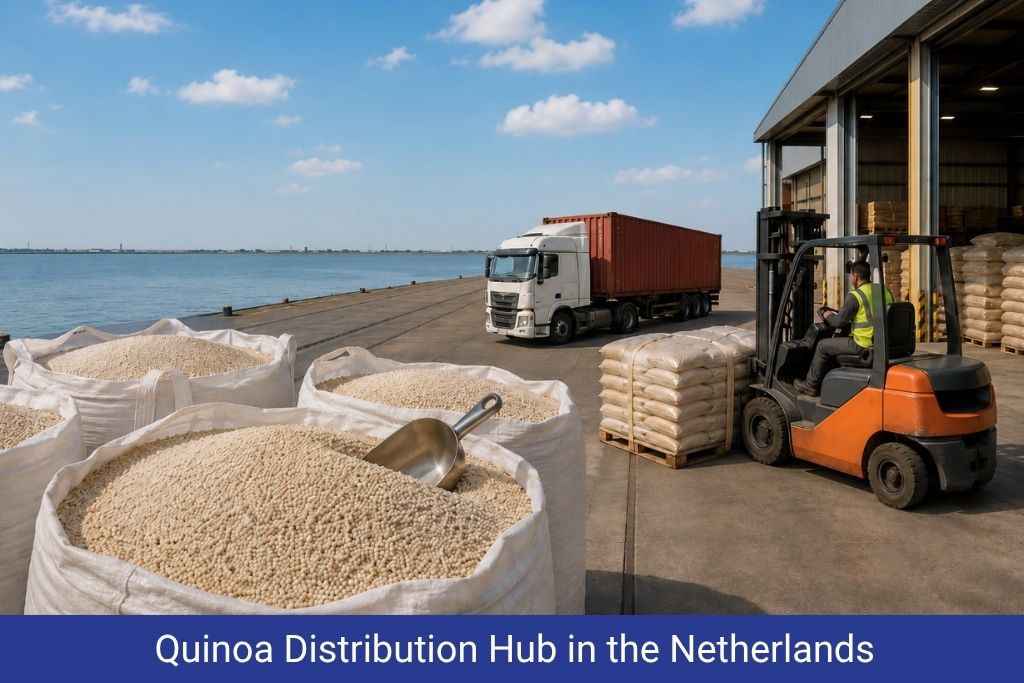
Dutch buyers are commercially aggressive negotiators who nonetheless pay promptly and order predictably, making them valuable baseline volume customers for Indian exporters balancing seasonal retail demand elsewhere. Technical requirements center on EU MRL compliance, moisture below 12 percent for warehouse stability, and consistent purity, with documentation packages expected complete and correct on first presentation. Several Rotterdam houses operate their own repacking facilities converting 25 kg bulk bags into retail and food service formats under dozens of European brands, so a single Dutch relationship can place Indian quinoa on shelves across ten countries. Traders here also provide honest market intelligence on pricing and competing origins, information that helps Indian suppliers calibrate their global offers.
Saudi Arabia: Rising Consumption of Healthy Grains and Superfoods
Health awareness campaigns, rising obesity concerns, and government wellness initiatives under Vision 2030 have driven Saudi supermarket demand for healthy grains and superfoods, with quinoa leading the category alongside chia and oats. Saudi Arabia’s young, urban, increasingly health literate population encounters quinoa through social media food culture, gym nutrition, and the rapid expansion of healthy restaurant concepts in Riyadh and Jeddah, translating directly into retail velocity. Importers historically sourced through Dubai consolidators, but larger Saudi distributors now contract Indian quinoa seed suppliers directly to capture margin and secure supply, a structural shift favoring exporters ready to manage Saudi FDA registration and Arabic labeling requirements. Halal certification is assumed, and SASO conformity documentation accompanies every shipment. The institutional catering segment serving schools, hospitals, and corporate campuses adds tender based volume on top of retail growth. With per capita quinoa consumption still far below western levels and disposable income high, Saudi Arabia offers Indian exporters one of the strongest volume growth trajectories on this entire list.
Our Other Product
Coriander SeedsJapan: Quality Focused Imports of Prewashed Quinoa
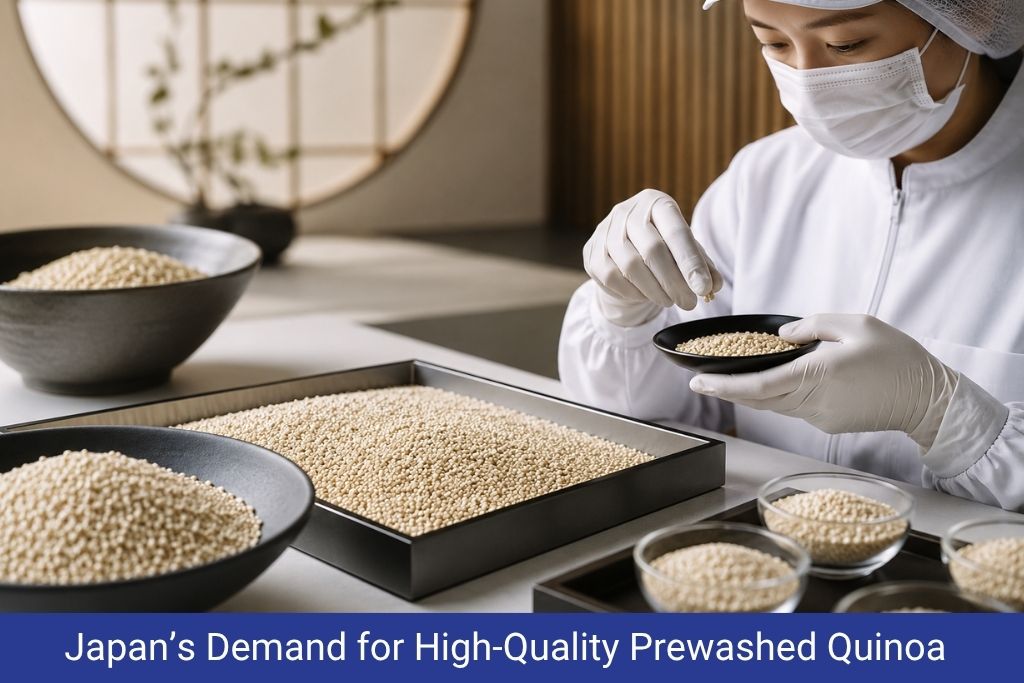
Japanese food companies require prewashed quinoa with saponin levels below sensory detection, immaculate grain uniformity, and comprehensive residue testing under Japan’s positive list pesticide system, and they compensate suppliers meeting these standards with the highest prices in the global quinoa trade. Japan uses quinoa distinctively, blending it into rice at 5 to 15 percent for nutritional enhancement, incorporating it into bento products, and formulating quinoa into health positioned snacks and cereals, applications where any bitterness or visual defect is unacceptable.
Buyers begin relationships with small trial lots, subject them to months of internal testing and consumer evaluation, and scale slowly, so Indian exporters need patience and flawless consistency to convert Japanese interest into volume. Documentation expectations include detailed residue certificates covering hundreds of compounds, process flow descriptions, and often factory audit access. The reward structure justifies the effort: Japanese contracts run for years with minimal price pressure once trust is established, and Japanese qualification signals quality to buyers worldwide. Indian quinoa’s freight advantage over South America is particularly meaningful here, cutting weeks from replenishment cycles.
Singapore: Southeast Asian Gateway for Quinoa Seed India Origin
Singapore distributors channel quinoa seed India origin into Malaysia, Indonesia, Thailand, Vietnam, and the Philippines, where westernizing diets and expanding middle classes are adopting health grains at accelerating rates. Singapore itself consumes quinoa heavily through its affluent, internationally oriented population, with the grain standard across upscale supermarkets, salad chains, and corporate catering, but the city state’s larger commercial value lies in its role as Southeast Asia’s food distribution hub. Regional buyers prefer transacting through Singapore’s efficient legal and banking infrastructure, so Indian exporters establishing one strong Singaporean distributor effectively gain access to half a billion Southeast Asian consumers. Import requirements are professional but pragmatic, centering on Singapore Food Agency registration and standard safety documentation rather than the exhaustive testing regimes of Japan or Germany. Short shipping routes from Indian east coast ports keep logistics costs minimal and replenishment fast. As Muslim majority Indonesia and Malaysia grow within this distribution web, Halal certified Indian quinoa gains a specific advantage over uncertified competing origins.
Why Global Buyers Choose Giriraj Enterprise as Their Quinoa Seed Supplier
- Machine cleaned, gravity separated, and saponin washed quinoa achieving 99 percent purity with bold uniform grain size
- Both conventional and certified organic supply chains with farm level traceability documentation
- Moisture controlled below 12 percent and professionally fumigated packing for safe ocean transit to any climate zone
- Private label retail pouches alongside 25 kg bulk export bags, with custom printing and barcode support
- Complete export documentation including Certificate of Analysis, phytosanitary certificate, certificate of origin, and Halal certification where required
- Competitive Indian origin pricing with freight advantages of one to two weeks against South American quinoa for Asian and Gulf buyers
Frequently Asked Questions
Is Indian quinoa as good as Bolivian quinoa?
Yes. Properly processed Indian quinoa matches international standards for purity, protein content, saponin removal, and cooking quality, while offering lower pricing and faster shipping. Bold grained Indian lots compete directly with Bolivian royal quinoa in premium applications.
Which country is the biggest importer of quinoa from India?
The United States leads Indian quinoa export demand, followed by the United Kingdom, Germany, and the United Arab Emirates, with Saudi Arabia and Southeast Asia growing fastest.
What is the difference between quinoa vs chia seeds for importers?
Quinoa is a cooked grain used as a rice and couscous substitute, while chia is consumed raw in beverages, puddings, and toppings. Many importers buy both from a single Indian supplier to consolidate containers and reduce per unit freight costs.
What quality parameters matter when buying bulk quinoa seeds?
Buyers should verify purity percentage, complete saponin removal confirmed by taste and foam testing, moisture below 12 percent, uniform grain size, pesticide residue compliance for the destination market, and absence of foreign matter and admixture.
Does Giriraj Enterprise export quinoa seeds in private label packaging?
Yes. Giriraj Enterprise offers private label quinoa seeds with custom pouch printing, brand labeling, and barcode integration for retail brands worldwide, alongside standard bulk export packing.

Mihir Shah is the CEO of Giriraj Enterprise, a trusted manufacturer, supplier, and exporter of Psyllium products, whole spices, ground spices, herbal products, guar gum and other agro products like Quinoa Seeds, Chia Seeds including Isabgol, Plantago ovata Seeds, Ispaghula Husk Powder and Kha Kha Powder. Founded in 1973 and based in Unjha, Gujarat, Giriraj Enterprise has grown significantly under Mihir’s leadership, establishing itself as a trusted name in the global market. With a focus on high-quality standards and adherence to international food norms, the company serves a wide customer base across the globe.
A strategic thinker with a passion for sustainable growth, Mihir has played a pivotal role in expanding the company’s production capacity, which now stands at 3,000 quintals per month, and in ensuring that Giriraj Enterprise remains at the forefront of innovation in the industry. His commitment to quality is reflected in the company’s stringent in-house quality testing and third-party verification, ensuring that all products meet the highest standards of excellence. He is dedicated to driving customer satisfaction by offering fast, reliable services both domestically and internationally.
Through his writing, Mihir shares valuable insights and knowledge about Psyllium, spices, herbal and other agro products, educating readers on their benefits and the role they play in promoting health and well-being. His goal is to provide factual, transparent information to help consumers and businesses make informed decisions.