



AI Summary
The top 10 red chilli producing states in India are Andhra Pradesh, Telangana, Madhya Pradesh, Karnataka, West Bengal, Odisha, Maharashtra, Tamil Nadu, Gujarat, and Rajasthan. India produces around 2 million tonnes of dry chilli annually, and Andhra Pradesh alone contributes roughly 40 percent of national output, anchored by the Guntur market, Asia’s largest chilli trading yard. Each state’s soil, climate, and traditional variety choice yields distinct pod characteristics, from fiery Teja in Telangana to color rich Byadgi in Karnataka. This regional specialization lets exporters like Giriraj Enterprise match every buyer’s exact heat and color specification with the ideal origin and variety through multi state dry red chilli sourcing.
Introduction
India produces close to 2 million tonnes of dry chilli each year across remarkably diverse agro climatic zones, from the red soils of coastal Andhra Pradesh to the arid fields of Rajasthan and the humid plains of West Bengal. This geographic spread is not incidental to the export business; it is the foundation of it, because each state’s combination of soil type, rainfall, temperature, and generations of variety selection produces pods with distinct pungency, color, size, and flavor profiles. A buyer needing maximum heat looks to Telangana, one needing brilliant color looks to Karnataka, and one needing authentic sambar chilli looks to Tamil Nadu, meaning professional dry red chilli sourcing always begins with knowing the producing belts and what each reliably delivers. Understanding this geography also explains price formation, harvest timing, and supply security, since concentration in particular regions creates both specialization and risk. For importers, recognizing origin helps verify variety authenticity and anticipate seasonal availability. Here are the ten states that grow India’s chilli and the commercial identity each one carries.
Andhra Pradesh: Home of the Guntur Chilli Market
Andhra Pradesh is the undisputed leader of red chillies India production, contributing roughly 40 percent of the national crop and hosting the Guntur market, the largest chilli trading yard in Asia and the price setting hub for the entire subcontinent. The state’s fertile red and black soils across Guntur, Prakasam, Krishna, and Kurnool districts grow the celebrated Guntur Sannam, high heat Teja, and economy 334 varieties, giving it the broadest variety portfolio of any producing region. During peak arrival season the Guntur yard trades over ten lakh bags, and its daily quotations effectively determine what buyers worldwide pay, making the market a genuine global price benchmark rather than merely a local trading post. The surrounding cold storage infrastructure, holding many millions of bags, allows the March harvest to be released across all twelve months, giving exporters year round supply security no other state matches. Andhra’s combination of scale, variety diversity, quality infrastructure, and price transparency makes it the natural anchor of any serious chilli export operation. Buyers who understand Indian chilli invariably start their sourcing conversation with Andhra Pradesh origin.



Telangana: The Teja Chilli Cultivation India Depends On
Telangana, carved from northern Andhra Pradesh, has become the epicenter of high pungency chilli cultivation India relies on for its hottest export varieties, with Khammam and Warangal districts specializing in Teja S17. The region’s climate and soils suit the intense capsaicin development that Teja demands, and the Khammam market has grown into a major trading center specifically for this fiery variety that oleoresin extractors and hot sauce manufacturers prize. Chinese buyers, who absorb enormous Teja volumes for extraction and hot pot seasoning, watch Telangana arrivals closely, and their buying activity drives sharp seasonal price movements that ripple through the global hot chilli trade. Beyond Teja, Telangana produces Sannam and extraction grade varieties feeding both domestic grinding and international extract industries. The state’s farmers increasingly grow under buyback arrangements with extraction companies seeking guaranteed capsaicin supply, formalizing what was once purely open market trade. For exporters serving the heat and extraction end of the market, Telangana is the essential sourcing origin, and proximity to Andhra’s infrastructure lets material flow efficiently to export processing and ports.
Madhya Pradesh: Fast Growing Hub for Hybrid Red Chilli Farming
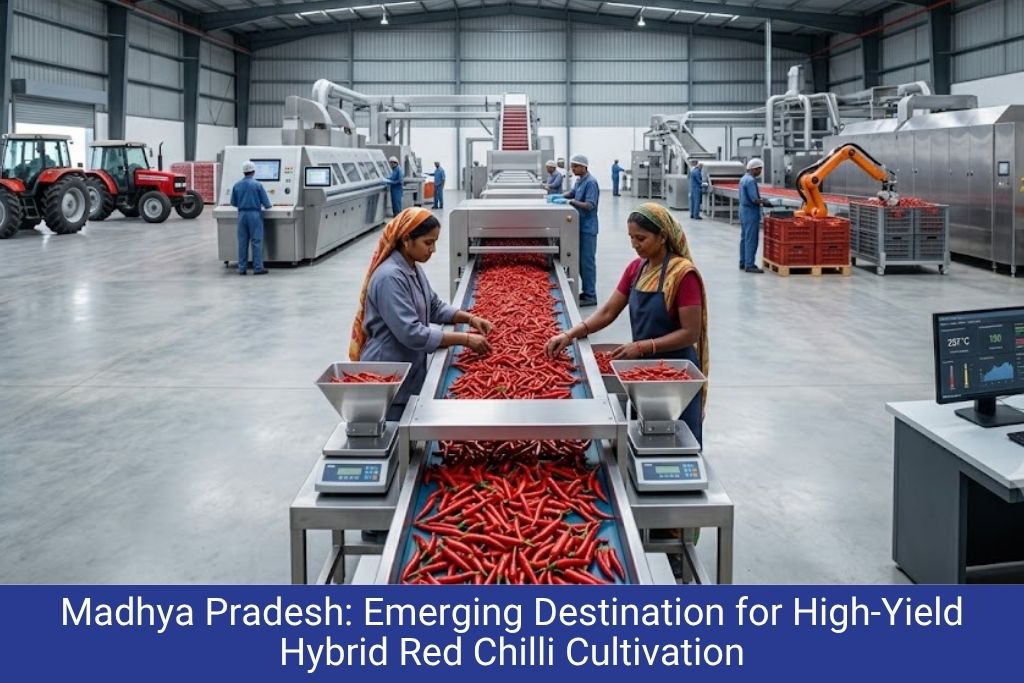
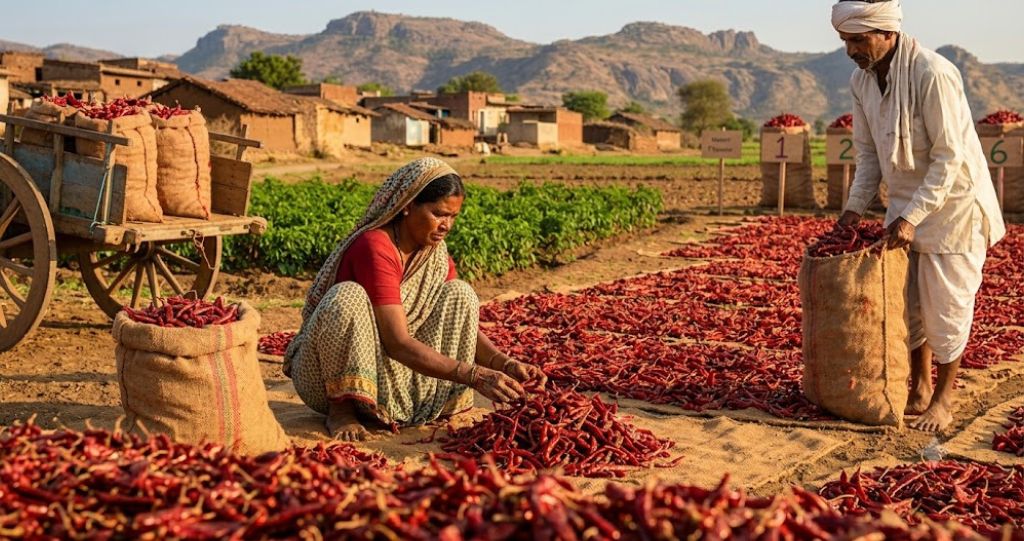
Madhya Pradesh has emerged as India’s fastest expanding chilli region, with the Nimar belt around Khargone, Dhar, and Barwani districts scaling hybrid red chilli farming rapidly over the past decade. The state’s fertile Narmada valley soils and favorable irrigation support high yielding hybrid varieties like Wonder Hot, producing long, glossy, uniformly red pods well suited to chilli flakes and powder applications gaining demand in western markets. Madhya Pradesh serves both fresh and dry chilli markets, and its growing dry output increasingly enters export processing channels as the region’s quality and consistency improve.
Read Our Article
Top 10 Ground Spices Every Kitchen Should HaveThe Bedia and surrounding markets have developed into significant trading points, adding liquidity and price competition that benefit buyers. Because the state grows modern hybrids rather than traditional landraces, its material appeals to buyers wanting the uniform appearance and predictable characteristics that hybrids deliver, particularly for flakes and visual seasoning products. As cultivation continues expanding and processing infrastructure matures, Madhya Pradesh is steadily claiming a larger share of India’s chilli export supply, offering exporters an alternative sourcing base that diversifies away from concentration in the southern states.
Karnataka: Origin of GI Tagged Byadgi Chilli Production
Karnataka anchors the color end of India’s chilli production through the world famous Byadgi chilli grown in Haveri and Dharwad districts, whose deeply wrinkled, dark red pods yield exceptional ASTA color at mild heat. This color richness makes Karnataka the center of India’s natural color extraction supply chain, feeding oleoresin plants that produce the capsanthin based red colorants used across global food, cosmetic, and even poultry feed industries. The Byadgi variety carries a Geographical Indication tag protecting its regional authenticity, and genuine Byadgi commands substantial premiums over imitation wrinkled chillies grown elsewhere, making Karnataka origin a specific value marker buyers seek. The Byadgi market town gives its name to the variety and serves as the trading hub where color grade material concentrates. Beyond Byadgi, Karnataka produces other chilli types across its diverse growing zones, but its international identity rests firmly on color. The climatically sensitive Byadgi crop creates supply and price volatility that buyers manage through early contracting and relationships with exporters holding cold storage. For any buyer whose application prioritizes redness over heat, Karnataka is the indispensable sourcing origin.
Our Other Product
TurmericWest Bengal: Eastern India’s Fresh and Dry Chilli Supplier
West Bengal contributes significantly to national chilli production, serving eastern domestic markets and anchoring cross border trade with neighboring Bangladesh, one of the world’s largest chilli importers. The state’s humid climate and fertile Gangetic soils support cultivation of distinctive smaller pod varieties suited to the pungency preferences of eastern Indian and Bangladeshi cuisine, which differ from the color and size priorities of southern export grades.
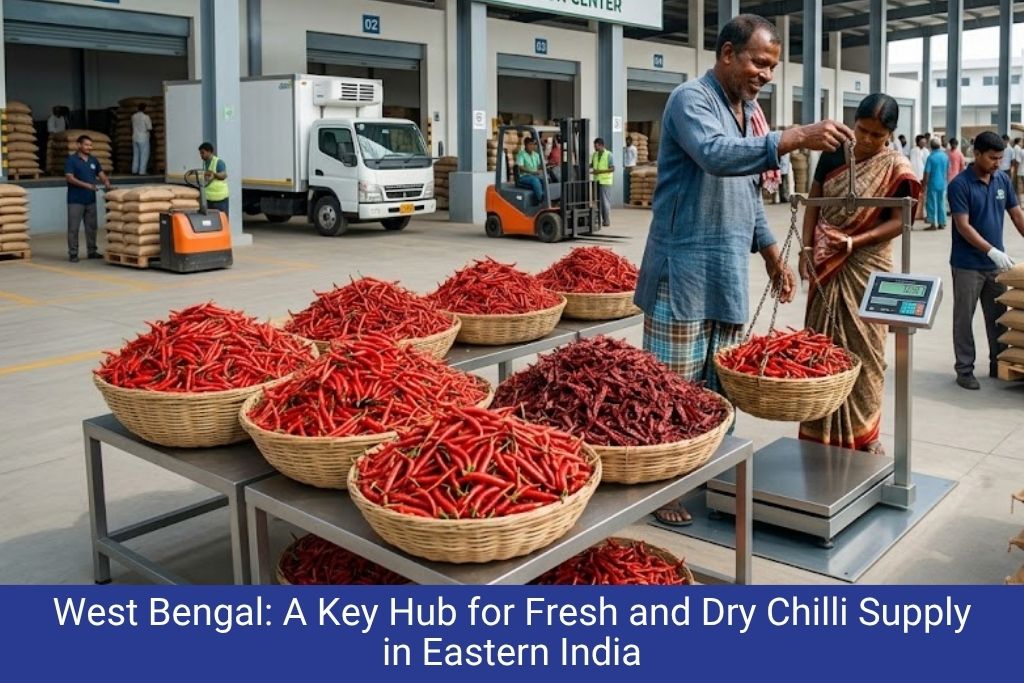
West Bengal’s proximity to Bangladesh gives it a natural trade advantage, and substantial volumes move across the border through both formal and informal channels to feed Bangladesh’s enormous chilli powder consumption. The state grows both fresh chilli for immediate culinary use and dry chilli for grinding and storage, with production concentrated in districts across the southern and western parts of the state. While West Bengal’s varieties are less prominent in premium international export than southern grades, its role in regional South Asian trade is substantial, and its output helps supply the price sensitive bulk grinding demand that Bangladesh and eastern markets generate. For exporters serving these regional flows, Bengal origin offers logistical and varietal advantages.
Odisha: Emerging State in Red Chilli Manufacturers’ Supply Chains
Odisha has grown into an increasingly relevant chilli producing state, and its expanding output steadily enters the supply chains of red chilli manufacturers seeking competitively priced raw material. The state’s cultivation spans several districts where favorable growing conditions and rising farmer participation have lifted production volumes, adding a newer source to India’s chilli map. Odisha material appeals particularly to grinders and processors focused on cost efficiency, since the state’s grades often price attractively relative to premium southern origins while delivering acceptable heat and color for mass market powder and blends. As the state’s agricultural infrastructure and market linkages develop, Odisha chilli increasingly flows to processing hubs in neighboring states and to export channels serving price driven markets. The growth also provides supply diversification that benefits the broader trade, reducing dependence on the concentrated Andhra and Telangana belts and adding resilience against regional weather or disease disruptions. For manufacturers building cost competitive product lines, Odisha represents a useful and expanding sourcing option. Its trajectory mirrors the broader pattern of chilli cultivation spreading beyond its traditional southern heartland into new productive regions.
Maharashtra: Diverse Chilli Belts from Nandurbar to Nagpur
Maharashtra grows chilli across multiple distinct belts producing a range of types, from dry export grades to the region’s famously fiery local varieties, with Nandurbar hosting one of the state’s largest chilli mandis. The Nandurbar market in the state’s northwest has developed into a major trading center drawing chilli from surrounding growing areas and channeling it into both domestic and export processing streams. Maharashtra’s varied geography, spanning the Khandesh region, Vidarbha around Nagpur, and other zones, produces different chilli characteristics suited to different end uses, giving the state a diverse rather than singular chilli identity.
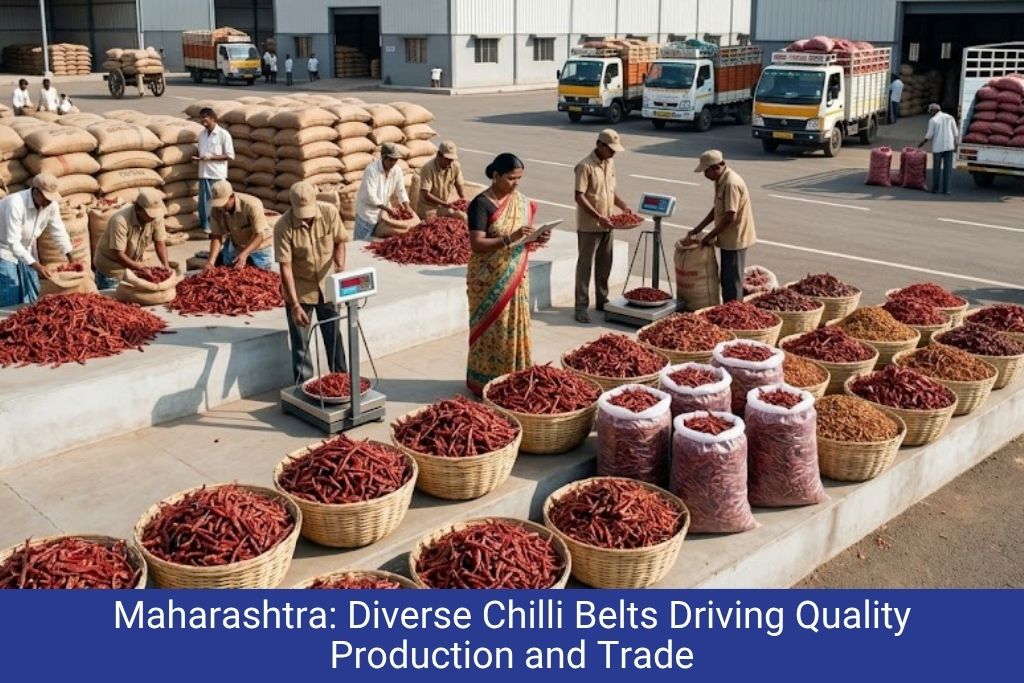
Some Maharashtra varieties deliver notable heat prized in regional cuisines, while others serve general grinding and blending demand. The state’s central location and developed transport links help its chilli reach processing and port infrastructure efficiently. As a substantial producing state with active markets and diverse output, Maharashtra contributes meaningfully to national supply and offers exporters additional sourcing flexibility, particularly when they need to balance variety, price, and availability across multiple origins. Its markets add liquidity and choice to the overall Indian chilli sourcing landscape.
Tamil Nadu: Traditional Mundu and Sannam Chilli Growing Region
Tamil Nadu holds a distinctive place in Indian chilli production as the home of the round Ramnad Mundu chilli alongside Sannam types, grown primarily in the dry districts of Ramanathapuram and Virudhunagar. The Mundu variety, with its spherical thin skinned pods and characteristic nutty flavor, is essential to authentic South Indian sambar and rasam blends, creating dedicated demand from the vast Tamil diaspora across Sri Lanka, Malaysia, Singapore, the Gulf, and western countries. This gives Tamil Nadu a specialized export identity no other state can replicate, since genuine Mundu comes only from this region and buyers needing it have few alternatives. Beyond Mundu, the state grows Sannam and other varieties feeding both domestic consumption and the specific culinary traditions of southern India and its emigrant communities worldwide. Tamil Nadu’s chilli production connects directly to ethnic food manufacturing, where brands prize authentic regional varieties named on packaging as marks of genuineness. The geographic concentration of Mundu cultivation supports firm pricing for authentic material, rewarding exporters with Tamil Nadu procurement networks. For buyers serving South Indian and Sri Lankan cuisine, this state is the irreplaceable origin.
Gujarat: Processing Gateway with Growing Chilli Acreage
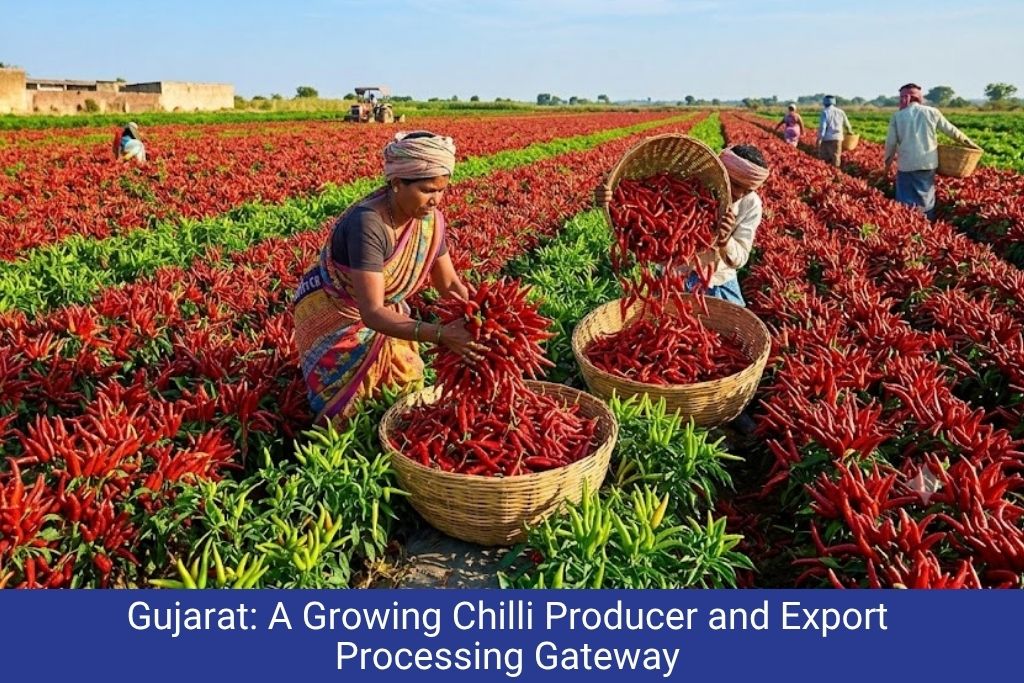
Gujarat plays a dual role in the chilli trade, cultivating a growing chilli acreage in Saurashtra and other regions while serving as the processing and logistics gateway through which much of India’s chilli reaches global buyers. The state’s ports, including Mundra and Kandla, handle a large share of India’s spice exports, and its established spice processing infrastructure, centered around trading hubs like Unjha, adds cleaning, grinding, and packing capacity close to shipment points.
This proximity between processing and ports gives Gujarat based operations a logistical efficiency advantage, reducing inland transport time and cost before stuffing containers for export. Gujarat’s own chilli cultivation has expanded, adding domestic raw material to the flow of chilli arriving from Andhra, Telangana, and Karnataka for processing and re export. The state’s strong export orientation, developed trade infrastructure, and business ecosystem make it a natural base for chilli exporters serving international markets. For buyers, Gujarat processed and shipped chilli benefits from faster port access and the operational discipline of an established export region, while the growing local acreage adds supply diversity. Gujarat’s gateway function makes it central to how Indian chilli actually reaches the world.
Our Other Product
Clove PowderRajasthan: Mathania Chilli and Arid Zone Cultivation
Rajasthan contributes the famous Mathania chilli from the Jodhpur region alongside expanding arid zone cultivation that adds to national supply. Mathania chilli enjoys a premium culinary reputation, particularly in Rajasthani cuisine where its color and moderate heat define signature dishes, and it commands recognition as a regional specialty variety. The state’s arid climate and distinct growing conditions produce chilli with characteristics valued in specific traditional applications, giving Rajasthan a niche identity within the broader chilli map. New acreage across the state has been adding to production as farmers diversify and irrigation expands, contributing incremental supply to the national total. While Rajasthan’s volumes are smaller than the major southern producing states, its specialty varieties and growing output play a useful role, particularly for buyers seeking regional authenticity or additional sourcing diversity. The Mathania name, like Byadgi and Guntur, carries origin value that ethnic and premium spice brands can leverage on packaging. As arid zone agriculture develops with better water management and improved varieties, Rajasthan’s contribution to India’s chilli supply and its portfolio of distinctive regional grades continues to grow steadily.

How Giriraj Enterprise Leverages Multi State Red Chilli Sourcing
- Established procurement relationships across the Guntur, Khammam, Byadgi, and Gujarat markets covering every major variety and grade
- Variety matching that delivers each buyer the exact Scoville heat and ASTA color profile ordered from the ideal producing origin
- Processing near Gujarat ports for faster container stuffing, reduced inland freight, and quicker shipment turnaround
- Season spanning cold storage that keeps red chillies India harvested between January and April available in all twelve months
- Complete origin traceability identifying the source state and market lot for every container shipped
- Diversified multi state sourcing that protects supply security against regional weather, disease, or price disruptions
Frequently Asked Questions
Which state is the largest producer of red chilli in India?
Andhra Pradesh leads with roughly 40 percent of national production, centered on Guntur district, which also hosts Asia’s largest chilli trading market and sets price benchmarks for the entire subcontinent.
Which is the biggest chilli market in Asia?
The Guntur chilli market in Andhra Pradesh is Asia’s largest, trading over ten lakh bags during peak arrival season, and its daily quotations effectively set global chilli price references.
Where is Byadgi chilli grown?
Byadgi chilli grows in Karnataka’s Haveri and Dharwad districts and carries a Geographical Indication tag. Its high ASTA color at mild heat makes Karnataka the center of India’s natural color extraction supply chain.
When is the red chilli harvest season in India?
The main harvest runs from January to April across the major producing states. Extensive cold storage infrastructure, particularly around Guntur, then maintains year round export availability from a single annual crop.

Mihir Shah is the CEO of Giriraj Enterprise, a trusted manufacturer, supplier, and exporter of Psyllium products, whole spices, ground spices, herbal products, guar gum and other agro products like Quinoa Seeds, Chia Seeds including Isabgol, Plantago ovata Seeds, Ispaghula Husk Powder and Kha Kha Powder. Founded in 1973 and based in Unjha, Gujarat, Giriraj Enterprise has grown significantly under Mihir’s leadership, establishing itself as a trusted name in the global market. With a focus on high-quality standards and adherence to international food norms, the company serves a wide customer base across the globe.
A strategic thinker with a passion for sustainable growth, Mihir has played a pivotal role in expanding the company’s production capacity, which now stands at 3,000 quintals per month, and in ensuring that Giriraj Enterprise remains at the forefront of innovation in the industry. His commitment to quality is reflected in the company’s stringent in-house quality testing and third-party verification, ensuring that all products meet the highest standards of excellence. He is dedicated to driving customer satisfaction by offering fast, reliable services both domestically and internationally.
Through his writing, Mihir shares valuable insights and knowledge about Psyllium, spices, herbal and other agro products, educating readers on their benefits and the role they play in promoting health and well-being. His goal is to provide factual, transparent information to help consumers and businesses make informed decisions.